A surprising decline in driving test success rates across the Australian Capital Territory has prompted a pointed question from one local resident: how does anyone actually fail in Canberra? The debate, sparked by recent reporting, has opened a floodgate of community concern about the everyday standards observed on the city's roads.
Road Rules Ignored and Common Frustrations
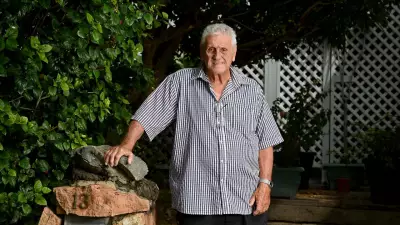
In a letter to the editor published on January 16, 2026, Kambah resident Gordon Fyfe expressed astonishment at the reported failure rates. His daily observations suggest a different reality, where obtaining a licence seems almost guaranteed "regardless of their ability, or lack thereof."
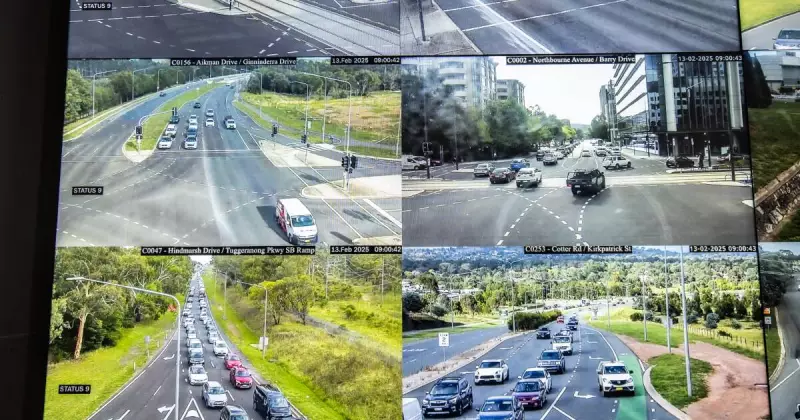
Fyfe catalogues a series of routine infractions that have become normalised for Canberra drivers. He highlights the persistent issue of drivers in right lanes matching the speed of those in left lanes, effectively blocking the flow of traffic. The improper use of indicators is another major gripe, with many drivers only activating them after beginning a turn or lane change, as if to merely prove the lights function.

However, he identifies a more dangerous and growing trend: a severe lack of anticipation and judgement. "It has now become pretty much routine for a driver to pull onto a main road from a side street without any regard whatsoever to the volume and/or speed of the traffic already travelling along the main road," Fyfe writes. This forces other motorists to brake unexpectedly, raising serious questions about how these drivers passed any rigorous assessment.
A Linguistic Critique and Broader Community Voices
The driving debate was just one of several topics tackled by Canberra Times readers in the same letters edition. From Red Hill, Jim Windeyer took issue with the Education Minister's use of the word "fulsome" in discussing regulatory powers for childcare. He pointed out the adjective's ambiguous meaning, which can imply either excessive praise or a complete apology, making its application to a "next step" confusing.
Other correspondents ranged far wider in their commentary. A letter from Hackett's Steve Ellis criticised the Trump administration's "surreal" lying following a police shooting in Minneapolis, drawing parallels to Orwellian propaganda. Meanwhile, Dr Kristine Klugman OAM of Civil Liberties Australia in Fisher urged the Bell Royal Commission into the Bondi atrocity to consider the positive social cohesion and community support shown in the aftermath.
Political Pressure and Defining Anti-Semitism
Further letters touched on local and international political tensions. Keith Hill from New Acton questioned South Australian Premier Peter Malinauskas's influence over the Adelaide Writers' Week, suggesting public statements from a funding holder constitute significant pressure.
The definition of anti-Semitism was hotly contested. A Rivett reader, D McNeill, challenged columnist Jack Waterford's use of the term, insisting it must strictly mean prejudice against Jews to retain its power. This was countered by J van Dijk from Fadden, who accused Waterford of misrepresenting Jewish community concerns and Israeli policies over several consecutive columns.
Amidst the critiques, a heartfelt thank you came from the Mann family in Page, who praised the exceptional care from North Canberra Hospital and the Home-Based Palliative Care Team, allowing a family member to die with dignity at home.
To The Point: Canberra's Quick Quips
The edition's "To The Point" section featured sharp, brief observations from across the region and nation:

- John Howarth of Weston joked that poor driving skills seemed mandatory for Canberra drivers, not a test failure reason.
- Lesley Walker from Northcote, Victoria, asked why there was no royal commission into anti-Muslim hatred after the 2019 Christchurch massacre, whose perpetrator radicalised in Australia.
- Kenneth Griffiths in O'Connor called for a new national flag featuring the Boxing Kangaroo to inspire stronger political leadership.
- Richard Manderson of Red Hill suggested an annual day of mourning for Indigenous Australians killed since colonisation, alongside one for Bondi victims.
- Concerns were also raised about open-plan living mistakes, disaster resilience amid climate change, and the use of Portaloos at new lakefront venues.
The collective voice of the letters presents a snapshot of a community deeply engaged with issues from the hyper-local state of its roads to the vast complexities of global politics and language.