The nation is in mourning after a terrorist attack at Sydney's iconic Bondi Beach resulted in the tragic loss of at least 15 lives, marking Australia's worst mass shooting in nearly three decades. The horrific event has triggered a fierce political storm, with Prime Minister Anthony Albanese facing intense scrutiny over his government's approach to combating anti-Semitism.
Immediate Political Recriminations and Accusations
Almost as soon as news of the Sunday night attack broke, political and media figures launched pointed criticisms at the Prime Minister. Sky News host Sharri Markson and former Liberal Treasurer Josh Frydenberg were among those who accused Mr Albanese of failing to adequately address the threat of anti-Semitism in Australia.
Mr Frydenberg, whose family members were murdered at Auschwitz, highlighted the Prime Minister's 2023 pledge to not let anti-Semitism "get a foothold" in the country, declaring: "What a failure that has been."

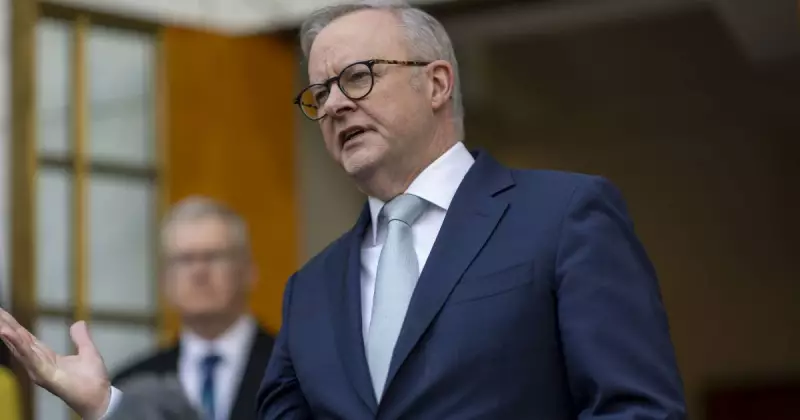
On Monday, a visibly shaken Prime Minister addressed the nation, vowing unity and action. "We will never submit to division, violence or hatred and we will come through this together," Mr Albanese stated. He promised to do "whatever is necessary to stamp out anti-Semitism," announcing an emergency meeting of the national cabinet to discuss tightening Australia's already strict gun laws.
Coalition Seizes on Government's 'Festering' Crisis
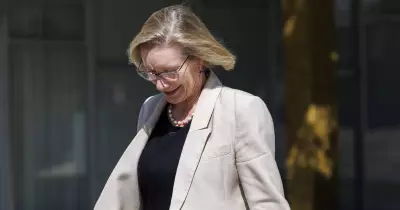
While offering nominal support for state and federal agencies, the federal Opposition has moved to capitalise on the government's perceived vulnerability. Opposition Leader Sussan Ley asserted that anti-Semitism had been "allowed to fester" under Mr Albanese's watch.
"This rising tide of anti-Semitism has happened in front of this government, and they have not responded," Ms Ley said. She made this criticism across nine separate media appearances, though she declined to state her position on specific gun law reforms on a day of national mourning.
The sentiment was echoed by key Jewish community leaders. Alex Ryvchin, Co-Chief Executive of the Executive Council of Australian Jewry, called the attack "a colossal failing of this government." Opposition finance spokesperson James Paterson said the Jewish community was "rightly angry [that] their years of warnings ... have not been heeded."
The Pro-Palestine Protest Movement and Unanswered Questions
A central point of contention for critics is the government's handling of the pro-Palestine protest movement. They point to events from the October 2023 Opera House rally, where anti-Jewish chants were reported, to ongoing incidents of anti-Semitic abuse on university campuses.
Ms Ley has called for the full implementation of the recommendations from Special Envoy to Combat Anti-Semitism Jillian Segal's report, published in July. "If laws need to be passed, we should recall the Parliament and undertake to do exactly that," she urged.
Prime Minister Albanese countered that his government had already acted on key recommendations, including criminalising hate speech and doxxing, banning the Nazi salute and other hate symbols, and funding Jewish museums and education centres. He also noted progress on school education programs, a national student ombudsman, and a university report card system.
Contentious Definitions and the Path Forward
The debate over how to proceed is complicated by contested definitions. Ms Segal's report advocates for the International Holocaust Remembrance Alliance (IHRA) definition of anti-Semitism. This definition states that criticism of Israel can be anti-Semitic when it employs harmful stereotypes, calls for Israel's elimination, or holds all Jews responsible for Israel's actions.
Some of Ms Segal's most significant recommendations, such as cutting funding to institutions that fail to act against anti-Semitism or deporting non-citizens involved in such conduct, hinge on this definition. These proposals raise difficult questions about balancing action with freedom of speech.

Despite the outstanding challenges, Ms Segal, who was scheduled to meet with the Prime Minister late Monday, acknowledged the government's efforts. "It's not as if there has been no action," she told the ABC. "But I think we need to accelerate the work. The government needs to come out and fully endorse the actions, so that there's no doubt... that this is a full-throttle approach."
As Australia grieves, the Bondi Beach attack has irrevocably shifted the national conversation, placing the government's policies and the Prime Minister's leadership under an unforgiving microscope in a time of profound crisis.