Readers of the Newcastle Herald have voiced a collective sense of disillusionment, contrasting the inspiring oratory of past leaders with what they see as the mediocre political rhetoric of today, while also expressing fury over ongoing government support for coal and gas amid climate-fuelled disasters.
A Lost Art: The Decline of Inspiring Political Speech
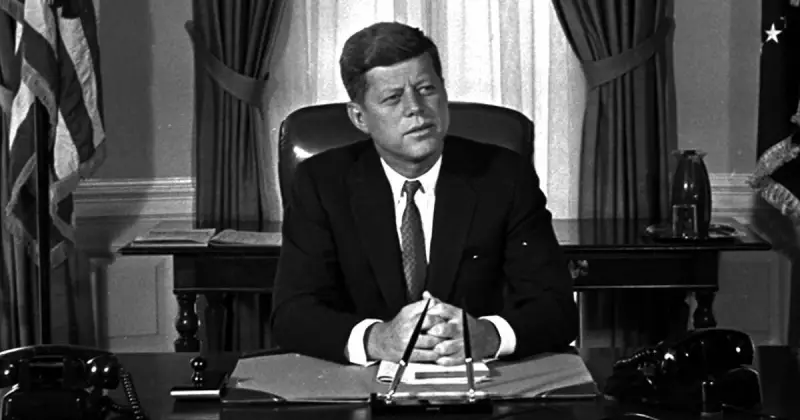
In a letter published on January 19, 2026, Newcastle resident Denise Lindus Trummel reflected on the powerful speeches that once defined political leadership. She recalled moments like US President John F. Kennedy's 1961 declaration "Ich bin ein Berliner" and his iconic inaugural address asking citizens "what you can do for your country."
She also cited Martin Luther King Jr.'s "I have a dream" speech, Robert Kennedy's call to dream of things that never were, and former Prime Minister Julia Gillard's 2012 parliamentary misogyny speech. Trummel noted that even fictional depictions of governance, like the TV series The West Wing, showcase the potential of compelling speechwriting.

"Now in reality, we are stuck with mediocre speechwriters," Trummel wrote. She argued that words from contemporary leaders fail to inspire during crises, with recent tragedies in Australia only prompting political point-scoring instead of visionary calls for change.
Planetary Health Must Trump Profit, Reader Argues
The fierce debate over climate policy and fossil fuels also dominated the letters page. Ray Peck from Hawthorn responded with anger to a recent opinion piece by cardiologist Dr Arnagretta Hunter on the health impacts of heatwaves.
Peck connected the piece to personal experiences of climate disaster, including friends fleeing the Longwood fire in Victoria and memories of evacuating his infant granddaughter during the Black Summer fires in NSW. "This is the hotter, more dangerous world we are passing on to our grandchildren," he stated.
He expressed frustration that governments continue to approve new coal and gas projects despite the clear link to global warming, dismissing references to Dorothea Mackellar's poem or cold-weather deaths as irrelevant. "Planetary health is more important than profit," Peck concluded, calling on shareholders in fossil fuel companies to divest.
Community Divides on Protest, Conflict, and Sport
Other letters revealed a spectrum of local opinions on current events. Shane Tull from Redhead expressed dismay that courts are still processing over 100 cases from the 2025 Rising Tide protest in Newcastle. He called for stronger penalties to be applied to the protesters to set an example.
In international affairs, Glen Wilson from Cardiff contested another reader's views on armed forces in the Middle East. Wilson argued that the Israeli army's presence in the West Bank, land captured from Jordan in 1967, is illegal and leads to brutality. He cited the death of a 9-year-old boy, Mohammad Bahjat Al-Hallaq, shot in October while playing football, and accused Israel of apartheid and genocidal actions.
Lighter topics also found space. Robert Menhenick from Charlestown offered a statistical rebuttal to comparisons between cricketers Steve Smith and Don Bradman, noting Bradman scored 29 centuries in 52 Tests to Smith's 16. Meanwhile, Ian King from Warners Bay criticised Prime Minister Anthony Albanese for his handling of the call for a royal commission into the Bondi tragedy, accusing him of backpedalling under public pressure after initially refusing the inquiry.
The letters section also included brief notes correcting the origins of Greenland's name and defending surfing as a future survival skill, showcasing the wide-ranging concerns of Herald readers.