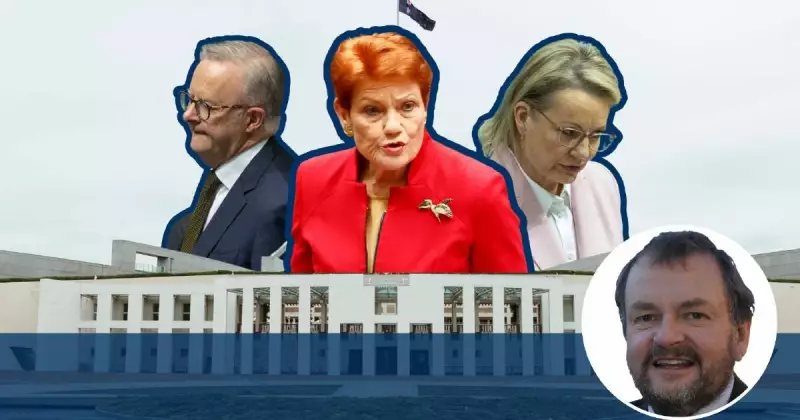
The political fallout from the Bondi Beach terror attack has delivered a stunning outcome: neither of Australia's major parties has gained significant ground, while minor parties, particularly Pauline Hanson's One Nation, have surged in voter support.
A Crisis Mismanaged by Both Sides
In the wake of the December 14 attack, Prime Minister Anthony Albanese and Opposition Leader Sussan Ley have both struggled to capitalise on the crisis, a rare failure in modern politics. Historically, leaders who handle major events well see their popularity rise, as seen with Margaret Thatcher after the Falklands War or George W. Bush following the September 11 attacks. Conversely, those who mishandle crises face electoral defeat.
In this instance, both leaders have performed poorly. Anthony Albanese faced internal pressure from pro-Palestine elements within his caucus and MPs representing electorates with large Muslim communities. This prevented him from using the moment to address hate speech more broadly against racial attributes and sexual orientation. His suggestion that citing religious texts should be exempt from hate-speech laws was widely criticised, given such texts often contain exhortations to violence.

Sussan Ley has also faltered, needing to placate culture warriors within the Liberal Party who champion freedom of speech over vilification laws. Her response has been marked by knee-jerk reactions and inconsistency. On December 18, she demanded Parliament be recalled immediately to pass laws against anti-Semitism and strengthen counter-terrorism measures. Yet, when Parliament sat this week to do exactly that, she argued the process was too rushed, highlighting her political opportunism.
Legislative Challenges and Political Opportunism
Albanese wisely separated the proposed legislative response into two parts: gun control and hate speech. The gun laws, which would define specifications for legal ownership, storage requirements, and owner eligibility, are straightforward and likely to gain Greens support. It was guns that killed people at Bondi, making this a clear priority.
Hate-speech legislation, however, is fraught with complexity. Similar to defamation law, it involves nuanced interpretations of language and intent. Law reform commissions have spent countless hours trying to strike the right balance. Rushed laws in this area risk creating martyrs and are unlikely to pass the Senate in their current form.
Meanwhile, Pauline Hanson and One Nation have not let the crisis go to waste. Four opinion polls conducted since the attack show One Nation's vote sitting between 15 and 21 percent. The most recent poll, at 18 percent, is triple the party's vote at the last federal election.
The Surge of Minor Parties and a Transformative Shift
The latest Resolve poll reveals a more alarming trend for the major parties: the combined vote for minor parties and independents has reached 42 percent, the highest level since polling began. While this figure may dip as an election approaches, it signals a potential transformation of the Australian political landscape.
At the last election, minors and independents won 33.6 percent of the vote but only 6 percent of the seats. If their support pushes toward 40 percent, they will come second in many electorates and win seats with preferences from the trailing major party. This could more than double their parliamentary representation.
Such an outcome would mean no governing party holds a majority in the House of Representatives or the Senate. Legislation opposed by the government could pass with support from the opposition and crossbench, forcing the government to either accept it or call an election—a potentially suicidal or inconclusive move.
Immigration: The Root of One Nation's Appeal
Why has One Nation soared? The answer lies squarely in immigration. Recent polling indicates that two-thirds of Australians want fewer or significantly fewer migrants, citing pressures on housing and government services. The government has largely ignored these concerns, while the opposition, still beholden to business interests seeking cheap labour, offers only vague statements.

Pauline Hanson has been unequivocal, calling for lower immigration. An overwhelming 94 percent of her supporters want fewer migrants, with 84 percent of that group wanting "a lot fewer." She is tapping into a deep-seated frustration that the major parties have failed to address.
The task for Anthony Albanese now is to focus less on a Coalition that is "doing a good self-demolition job" and more on reversing the One Nation surge. The most effective way to achieve this is by directly addressing widespread community disquiet over high immigration levels. Failure to do so may cement a new, fragmented political reality in Australia.