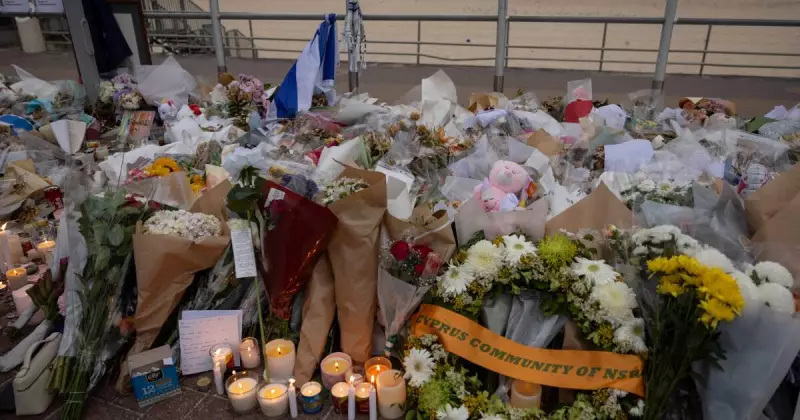
The act of writing, as the old adage goes, is how we discover what we truly think. It forces order upon chaos, transforming raw facts and swirling ideas into coherent propositions. This deliberative process carries a weight that off-the-cuff speech often avoids, a truth underscored by the late columnist A.A. Gill's observation that writing is, definitively, "black and white".
I found myself grappling with this need for clarity as I sat down to write about the tumultuous events that have shaken Australia in recent times. The task was to find a path through the wreckage left by the horrific Bondi terrorist attack, the ongoing cultural controversies, and the cavernous divides that now characterise our national discourse.
A Clear Atrocity, A Muddy Response
The attack at Bondi Beach itself was horrifying in its simplicity: a premeditated massacre driven by profound anti-Semitic hatred. The appropriate political response to such an event should have been equally clear. In moments of genuine national peril, true leaders traditionally set aside partisan bickering over policy minutiae to prioritise the collective interest. They unite to project strength, calm, and a shared resolve to protect the nation.

This time, that did not happen. Instead of convergence, the aftermath of the Bondi tragedy was marked by immediate and reflexive politicisation. The opportunity for sober, unifying leadership was bypassed in favour of exploiting the raw emotional capital on offer.
Elements within the Jewish community, long warning of rising anti-Semitism, felt a grim vindication. An emboldened political opposition, led by Peter Dutton, faced a critical choice. It could have opted for a measured, statesmanlike approach. Instead, it chose a path of heightened blame, and its parliamentary ranks and media allies followed.
The Blame Game and a Political Misstep
The rhetoric escalated rapidly. Former free-speech advocates demanded new laws criminalising anti-Semitism. Critics conflated the government's diplomatic recognition of a future Palestinian state with being a causal factor in the massacre. Protestors who had marched for peace in Gaza were accused of fostering a permissive atmosphere for violence.
Amid this storm, Prime Minister Anthony Albanese made a significant tactical error. He initially ruled out calls for a royal commission into the attack, a decision that left him appearing out of touch and lacking urgency. Critics pounced, accusing his government of being flat-footed, unempathetic, and potentially hiding something.
This misjudgment allowed the opposition to seize the initiative. However, Albanese eventually reversed course, agreeing to a royal commission. More strikingly, he then turned the political tables. He presented a comprehensive, tough legislative package directly addressing the opposition's demands: crackdowns on hate speech, the criminalisation of extremist political parties, and restrictive new gun laws.
Coalition Disarray and a Fight Over Bridges
The government's sudden decisiveness, packaging these measures into an omnibus bill for an emergency parliamentary sitting, threw the Coalition into disarray. Questions about haste were raised, with senior figures like Andrew Hastie declaring he would not support changes before a royal commission reported—a process that could take a year or more. The Nationals baulked at the gun law provisions.
The political theatre grew increasingly chaotic, a perfect illustration of Leonard Cohen's lyric about things sliding "in all directions." Even the physical landscape of the tragedy became a point of bitter contention. NSW Premier Chris Minns is reportedly pushing for the demolition of the footbridge in Bondi Park from which the attackers fired, to prevent it becoming a rallying point. Many locals argue it should remain as a sacred memorial to the lives lost, a site of history and grief.
It is a painfully apt metaphor: a nation straining at the seams ends up fighting over the very meaning of its bridges.

So, did the act of writing help me understand what I think? Partly. It confirms that in the absence of genuine political bipartisanship, the widening of social divisions was inevitable. When national interest is sacrificed for partisan advantage, the result is not security, but deeper fracture. That, in the wake of such a clear atrocity, remains the most shameful outcome of all.