The National Party finds itself in a precarious political position, with analysis suggesting it faces potential doom regardless of whether it rejoins the Coalition or maintains its current independent stance. This dilemma emerges against the backdrop of One Nation's significant polling surge, which threatens to reshape Australia's political landscape, particularly in rural and regional areas.
The Coalition Split and Its Consequences
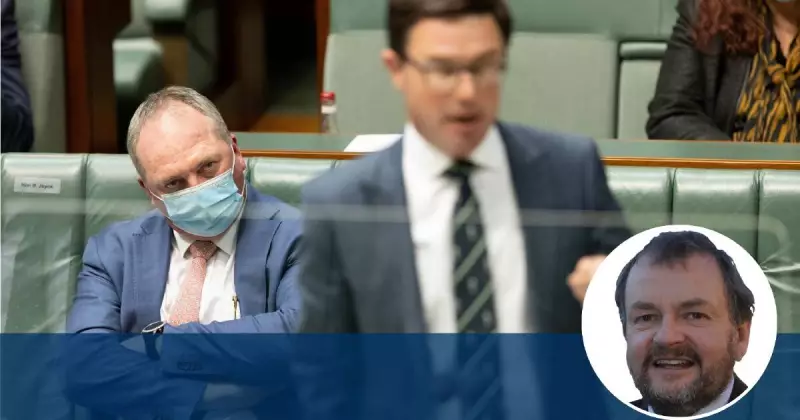
Recent developments have accelerated the Coalition's fragmentation, with the Nationals' walkout creating unprecedented challenges. Barnaby Joyce, pictured during his tenure as Nationals leader, observes current leader David Littleproud addressing Parliament, symbolizing the party's transitional phase. The split has opened the door for three-cornered contests between Liberals and Nationals in future elections, despite likely preference swaps between the traditional partners.
Such contests inevitably lead to preference leakage, which One Nation stands ready to capture alongside votes from Australians disillusioned with infighting between the former coalition partners. This dynamic creates a perfect storm for the Nationals, whose 14 lower house MPs represent precisely the rural seats where One Nation support runs highest.

One Nation's Rising Influence
Polling since the Bondi shootings reveals One Nation climbing from traditional support levels of 6-7 percent to challenging the former Coalition's vote share in the low twenties. This surge reflects deeper voter dissatisfaction with government effectiveness and growing resentment that One Nation expertly exploits through three primary channels:
- Capitalizing on fears regarding linguistic, ethnic, and religious differences
- Amplifying perceptions of exploitation by multinational corporations, major mining operations, and supermarket chains
- Fueling resentment toward perceived elites who diminish ordinary Australians' dignity
One Nation offers nostalgic, simplistic solutions to complex problems, advocating for reduced non-white immigration, abandonment of net-zero commitments, tougher crime policies, and an end to multiculturalism. These policies resonate despite lacking detailed implementation plans, presenting voters with apparently clear alternatives to mainstream political complexity.
Electoral Implications and Historical Parallels
The changing political landscape renders traditional two-party-preferred analysis increasingly irrelevant. In the previous federal election, 35 of 150 seats featured contests beyond Labor versus Coalition dynamics. With One Nation's current trajectory, this number could more than double, fundamentally altering Australia's electoral mathematics.
The 1998 Queensland state election provides instructive parallels, where One Nation captured 23 percent of the vote and won 11 seats—six from Nationals and five from Labor. Although those One Nation MPs eventually quit before the next election, the Nationals benefited from fortunate timing that may not repeat federally.
Senate Dynamics and Future Governance
Labor should avoid complacency despite One Nation's primary threat targeting conservative parties. Senate elections in 2028, featuring senators originally elected in 2022, present particular challenges. Current polling suggests One Nation could secure five Senate seats, potentially capturing two of six available positions in most states given the modest 14.3 percent quota requirement.
Three of the Nationals' four senators face re-election in this environment, with their prospects diminished by their role in precipitating the Coalition crisis through floor-crossing on hate-speech legislation. Regardless of which party forms government after the next election, passing legislation through the Senate promises to become significantly more difficult, potentially creating governance nightmares.
The Nationals' Dilemma: Rejoin or Remain Independent?
Even rejoining the Coalition may arrive too late for the Nationals' salvation. Any return would likely require forcing the Liberals to replace Sussan Ley as leader and adopt policies closer to One Nation's platform. Such moves risk provoking voter backlash, particularly among women, potentially sparking renewed independent movements like the Voices Of campaigns that previously succeeded in rural seats such as Indi.

David Littleproud's orchestration of the Coalition walkout may have inadvertently initiated his party's decline, leaving Labor and Liberals to contend with One Nation's growing influence. The voters One Nation attracts possess legitimate grievances about infrastructure strains, housing affordability, education costs, healthcare quality, and immigration levels that have escalated from 70,000 to over 250,000 annually in recent decades.
Addressing these substantive issues through thoughtful policy represents a more effective response to One Nation's rise than adopting simplistic right-wing approaches. As Australia's political landscape undergoes profound transformation, the Nationals face existential choices with implications extending far beyond their own survival to the fundamental functioning of Australian democracy.