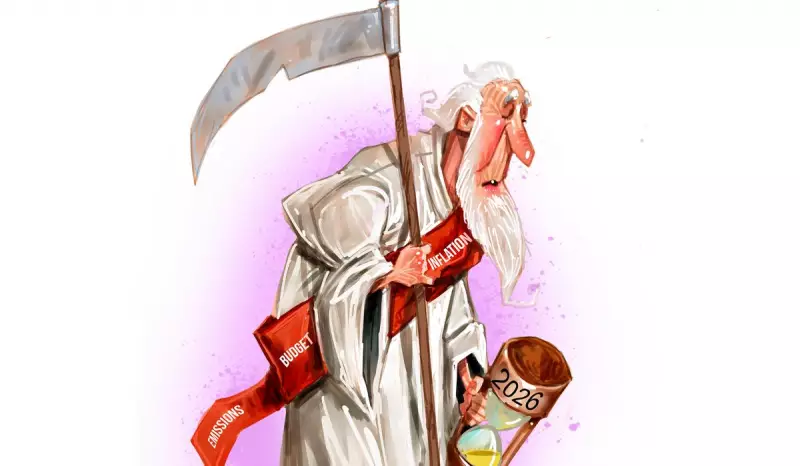
A former senior Australian public servant has issued a stark warning, stating the nation desperately needs a political "fixer" to navigate a series of looming economic and social challenges. Mike Mrdak, who served as a department secretary for over a decade, argues that the current political environment is ill-equipped to handle the complex problems on the horizon.
The Call for a Coordinated Approach
Mike Mrdak, whose distinguished career included leading the Department of Infrastructure and Regional Development, made his comments during a recent address in Canberra. He pinpointed a critical gap in the government's ability to implement long-term, cross-portfolio solutions. Mrdak emphasised that the upcoming challenges require a dedicated figure who can cut through bureaucratic and political barriers to drive coordinated action.
He specifically highlighted several pressing issues that demand this new approach. These include the monumental task of managing the transition to a net-zero emissions economy, the ongoing housing affordability crisis, and the need for comprehensive reform in the skills and migration sectors. According to Mrdak, these are not isolated problems but are deeply interconnected, requiring a holistic strategy that spans multiple government departments.

Why the Current System is Failing
Mrdak's critique centres on the limitations of the existing Westminster system and the short-term nature of the political cycle. He observed that the system often promotes a "siloed" approach, where departments work in isolation rather than in concert. Furthermore, the three-year electoral cycle discourages governments from embarking on ambitious, long-term projects that may not yield results before the next election.
This focus on short-term political wins, he argues, comes at the expense of the nation's future prosperity and stability. The proposed "fixer" would operate with a mandate to look beyond the next news cycle or opinion poll, focusing instead on delivering sustainable outcomes for Australia. This role would involve high-level coordination, dispute resolution between ministers and departments, and ensuring that policy implementation stays on track.
Implications for Australia's Future
The call for a political fixer underscores a growing concern among policy experts about the capacity of Australia's institutions to adapt to rapid change. Without a mechanism to break down these barriers, Mrdak warns that the country risks policy failure, wasted resources, and missed opportunities. The housing crisis could worsen, the energy transition could become disorderly, and skills shortages could persist, hampering economic growth.
While the concept of a powerful, cross-cutting coordinator is not entirely new, Mrdak's public advocacy gives it renewed urgency. It presents a direct challenge to the Prime Minister, the Cabinet, and the public service to rethink how complex governance is achieved. The success or failure of this idea could significantly influence how Australia tackles its most defining challenges in the coming decades. The debate now turns to whether the political will exists to create such a role and empower an individual with the authority to truly "fix" the system's deep-seated coordination problems.