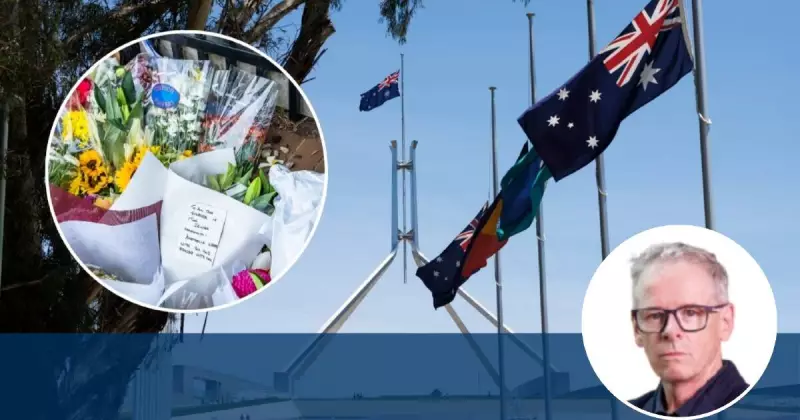
One week after the horrific events at Bondi, Australians are grappling with a profound national trauma. The attack revealed a chilling truth for Jewish communities: even within one of the world's most tolerant societies, the deadly spectre of anti-Semitism remains a present danger.
Political Point-Scoring Amid Tragedy
The aftermath has been marred by a distressing lack of political unity. Liberal Party MPs, who previously sought to dismantle section 18C of the Racial Discrimination Act, have now positioned themselves as staunch opponents of hate speech. Their swift condemnation of the government's move to tighten firearm regulations as a mere "distraction" stands in stark contrast to the bipartisan solidarity shown after the Port Arthur massacre in 1996.
This political manoeuvring occurs despite the grim reality that the Bondi attackers utilised a legally-held suburban arsenal of high-powered long-arms and substantial ammunition. Reducing the number of such weapons addresses a core logistical component of the violence, a point underscored by heartfelt public demands for concrete action over empty words.

A Jewish Voice: Nuance Beyond the Absolutism
Amid the polarised debate, a thoughtful, analytical, and deeply decent Jewish friend of the author offered a perspective lost in the current absolutist reporting. Speaking on condition of anonymity due to the community's profound grief, he provided crucial insight via phone and follow-up emails.
He clarified that while anti-Semitism was the central problem, guns were not merely a side issue. "Guns were critical to the savagery of the Bondi massacre. If we deal with guns, casualties will be cut," he stated, agreeing with NSW Premier Chris Minns that all factors must be addressed. He emphasised that tighter gun control would save lives, whereas cheap political points would not.
Despite the horror, he affirmed Australia as "a great country," though one with deep divisions. He drew a parallel to the prejudice faced by Muslim Australians after 9/11, noting that today, heroes like Ahmed al Ahmed—the Muslim Australian who disarmed the Bondi gunman—represent the nation's true character.
The Unspoken Influence of Gaza
His analysis took a challenging turn, pointing to a deliberately ignored element in the post-attack discourse: the influence of the war in Gaza. He argued that the "baseline, raw, revolting anti-Semitism" visible at the Opera House rallies in October 2023 metastasised as the conflict resulted in widespread destruction and tens of thousands of casualties in Gaza.
"Most Australians are against what Israel is doing in Gaza," he said, asserting that the Netanyahu government's prosecution of the war had tilted global public opinion decisively against Israel. He concluded that today's anti-Semitic terror cohorts in Australia are armed with added hate and act on vengeance for Gaza, a factor he believes is being sidelined in the national conversation.
A Path Forward: Education and Security Reform
When asked what is needed now, he called for a long-term effort in education and culture, acknowledging it would be a slow process. However, he stressed one urgent change: overhauling police and security service blind spots.
He cited the failure to prevent Nazis marching in front of the NSW Parliament on Macquarie Street as a "terrible lapse" that created indelible, damaging images. This oversight is particularly alarming given the terror alert level was already set at "probable" before the Bondi attack.
Despite the rent social and political fabric, he expressed a resilient hope. "I think Australia will, over time, get stronger from this trauma, just as it did after Port Arthur, the Bali bombings, the Lindt café siege," he reflected. "We got stronger even though the pain endures."
The journey ahead is fraught, demanding honest dialogue about anti-Semitism, responsible political leadership, and pragmatic reforms to gun laws and security protocols. The path to recovery, as history shows, is painful but possible.