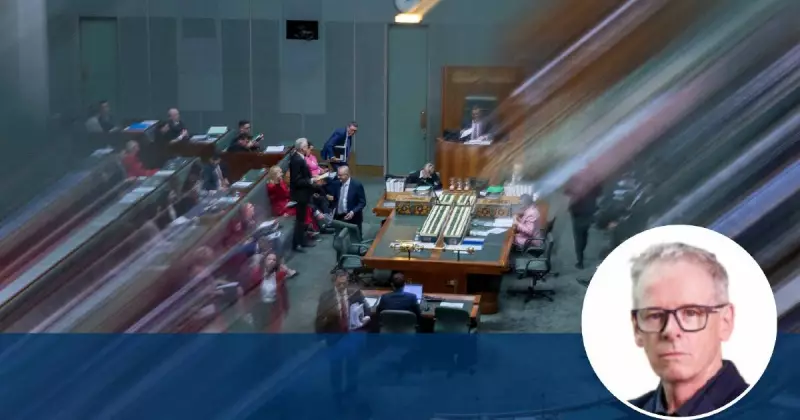
As the final parliamentary sitting day of 2025 drew to a close, a stark half-hour scene perfectly encapsulated the Australian political year. It was a snapshot of a dominant Labor Party and a fractured, floundering Coalition.
A Chamber of Contrasts: Triumph and Defeat
At precisely 2:00pm on that Friday, Prime Minister Anthony Albanese stood at the despatch box, buoyant and in command. The atmosphere was electric, a testament to a year that saw him lead Labor to an emphatic re-election, securing a massive 94-seat majority and reducing the opposition to a mere 43 seats.
This triumphant scene offered a jarring contrast to the subdued mood just thirty minutes prior. Then, Barnaby Joyce, the former deputy prime minister and a Nationals heavyweight for two decades, used a 90-second address slot to announce his defection from the party. He delivered his sombre resignation to a near-empty chamber, his sullen exit symbolising a deep internal crisis for mainstream conservatism.

Back in a packed Question Time, Albanese seized the moment to mock his opponents. "The once great parties of the Liberal Party and the National Party are reduced," he declared. "They've gone from being either the party of government or the party of alternative government to Play School."
The Perils of a Super-Majority
Opposition Leader Sussan Ley faced the Prime Minister's barbs, her early promise to reclaim the political centre-ground having seemingly evaporated. Analysts note her capitulation to right-wing demands on issues like the net-zero emissions target and gender quotas, with immigration policy next in line for internal battles.
While Albanese had every reason for confidence—including a secret wedding just two days later—such overwhelming political dominance carries inherent risks. Large majorities can foster roiling backbench ambition and make party discipline a significant challenge. However, the most potent threat is often hubris, a vanity that can start at the very top.
A telling moment of this potential arrogance flashed during Albanese's speech. Quoting political journalist Phil Coorey to attack the Coalition on energy policy, the Prime Minister was met with gleeful interjections pointing out Coorey wasn't even in the press gallery. Albanese retorted, "They're all outside watching you go down to 42!" before another Liberal MP was ejected, prompting a triumphant shout of "41!" from the PM.
Warning Signs: Secrecy and Complacency
This bravura parliamentary theatre masked emerging vulnerabilities. The Albanese government, now in its second term, is beginning to exhibit instincts reminiscent of the deeply unpopular Morrison government it defeated. A critical report into "jobs for mates" by former public service commissioner Lynelle Briggs was kept secret for two years, and its key recommendations were largely rejected upon release.
This creates a damaging irony: a report about transparency was itself denied transparency. Furthermore, the government's puzzling failure to respond to a 2023 report on gambling advertising adds to concerns about accountability and process.
These issues strike directly at public trust. As noted by analyst Mark Kenny, Labor's current political invulnerability is a dangerous illusion. The government was elected in 2022 against a backdrop of secrecy and policy intransigence; it must now guard against becoming defined by those very same flaws.
The lesson from history is clear. For all-conquering parties, the peak of success is often the point from which the decline begins. The final question time of 2025 may have been a celebration of Labor's power, but it also served as a stark warning: when you're riding the highest, the hits are often just around the corner.