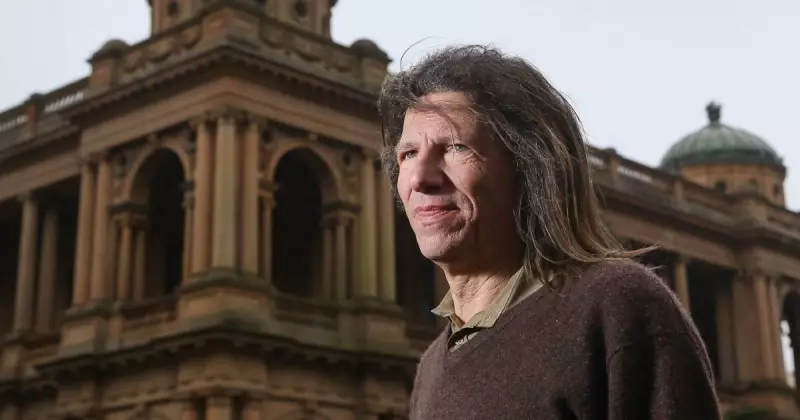
Government Responds to Post Office Restoration Criticism
In response to recent community feedback, the state government has clarified its position regarding the restoration of Newcastle's historic post office. Steven Busch had previously called for increased government assistance to support developer Jerry Schwartz's renovation efforts. However, official correspondence reveals that Dr Schwartz actually received a substantial $1 million grant from the government last year specifically for this purpose.
The grant comes with specific conditions requiring completion of the post office renovation by mid-2027, providing a clear timeline for the project's conclusion. This information addresses concerns about the pace of restoration work on the significant heritage building.
Developer's Concerns and Historical Context
Recent statements from Dr Schwartz have connected progress on the post office restoration with approval for other development projects, including a proposed foreshore carousel. He expressed frustration about what he perceives as contradictory treatment from local authorities regarding different ventures.

Regarding historical damage to the site, correspondence notes that significant deterioration occurred primarily during the period of private ownership between 2002 and 2014, when the property was under Liberal/National government oversight. This contrasts with the relatively brief Awabakal Land Council ownership from 2014 to 2018.
Tim Crakanthorp, Member for Newcastle, emphasized that while the government continues to provide support, Dr Schwartz must also fulfill his responsibilities to advance the restoration project according to agreed timelines.
Multiple Community Issues Addressed in Letters
The latest batch of letters to the Newcastle Herald reveals a wide range of community concerns beyond the post office restoration debate. Several correspondents addressed political responses to the Bondi beach massacre, with particular criticism directed at Opposition Leader Sussan Ley's call for a royal commission.
Barry Swan from Balgownie described Ley's approach as "weaponising tragedy for political purposes" while noting her subsequent opposition to early parliamentary action on related legislation. This perspective highlights ongoing political tensions surrounding national security and response mechanisms.
Healthcare and Resource Allocation Debates
Healthcare funding emerged as another significant concern, with David Jennings from Edgeworth arguing that Newcastle receives inadequate resources compared to metropolitan areas. His letter proposed redirecting $15 billion in annual mining subsidies toward health services and addressing tax avoidance by foreign corporations.
This reflects broader regional frustrations about resource distribution and government priorities affecting service provision outside major cities.
Australia Day and Environmental Concerns
The perennial Australia Day debate resurfaced with Ian King from Warners Bay advocating for maintaining January 26 as the national day, citing poll results showing majority support for the current arrangement. This perspective contrasts with ongoing campaigns to change the date or name of the celebration.
Environmental priorities also featured prominently, with Salvatore Cocco from Rutherford supporting Ray Peck's earlier arguments about prioritizing planetary health over profits. This exchange underscores growing community awareness of climate change impacts and the need for stronger environmental policies.
Diverse Perspectives on Current Affairs
Additional letters covered varied topics including media responsibility, international relations, and local healthcare standards. Several correspondents addressed the Bondi massacre from different angles, with Adz Carter from Newcastle noting that key events in the gunman's history occurred under previous coalition governments.
Steven Busch from Rathmines offered perspectives on Middle Eastern conflicts, while Darryl Stevenson from Coal Point raised concerns about opinion pieces appearing on newspaper front pages. These diverse contributions demonstrate the breadth of community engagement with local, national, and international issues.

The letters collectively present a snapshot of Newcastle community concerns, ranging from specific local development projects to broader national policy debates. They reflect active civic participation and diverse viewpoints on matters affecting both the Hunter region and Australia more broadly.