Coalition Descends into Disarray Over Hate Speech Legislation
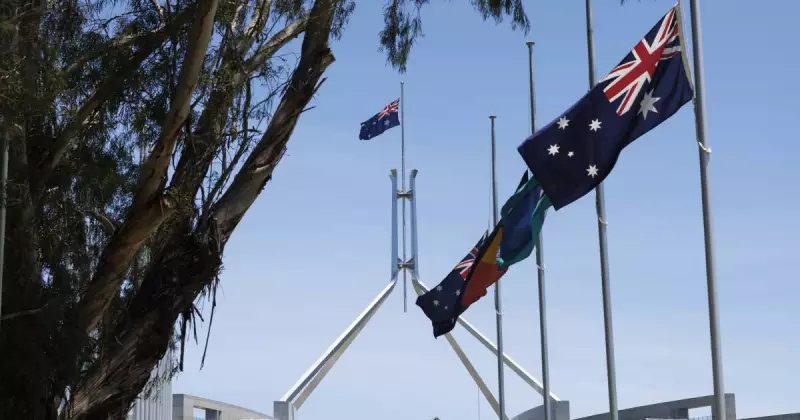
Just days after Prime Minister Anthony Albanese faced criticism for his response to the Bondi Massacre, political attention has shifted dramatically to a Coalition in crisis. As the nation prepares for a National Day of Mourning on Thursday, the opposition is grappling with an internal implosion that has left its leadership weakened and its future uncertain.
House of Representatives Rebellion Sets Stage for Chaos
The turmoil began in the House of Representatives where former deputy prime minister Michael McCormack broke ranks with his party. The Nationals MP, who had been exiled from shadow cabinet, voted against the Coalition's official position to support the government's hate speech legislation. McCormack argued the bill represented the only available mechanism to ban the designated terror organisation Hizb ut-Tahrir, whose website went offline following the parliamentary vote.
"McCormack, arguably the only sensible voice remaining in the Nationals, could not in good conscience oppose legislation targeting a designated terror group," political observers noted, despite acknowledging the bill's other shortcomings.

Leadership Failure and Senate Revolt
In stark contrast to McCormack's principled stand, Nationals leader David Littleproud delivered what many are calling a staggering failure of leadership. As a shadow cabinet member and potential future deputy prime minister, Littleproud was duty-bound by caucus solidarity to support the legislation according to the Coalition's formal position. Instead, he abstained from the vote, creating a vacuum of authority.
The disarray deepened significantly in the Senate where three Nationals frontbenchers – Bridget McKenzie, Ross Cadell, and Susan McDonald – all broke with caucus solidarity to vote against the bill. The consequences were immediate and severe.
Opposition Leader Sussan Ley confirmed she had accepted their resignations on Wednesday afternoon, stating: "This is an unfortunate circumstance and one that requires action."
Rebel Justifications and Political Fallout
Senator Cadell's subsequent comments added rich irony to the situation. Admitting he was prepared to be sacked, he remarked: "I can't do the crime if I'm not prepared to do the time." He insisted, somewhat bizarrely, that he and fellow rebels had no desire to "blow up" the Coalition, claiming everyone had worked well together on the issue.
Despite the rebellion, the bill passed regardless, rendering the gesture an empty piece of political theatre aimed at elements in their electorates who likely struggle to comprehend the conventions of LNP caucus solidarity. Political analysts noted the rebels could not have done a better job of destabilising the Coalition if they had planned it deliberately.
Leadership Questions and Future Prospects
The crisis raises serious questions about David Littleproud's future as Nationals leader. With this leadership failure hanging around his neck like the Ancient Mariner's dead albatross, his position appears increasingly untenable. He failed to lead by example and failed to keep his senators in line during a critical parliamentary vote.
Meanwhile, former Nationals leader Barnaby Joyce has positioned himself clear of the blast radius, inviting rebel Nationals to join what he described as the "One Nation settling pond." The situation creates a perfect opportunity for Prime Minister Albanese to capitalise on opposition disarray while sharing credit for Parliament's recent achievements.
Liberal Party Challenges and Coalition Future
The Liberals face their own leadership challenges, with no clear alternative to Sussan Ley emerging. While Michael McCormack possesses the intellectual capacity and depth of character to potentially rally the Nationals, the Liberals lack an obvious replacement for Ley.
Andrew Hastie would likely dynamite the party in a heartbeat, while Angus Taylor, despite his ambition, lacks the ability to cut through with voters effectively. Both under-delivered significantly during last year's election campaign, leaving the party without strong alternative leadership options.

Those dreaming of a Coalition merger with One Nation should carefully inspect the latter's policies, particularly their central cost-of-living plank promising to "immediately reduce energy prices by 20 per cent" – a proposal that warrants serious scrutiny. A marriage between the Liberals and One Nation would likely destroy the former as a serious party of government, with the tail definitely wagging the dog before consuming it entirely.
The Coalition's internal chaos represents more than just temporary disarray – it signals fundamental questions about opposition unity, leadership credibility, and the future direction of conservative politics in Australia. As Parliament addresses serious national issues including hate speech legislation and national mourning, the opposition finds itself fighting internal battles rather than presenting a coherent alternative government.