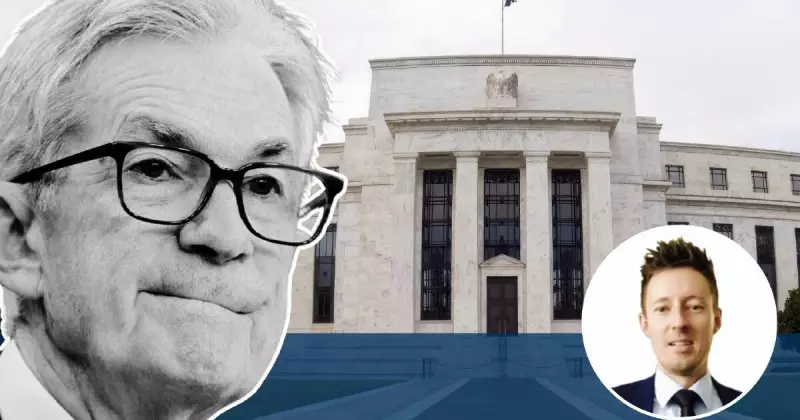
Trump's Dangerous Confrontation With the Ultimate Financial Power
Former US President Donald Trump has embarked on what may be his most perilous political battle yet – a direct confrontation with the formidable US Federal Reserve. This institution, far more powerful than any political opponent he has previously faced, holds the keys to global financial stability through its influence over the bond market.
The Bond Market's Unmatched Authority
As political strategist James Carville once famously observed, the bond market possesses an intimidating power that surpasses even that of presidents and popes. This financial force has demonstrated its might repeatedly throughout history, compelling governments to implement drastic policy changes, collapsing entire economies like Argentina's, plunging regions into crisis as seen in the eurozone, and abruptly ending political careers – most notably that of former UK Prime Minister Liz Truss.
Trump's pattern of challenging institutions is well-documented. While his predecessors occasionally circumvented Congress or appointed sympathetic judges, none have so openly defied and mocked fundamental institutions including the Constitution, military establishment, judicial system, and law enforcement agencies. However, in targeting the Federal Reserve, Trump has fundamentally miscalculated the balance of power.

The Federal Reserve's Global Significance
The US Federal Reserve operates as America's central bank, analogous to Australia's Reserve Bank but with exponentially greater global influence. Through its primary mechanism of buying and selling bonds, the Fed maintains low, stable inflation – a function with profound implications for US government debt servicing costs, economic growth, employment levels, and the value of the US dollar. These elements collectively underpin America's superpower status in the international arena.
Trump's recent escalation involves the Department of Justice launching a criminal investigation against Fed Chair Jerome Powell. Ostensibly examining whether Powell misled Congress regarding Federal Reserve headquarters renovations, this move transparently serves as a pretext to remove an independent-minded central banker who refuses to implement Trump's preferred monetary policies.
Potential Consequences of Political Interference
Should Trump succeed in replacing Powell with a politically compliant chair, several dangerous scenarios could unfold. If the new leadership dramatically lowers interest rates as Trump desires – potentially by more than two-thirds – inflation would likely surge dramatically. While corrective rate increases could temporarily alleviate this pressure, the greater risk emerges if the Fed fails to adjust course appropriately.
The politicization of US monetary policy and erosion of Federal Reserve independence could trigger severe bond market reactions. Inflation might spiral uncontrollably, potentially sparking financial crises both domestically and internationally through sudden asset repricing. Market confidence in the Fed's ability to manage inflation expectations would deteriorate, leading to unpredictable fluctuations in both inflation rates and asset values.
Furthermore, the bond market could impose substantial premiums on US government borrowing – particularly problematic given America's $38 trillion debt burden – while simultaneously increasing volatility in the US dollar's value.
Long-Term Implications for Global Finance
In extreme circumstances, these developments could accelerate global efforts to identify alternative safe-haven currencies and assets. Although no clear replacement currently exists, sustained uncertainty surrounding US monetary policy might prompt markets to develop alternatives, potentially undermining the United States' superpower status in a manner reminiscent of Britain's post-World War II experience when global markets transitioned from the pound to the dollar.

While temporary measures such as Federal Reserve bond purchases or Treasury debt maturity adjustments could provide short-term relief, these approaches typically exacerbate inflationary pressures through undesirable trade-offs. The fundamental lesson remains clear: interfering with Federal Reserve independence produces overwhelmingly negative outcomes, with the bond market capable of inflicting even greater damage than anticipated.
As 2026 unfolds, Trump may discover that bullies inevitably encounter opponents they cannot overcome. The bond market represents precisely such an adversary – one whose retaliation could reshape global financial landscapes for generations to come.