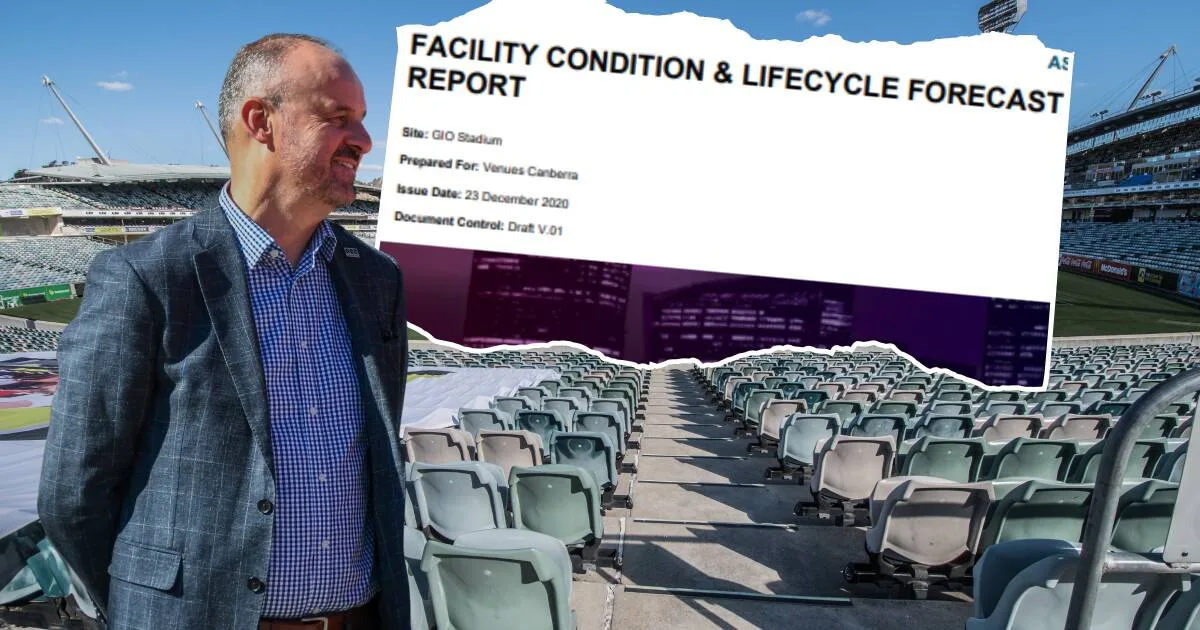
Canberra Stadium still contains high-risk asbestos that was scheduled for removal four years ago, while repairs to concrete cancer have fallen behind schedule, according to a leaked maintenance report. The revelations come despite recent ACT school lockdowns due to asbestos-tainted sand.
The stadium's 2021-2030 maintenance and repair plan, obtained by The Canberra Times, lists $9.2 million in upgrades. However, only $984,500 of work has been completed since 2021, though the government claims nearly $8 million in upgrades over the past five years. The report suggests overall costs may nearly double the original estimate.
Outstanding work includes asbestos removal in the west Mal Meninga stand, classified as high risk and medium priority, originally due for 2021. The report also notes overdue repairs for spalling—cracked concrete indicative of concrete cancer—on the north and south terraces, recommended for completion in 2022.

The documents reveal the stadium's expiry date is around 2027, contradicting Chief Minister Andrew Barr's July statement that it had at least another decade of use. Even a $73 million upgrade to modern standards would not extend its life expectancy, the report states.
An ACT government spokesperson said the plan is a planning tool, not a fixed funding allocation, and that high-priority works like asbestos management continue to be delivered. Independent MLA Thomas Emerson has repeatedly questioned Barr on the stadium, noting the discrepancy between the 2027 date and Barr's 2035 claim.