Just days after proclaiming a wish for "peace on Earth" for the new year, President Donald Trump has launched a stunning military operation in Venezuela, abducting the country's leader and raising fears of a new, lawless era in international relations.
A New Year's Resolution Shattered
On New Year's Eve at his Mar-a-Lago estate in Florida, President Trump stood with First Lady Melania Trump and told reporters his resolution was for global peace. Within 48 hours, US special forces stormed a fortified compound in Caracas, seizing Venezuelan President Nicolás Maduro and his wife, Cilia Flores, from their bed. Simultaneous missile and bomb strikes hit military targets across the nation.
Contrary to President Trump's claims of a casualty-free operation, Venezuelan civilians were among the dead. Rosa González, an 80-year-old woman, was killed when an apartment complex near Caracas airport was struck. For Australians now accustomed to waking to fresh international turmoil, this brazen act of kidnapping a foreign head of state and Trump's subsequent declaration that America was now "running Venezuela" has set a disturbing new benchmark.

From Bluster to Action: A Sinister Warning
President Trump hinted this was just the beginning. "This incredible thing last night ... We have to do it again. We can do it again, too. Nobody can stop us," he told Fox News. His past comments about wanting Greenland, making Canada a US state, or targeting Cuba, Colombia, and Panama can no longer be dismissed as harmless political bluster.
The planning for Operation Absolute Resolve appears to have been extensive, not impulsive. The international community watched aghast as Katie Miller, wife of Trump confidant Stephen Miller, tweeted a map of Greenland under a US flag captioned "Soon," drawing a sharp rebuke from Greenland's Prime Minister.
The official justifications for the Venezuela operation are wearing thin. Secretary of State Marco Rubio's claim of liberating Venezuela from an oppressive dictator is undermined by the fact Maduro's regime remains intact. His Vice President, Delcy Rodríguez, has been installed to run the country under a US-directed mandate, with a warning of a fate worse than Maduro's if she disobeys.
Defence Secretary Pete Hegseth's claim that fentanyl trafficking motivated the raids is considered spurious, as the drug does not flow from Venezuela to the US. Meanwhile, President Trump pardoned former Honduran leader Juan Orlando Hernández, who was serving 45 years for cocaine trafficking, highlighting a stark double standard.
The Real Prize and Global Repercussions
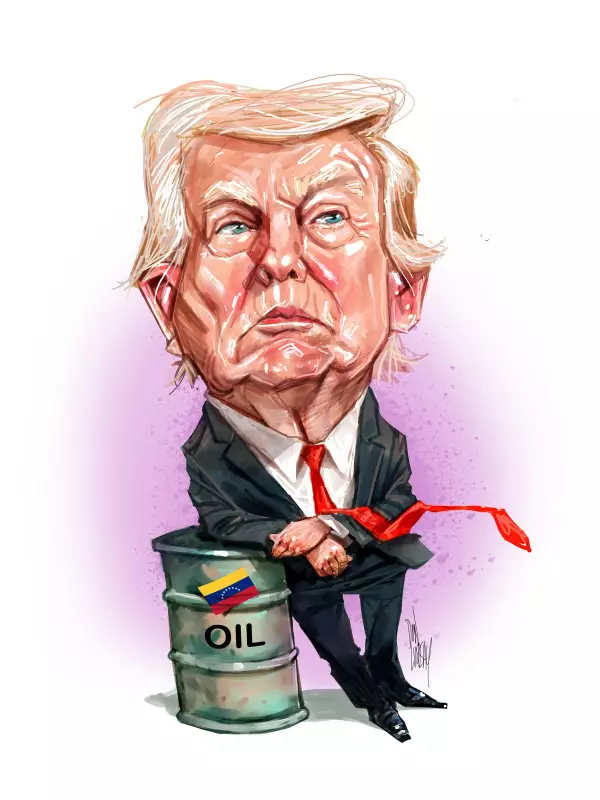
President Trump has been less coy about another motive, mentioning Venezuela's vast oil reserves—the world's largest—no fewer than 20 times in one media appearance. This fulfills a long-stated ambition he criticised George W. Bush for not achieving in Iraq: to "take the oil."
The dangerous precedent set by this gambit has experts deeply concerned. The international rule of law appears to have been discarded. The critical question now is whether this act of raw power in the US's "sphere of influence" will embolden other global powers. Could it encourage Russia's Vladimir Putin to push further into Europe, or China's Xi Jinping to move on Taiwan?
The world is left to unpack a destabilising event with far-reaching consequences. The Trump Administration's embrace of gunboat diplomacy has not only shattered any notion of peace in 2026 but has potentially redrawn the rules of global engagement, moving us closer to a world carved up by competing superpowers where might makes right.