Australian Readers Question US Alliance Amid Government Foreign Policy Silence
Readers of The Canberra Times have expressed deep concern over the Albanese government's perceived timidity in foreign policy, with multiple letters questioning whether Australia can genuinely call the United States an ally if it remains too fearful to offer criticism. The debate spans international conflicts, domestic policy failures, and the broader direction of Australian politics.
Foreign Policy Timidity Draws Sharp Criticism
Several correspondents highlighted specific instances where they believe the government has failed to speak out. One reader pointed to Australia's refusal to join an international statement condemning Israel's demolition of a United Nations aid agency headquarters in East Jerusalem, while eleven other nations including the United Kingdom, Canada, and France signed the document.
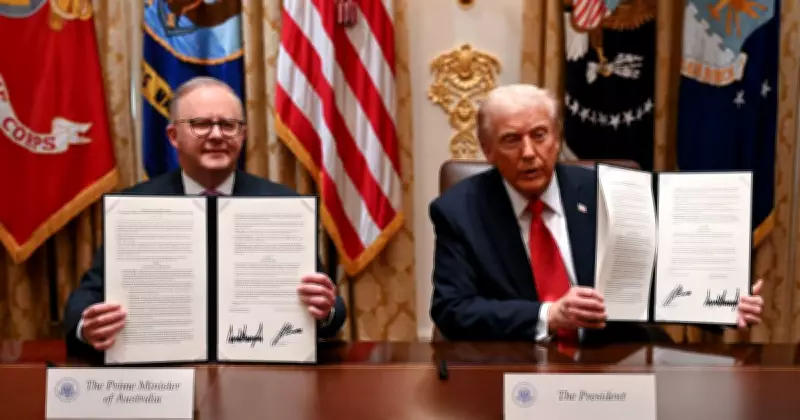
Further criticism was directed at the government's silence regarding former US President Donald Trump's actions, including his bullying of Greenland and Denmark, his incursion into Venezuela, and threats against Iran. "Is the US a real ally if we're too terrified to criticise them?" asked one correspondent, encapsulating a sentiment echoed by others.

The Gaza Conflict and Accusations of Bias
The ongoing conflict in Gaza featured prominently in the letters. One writer challenged the justification that Israeli destruction of civilian facilities is legitimate because Hamas used them for military purposes, asking if this logic applies to "all of Gaza." The correspondent noted a lack of empathy for innocent Palestinians and an absence of objectivity regarding the disproportionality of the response.
Another letter defended Israel, arguing it is a democracy with equal rights for all citizens and that the six million Palestinians cited by critics are not Israeli citizens. This writer attributed issues in the West Bank and Gaza to Palestinian governance failures, such as the Palestinian Authority not holding elections for two decades.
Domestic Disappointments: Gambling and Beyond
Beyond foreign affairs, readers expressed frustration with domestic policy. The government's inaction on gambling advertising reform was a particular point of contention, with one letter noting the "deafening silence" from Prime Minister Anthony Albanese despite advocacy from figures like the late Peta Murphy and Andrew Wilkie.
Other domestic criticisms included a perceived lack of progress on affordable housing and climate change, though some readers acknowledged the government's achievements in areas like Medicare funding, establishing a National Anti-Corruption Commission, and securing wage increases for aged care workers.
Political Landscape and Leadership Choices
The political context framed many letters. One supporter described Albanese as "our most conservative Labor prime minister," arguing he has captured the centre-right of politics. This writer viewed the Coalition as having fragmented, leaving Labor as the only viable option despite its imperfections.
Conversely, a critic labelled the administration a "Pinocchio government" excelling only in excessive travel and misleading the public, accusing it of alternating between good and bad policies.
Broader Concerns: From US Democracy to Climate Crisis
Letters also touched on wider global and existential issues. One expressed alarm about the state of American democracy, suggesting the Republican Party might seek to cancel midterm elections. Another presented an "existential crisis" framed by climate change, arguing that economic growth is unsustainable when extreme heat disrupts supply chains and makes outdoor activity unbearable, as seen in Broken Hill surpassing 50 degrees Celsius.
Local ACT issues were not forgotten, with complaints about the failed MyWay+ transport system, poor municipal services like road signage and footpaths, and even the inclusion of a Russian culture session in the Multicultural Festival amidst the war in Ukraine.
The collection of letters presents a snapshot of a readership engaged on multiple fronts, holding the government to account for its international stance while demanding greater action on pressing domestic and global challenges.