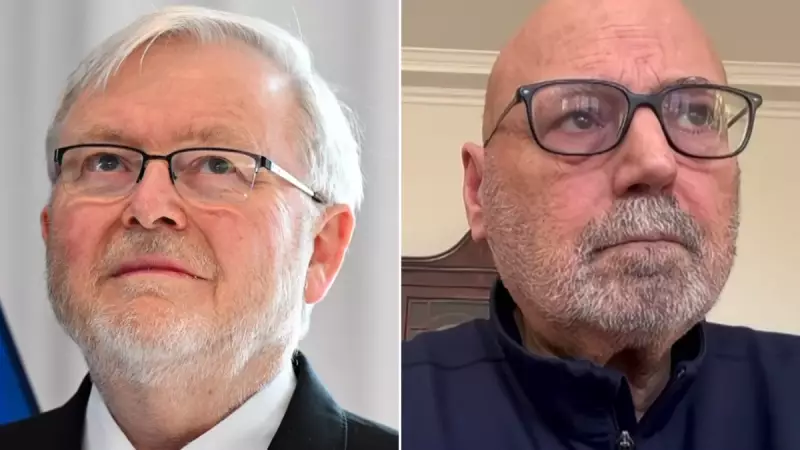
Political circles in Canberra and Washington are abuzz with speculation following Prime Minister Anthony Albanese's confirmation that Kevin Rudd will step down as Australia's Ambassador to the United States. The high-profile diplomatic posting will become vacant when Rudd formally concludes his tenure on March 31, 2026, with an announcement on his successor expected well before that date.
Frontrunners Emerge for Pivotal Washington Post
According to former ambassador to the US Arthur Sinodinos, discussions are already underway behind the scenes to identify a suitable replacement. Sinodinos, who served in Washington under both the Trump and Biden administrations, outlined the critical criteria for the role during an interview with Sunrise.
The government is reportedly weighing political experience, established personal relationships in Washington, and a proven ability to navigate the complex US political environment. Several prominent names are currently in the frame, including former defence minister Joel Fitzgibbon, former communications minister Stephen Conroy, and former foreign affairs minister Julie Bishop.

Sinodinos Weighs In on Leading Contenders
While many insiders tout Stephen Conroy as a frontrunner, Sinodinos suggested his past criticism of Donald Trump could be a liability. Conroy previously described the former president as "moronically stupid," a comment that may complicate relations if Trump returns to office.
Sinodinos' personal top pick is Joel Fitzgibbon, citing his "clean sheet" for not publicly criticising Trump or his administration. "Someone like Joel Fitzgibbon has got the personality, he's got the background as a defence minister," Sinodinos said. "He's already developed close links in his post-political life with the US."
The Demanding Reality of the Ambassador's Role
Sinodinos offered a candid assessment of the ambassador's job, describing it as an all-consuming and demanding position. The successful candidate must be prepared for relentless networking across the US administration, Congress, think tanks, and influential circles in Washington.
"As an ambassador, you're on show 24-7, you're networking, you're getting around talking to people, picking up intel, picking up even gossip, anything that might help you to fill in the mosaic of information," he explained. He also warned of intense media scrutiny and described the posting as a tough "grind," drawing from his own three-year experience navigating the challenges of COVID-19 and the AUKUS security pact.
Prime Minister Albanese has used the occasion to reaffirm the strength of the bilateral relationship, stating Australia and the US remain "the closest of friends and allies." The selection of Rudd's replacement will be closely watched as a signal of Australia's diplomatic priorities in one of its most crucial international partnerships.