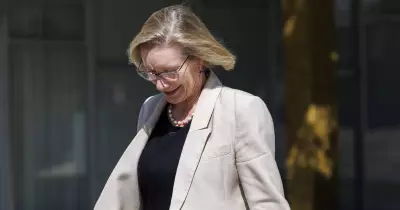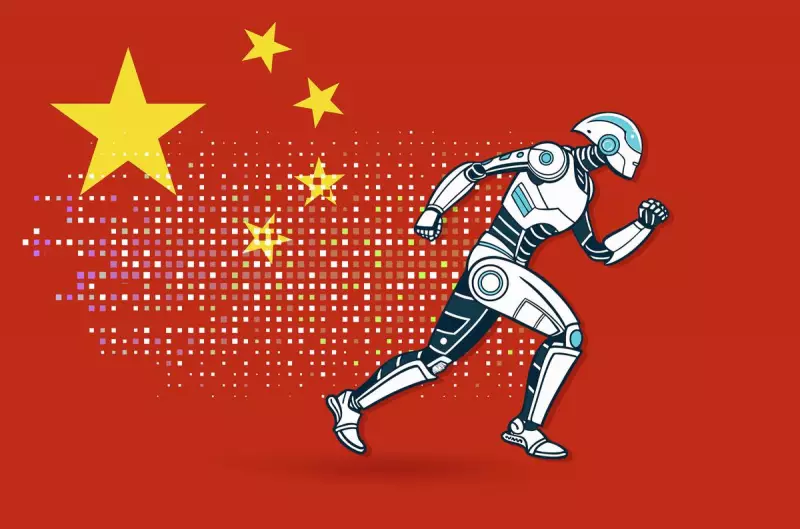
China's ambassador to Australia has expressed significant disappointment over Canberra's current reluctance to engage in collaborative artificial intelligence projects, describing the situation as a 'great pity' and warning of substantial missed opportunities.
Diplomatic Push for Technological Partnership
Ambassador Xiao Qian has publicly urged Australia to reconsider its stance, emphasising that 'to turn away from China is to turn away from opportunities'. The envoy's comments come during a period of heightened technological competition globally, with China advancing rapidly in AI despite international trade restrictions.
Proposed Expansion of Bilateral Cooperation
Mr Qian outlined several key areas where China stands ready to collaborate with Australia:

- Artificial intelligence research and development
- Quantum technology advancements
- Biomanufacturing innovation
- Green energy solutions and sustainable technology
The ambassador specifically proposed what he termed a 'strategic alignment' between the two nations, suggesting this could significantly boost productivity and technological advancement for both countries.
Background of Failed Negotiations
These diplomatic overtures follow Beijing's unsuccessful attempt in 2025 to expand the existing China-Australia Free Trade Agreement to include artificial intelligence and digital technology provisions. Chinese officials had promised such expansion would create substantial economic benefits through enhanced technological exchange.
Addressing Australian Reservations
Mr Qian acknowledged Australia's 'cautious attitude' toward scientific and technological cooperation with China but questioned why 'the door is completely closed'. He expressed particular concern about Australia potentially missing what he described as 'the train of AI' that has already begun moving rapidly.
'We should not miss the train of AI. It's started. It's started running fast,' the ambassador warned during his Wednesday address.
Flexible Approach Proposed
The Chinese diplomat indicated willingness to accommodate Australian concerns, stating China would be prepared to 'discuss and consider any reservations Australia had' and work at a pace comfortable to Australian authorities. He suggested collaboration could occur at various levels, including:
- Joint research ventures in artificial intelligence
- Commercialisation partnerships for AI products
- Gradual implementation of cooperative frameworks
Navigating Complex Diplomatic Relationships
Mr Qian acknowledged the delicate position Australia occupies between its alliance with the United States and potential cooperation with China. While recognising Australia's military and defence alignment with America, he emphasised the importance of engaging 'in all the possible areas, at all the possible levels' with China.
The ambassador noted that during his four-year tenure in Canberra, technology and defence have emerged as the two primary friction points between the nations.
Call for Enhanced Trade Agreement
Reflecting on the decade-old Free Trade Agreement between China and Australia, Mr Qian described it as 'mutually beneficial' but insisted significant untapped potential remains. He proposed developing what he termed a 'China-Australia FTA version two' that would better address contemporary technological and economic realities.
'We have not yet completely explored the full potential in our trade relationship,' the ambassador stated, adding that both sides agree on reviewing the agreement to identify additional benefits for bilateral trade.
The diplomatic outreach represents Beijing's continued efforts to strengthen technological and economic ties with Australia despite ongoing geopolitical tensions and differing approaches to international partnerships in critical emerging technologies.