The dramatic capture and extradition of Venezuelan leader Nicolás Maduro to the United States has ignited a fierce debate in Australia about the nation's foreign policy alignment and its consequences for the Latin American nation.
Maduro's Arrest and "Perp Walk" in New York
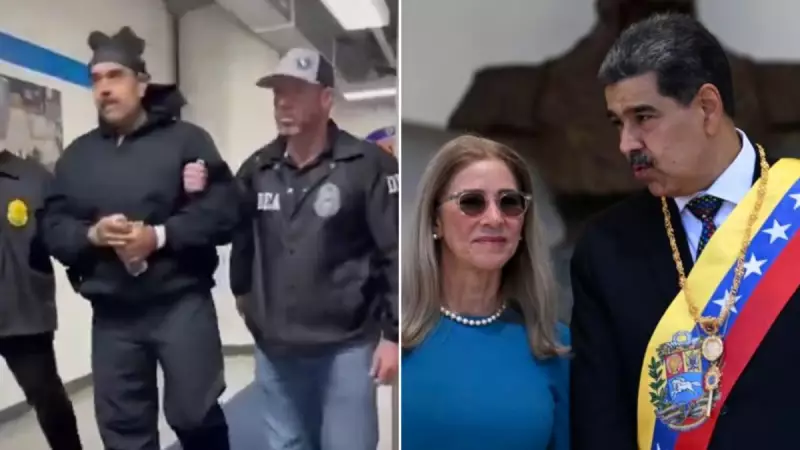
The White House's rapid response team publicly shared video of what it labelled a "perp walk" by the ousted Venezuelan president. The footage shows Nicolás Maduro, handcuffed and wearing a black hooded sweatshirt, being escorted by Drug Enforcement Administration (DEA) agents down a hallway in Manhattan.
After arriving on American soil, Maduro was processed and fingerprinted at the DEA office. In the video, he attempts to speak English, saying "Good night" and questioning his phrasing in Spanish. He also wished those present a "Happy New Year" in a more animated tone.

This follows a military operation by US President Donald Trump against Venezuela's capital, Caracas, on Saturday, Australian time. Trump unveiled plans to tap Venezuela's substantial oil reserves, with the proceeds intended to fund the American operation.
Australia Urged to Forge Independent Path
The US action has prompted experts to question Australia's historical alignment with American foreign policy in the region. Dr Raul Sanchez Urribarri, a Latin American politics expert at La Trobe University, stated that Australia can no longer afford to be a "completely aloof player."
"Australia’s default position on Venezuela sided with the US in terms of supporting different efforts to democratise the country," Dr Sanchez Urribarri told AAP. He argued that blind alignment is no longer sufficient and urged the Labor government to develop a strategic position reflecting Australia's own interests and values.
He suggested Australia could offer expertise, such as on electoral systems, to assist in any future democratic transition in Venezuela.
Domestic Reaction and Diaspora Concerns
Prime Minister Anthony Albanese has called for diplomacy to prevent escalation, stating Australia supports "a peaceful, democratic transition in Venezuela that reflects the will of the Venezuelan people." Analysts note this statement creates more distance from the US stance than allies like the UK or France, who directly condemned Maduro.
The Greens and an anti-war faction within the Labor party have urged Australia to separate itself from the Trump administration, labelling the moves "brazen military aggression." Protests against the US action are planned for Sunday evening in Melbourne, Sydney, Brisbane, Canberra, and Perth.
For the Venezuelan community in Australia, estimated at around 10,000 people, the situation evokes complex emotions. The Venezuelan Association of Australia expressed a shared hope for "a free, democratic, and united Venezuela" while acknowledging the pain of exile and separation from family.
The federal government's Smartraveller site has warned Australians not to travel to Venezuela. This follows the Venezuelan government's decision in October to close its Australian embassy, citing a "strategic re-assignation of resources."
Uncertain Future for Venezuela
While President Trump stated the US would "run the country" to facilitate a transition, Maduro's government appears to remain in charge in Caracas. Venezuela's Supreme Court has endorsed Vice President Delcy Rodriguez as interim president.
The US accuses Maduro of running a narco-state and rigging the 2024 election, charges he denies. He now faces trial in the United States.