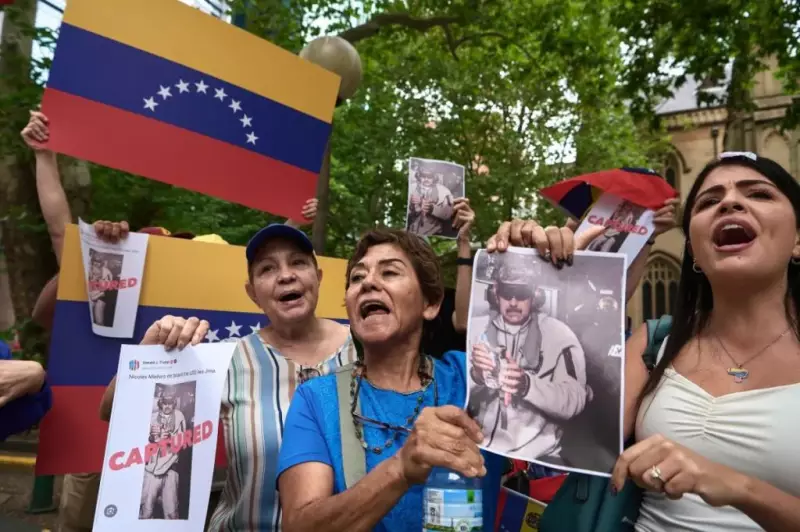
The political landscape of Venezuela has been thrust onto the streets of Australia, following the dramatic arrest of the nation's long-standing leader, Nicolas Maduro, by United States authorities. The event, confirmed on January 5, 2026, has ignited a firestorm of conflicting reactions across major Australian cities, revealing a deep divide in public opinion.
Streets of Australia: A Stage for Global Conflict
In the wake of the news, demonstrators have taken to public squares in Sydney, Melbourne, and other urban centres. One faction of protesters is vociferously condemning what they label as a US "takeover" of Venezuelan sovereignty, viewing the arrest as a brazen act of foreign intervention. Their chants and placards paint the action as an overreach of American power, undermining the principle of national self-determination.
However, a counter-narrative of jubilation is equally audible. Australian supporters of Venezuela's political opposition have welcomed the sudden downfall of President Maduro, whom they regard as an authoritarian figure. For these groups, the arrest represents a long-awaited moment of accountability and a potential turning point towards democracy for the South American nation. The contrasting scenes create a vivid snapshot of how distant geopolitical events resonate locally.

The Facts of the Fall
The central facts remain clear and undisputed. The United States government is responsible for the detention of Nicolas Maduro, the President of Venezuela. The event was reported on January 5, 2026, with no immediate updates altering that timeline. The reaction within Australia has been immediate and polarised, splitting largely along lines of perspective on US foreign policy and interpretations of Maduro's controversial tenure.
Implications and Unanswered Questions
This event sets a significant precedent in international relations, raising urgent questions about extra-territorial legal actions and the future of Venezuela's governance. The passionate response in Australia, a nation geographically distant from the crisis, underscores how interconnected modern political discourse has become. It also highlights the active diaspora and politically engaged communities within Australia who hold strong views on global leadership and human rights.
The coming days will likely see continued debate in Australian media and political circles. Key points of discussion will include the legality of the US action, the potential for instability in Venezuela, and what role, if any, Australia and other nations should play in the ensuing political process. The split reaction on Australian streets is a microcosm of the complex global debate now underway.