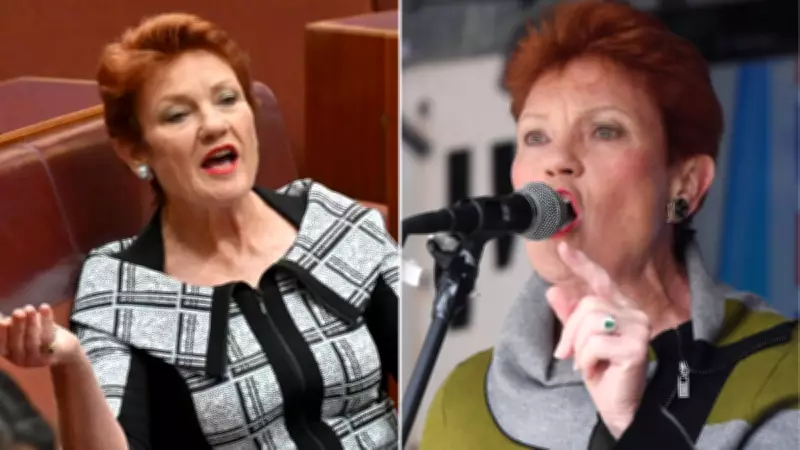
It might sound like a political fever dream: Pauline Hanson, the long-time leader of One Nation, elevated from the Senate to the nation’s top job. Yet recent polling has pushed that once-unthinkable scenario into the national conversation, raising questions about what is possible under Australia’s political system.
Polling Surge Sparks National Debate
Support for Hanson and her One Nation party has surged in recent months, with the latest polls placing her ahead of Opposition Leader Sussan Ley as preferred prime minister and lifting One Nation above the Coalition on primary vote. While Labor remains in front overall, these figures have ignited discussions over whether Hanson could realistically become prime minister.
Constitutional Eligibility: A Surprising Yes
The short answer is yes, Hanson is technically eligible. The longer answer reveals that the number of things that would need to align makes it extraordinarily unlikely. To understand how a Hanson prime ministership could be possible, one must look beyond usual political workings and examine the system’s rules.

Despite the role’s power, the Australian Constitution does not mention the prime minister at all. This surprises many, but as Australian Institute democracy and accountability program director Bill Browne explains, the role is shaped by convention and law rather than strict constitutional rules.
What the constitution does require is that ministers must be members of parliament within three months of appointment, a rule applying to senators as well as MPs. Australian National University school of politics and international relations’ Dr Pandanus Petter confirms this means Hanson, as a sitting senator, is technically eligible to serve as a government minister and, in theory, prime minister.
The Lower House Problem
Prime ministers are chosen in the House of Representatives, whereas Hanson sits in the Senate. In simple terms, the prime minister is the person who has the backing of most MPs in the lower house, allowing them to stay in power and pass the budget.
Browne notes that ordinarily, only the House of Representatives decides who is prime minister, with the most straightforward path being to lead a party or coalition holding 76 or more of its 150 seats. This presents a major obstacle for One Nation, which currently holds just one seat in the House, compared to Labor’s 94.
Numbers Don’t Add Up for Government Formation
For Hanson to become prime minister, One Nation would need to either win enough seats to form government outright or be central to a stable majority in a hung parliament. Recent polling from DemosAU suggests One Nation could become the largest opposition party if trends continue, but projections still show Labor retaining a comfortable majority.
DemosAU head of research George Hasanakos says the numbers reflect the current fragmentation on the right of Australian politics, rather than a collapse in Labor support. Being a strong opposition force is very different from having the numbers needed to actually form government.
A Hung Parliament: The More Realistic Path
The more plausible scenario for Hanson is a hung parliament, where no party wins 76 seats, triggering negotiations. In that situation, Browne says almost everything becomes negotiable, with Labor, Liberals, Nationals, Greens, One Nation, and independents potentially all involved.
If Hanson could convince 76 House members to support her bid, she could become prime minister. However, Petter points to the 2010 Gillard government as an example, where minor parties played a kingmaker role without leading. For Hanson to move beyond that, she would need to convince MPs she could lead a stable government, requiring an unprecedented shift.
Major Party Roadblocks and Historical Precedents
This scenario hits its biggest political roadblock with major party support. Petter is blunt: The chances of Labor doing so are basically nil. Backing from the Liberals and Nationals is also unlikely, as One Nation tends to take seats from them, making a deal improbable.

Browne adds that history is not on Hanson’s side; hung parliaments in Australia have typically led to choices between Labor and the Coalition, not minor party leaders. When government is in doubt, independents and minor parties negotiate to settle which major party has majority support.
Governing from the Senate: A Practical Hurdle
Even if Hanson cleared every political hurdle, another issue arises: she sits in the Senate. While no constitutional rule requires a prime minister to be a House member, leading from the Senate would be highly impractical. Petter explains that legislation generally originates in the House, and Question Time there holds prime ministers accountable.
Australia has had only one prime minister from the Senate—John Gorton in 1968—who quickly moved to the lower house. Hanson would likely face the same expectation, adding another layer of difficulty.
A Warning Sign, Not a Takeover
Both experts warn against confusing polling surges with systemic change. Petter notes voter frustration with major parties is long-running, but the electoral system still favours Labor and the Coalition for government formation. He sees fewer rusted on supporters but doubts One Nation can maintain its poll position until the next election.
Ultimately, the rules leave the door open for a Hanson prime ministership, but history, party politics, and parliamentary reality keep it as close to closed as possible. This debate serves as a constitutional curiosity and a sign of deeper political shifts, rather than an imminent takeover.