Clive Palmer Rejects Steve Bannon's Claims About $60m Anti-China Advertising Campaign
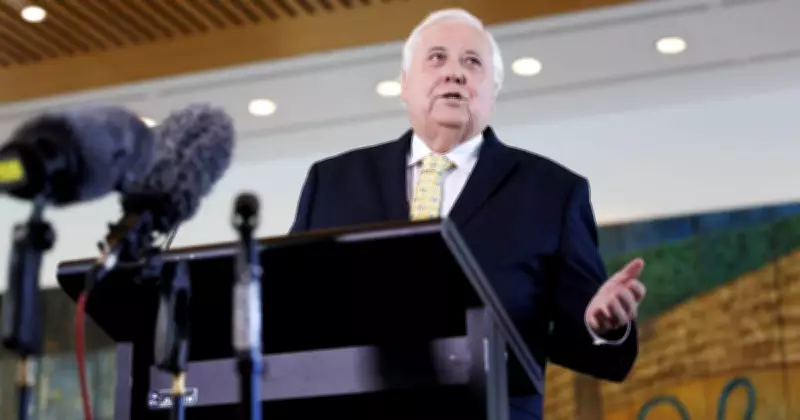
Billionaire Clive Palmer has publicly disputed allegations made by former Trump strategist Steve Bannon regarding a substantial anti-China advertising campaign during the 2019 federal election. The claims emerged in recently released Jeffrey Epstein files, prompting Mr Palmer to address what he called false statements during a media conference in Canberra.
Late Night Phone Call Details Revealed
Mr Palmer confirmed receiving a single unexpected phone call from Mr Bannon close to the May 18, 2019 election date, but strongly denied the strategist's assertion that he had orchestrated $60 million worth of anti-China and anti-climate change advertisements. The United Australia Party founder described the conversation as brief and occurring while he was asleep.
"I was deep in sleep, dreaming. I picked up the phone and this fellow said, 'It's Steve Bannon here'," Mr Palmer recounted to reporters. "He said, 'I'm just ringing to say you're running a great campaign against the Chinese. Keep it up.' I said, 'thanks, Steve'. And then I put the phone down."

Substantial Election Spending Confirmed
While rejecting Mr Bannon's specific claims, Mr Palmer acknowledged spending $83.6 million on advertising during the 2019 election campaign. This substantial investment supported United Australia Party promotions while critiquing Labor's climate policies and raising concerns about Chinese influence. The advertisements, according to Mr Palmer, were designed in collaboration with then minister and Liberal party powerbroker Mathias Cormann.
"No, he didn't," Mr Palmer stated definitively when asked about Mr Bannon's text message claim that he had arranged the $60 million advertising campaign. The text message was sent on May 20, 2019, just two days after Labor's unexpected election defeat.
High Court Challenge Against Donation Caps
The press conference also served to announce Mr Palmer's planned High Court challenge against the Albanese government's political donations legislation scheduled to commence in July. The billionaire argued that the new laws would unfairly advantage major political parties while restricting communication with Australian voters.
"It's about the right to be able to talk to each elector that's been really quarantined for sitting members of Parliament," Mr Palmer explained. He contended that the legislation conflicts with fundamental political free speech rights in Australia and creates an uneven electoral playing field.
Donation Caps and Electoral Impact
The proposed legislation would implement annual caps of $800,000 for individual lower-house MPs and $600,000 for ACT Senate candidates. These restrictions have raised concerns among independent political movements about their capacity to compete effectively against established major parties.
According to calculations presented by Mr Palmer, had these rules been applied during the 2025 election, Labor would have been permitted $54.6 million in donations while the Liberals could have received $41.7 million. The legislation is already facing separate High Court challenges from former crossbench politicians Zoe Daniel and Rex Patrick.
Recent Political Donation Records
Disclosure returns published by the Australian Electoral Commission reveal Mr Palmer's company Mineralogy as the largest single political donor during 2024-25, contributing $53.1 million to Trumpet of Patriots candidates. Additionally, Mr Palmer personally donated $302,901 to his United Australia Party, though none of his candidates secured election victory.
Despite this significant financial investment, Mr Palmer downplayed the impact of large political donations, noting his failure to elect any candidates in 2025. He suggested different preference arrangements from the Liberal Party might have altered this outcome.
Epstein Connection Denied
Addressing broader implications from the Epstein files release, Mr Palmer explicitly stated he had "never met Jeffrey Epstein", the disgraced American financier who died in prison in 2019. He characterized media coverage of the text exchange between Mr Bannon and Epstein as exaggerated and expressed uncertainty about how Mr Bannon obtained his mobile number.

The billionaire maintained that elections must remain fair and accessible, arguing that current legislative proposals would undermine these democratic principles while protecting established political interests.