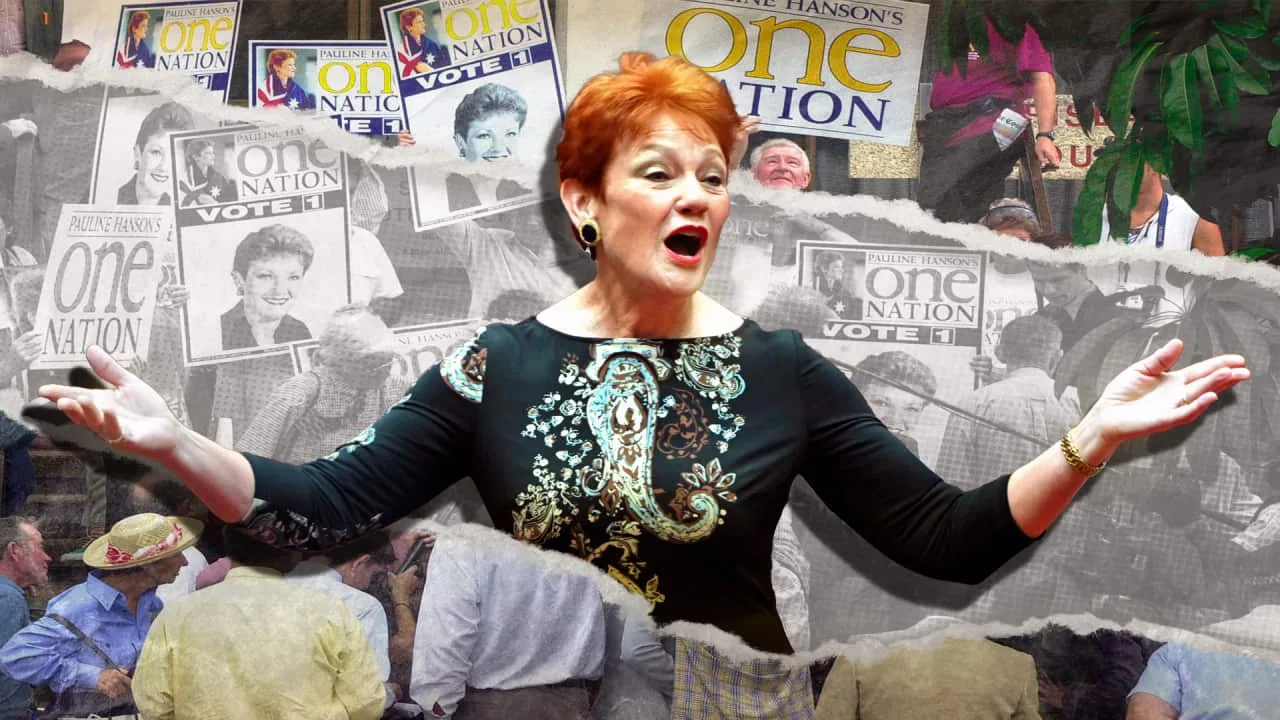
Political analyst Antony Green has identified the Hunter electorate as a critical seat to monitor as support for Pauline Hanson's One Nation party experiences a significant surge in early 2026. This development comes amid broader national polling shifts that could reshape the political landscape in upcoming elections.
Polling Data Reveals Sharp Increase in One Nation Support
Recent polling data indicates a substantial spike in popularity for the far-right political party through the beginning of 2026. According to the RedBridge poll published on Monday, twenty-six percent of Australians would place One Nation first on their ballot paper if an election were held today. This represents a notable nine-point increase in the party's primary support compared to previous measurements.
One Nation's growing popularity appears closely tied to Pauline Hanson's strong anti-immigration stance, which has resonated with certain voter segments across the country. However, Antony Green has provided a more measured perspective on the party's actual prospects in the next federal election, citing a slightly lower figure of twenty-two percent for One Nation's potential support.
Hunter Electorate Emerges as Potential Battleground
In his detailed analysis published on his blog, Mr Green highlighted twenty-five seats where One Nation has the strongest prospects of achieving electoral success. The Hunter seat features prominently among these identified constituencies, ranking twentieth in likelihood to shift to One Nation control.
The first cabs off the rank would be the seats where One Nation polled strongest in 2025, Mr Green explained in his assessment. There were only two seats where One Nation reached the final pairing of candidates after preferences - the Labor seat of Hunter in New South Wales, and Maranoa in Queensland held by National Party leader David Littleproud.
In both these constituencies, the One Nation candidate finished third on first preferences but managed to reach second place through preferences flowing from other right-of-centre parties. These included Family First, Trumpet of Patriots, Libertarians, Shooters Fishers and Farmers, and Gerard Rennick's People First.
Local Candidate Considers Another Electoral Run
Stuart Bonds, the One Nation candidate who contested the Hunter seat in the previous election, has not ruled out another state or federal campaign in light of recent polling trends. After last year's election, Mr Bonds initially expressed doubts about running again, stating at the time that without a strong conservative leader who lays out a proper plan for the future that is alternative to Labor, I don't know that I would bother to run again.
When questioned about the current polling situation, Mr Bonds indicated he might consider contesting a state election, noting I haven't run in a state election before. With the polling where it is, I may consider having a tilt at state. Regarding the federal Hunter seat, he added The federal Hunter seat is definitely on the cards the way the polling is. We did so well last time.
Despite One Nation receiving eighty-three percent of National party preferences in the previous election, Labor easily retained the Hunter seat. Incumbent Labor MP Dan Repacholi secured fifty-four point six percent of votes in three-party contest figures, compared to twenty-three point one percent for Stuart Bonds.
Regional Performance Varies Across Hunter Constituencies
Other seats in the Hunter region demonstrated more modest results for One Nation candidates during the last election. Barry Reed captured nine percent of the vote in Shortland, while Colin Hughes, Martin Stevenson, and Arnon Wither each achieved approximately eight percent in Lyne, Dobell, and Paterson respectively. In Newcastle, Philip Heyne attracted just over five percent of the vote.
These particular seats were not mentioned in Mr Green's analysis, as they would require not only swings from right-leaning voters to One Nation but also substantial shifts away from Labor, which currently holds all but Lyne among these constituencies.
Geographic Distribution of Vulnerable Seats
Of the twenty-five electorates highlighted by Antony Green, twelve are located in Queensland, six in New South Wales, three in Victoria, two in Western Australia, and one each in South Australia and Tasmania. The political distribution shows twelve seats currently held by the Nationals, seven by the Liberals, and six by Labor - including Dan Repacholi's Hunter seat.
Two-thirds of these vulnerable seats exist outside capital cities, with the remainder generally situated in outer metropolitan areas of capital cities. Among those deemed most at risk to the One Nation surge, the top six were all Liberal or National held seats in Queensland with three-party-preferred percentages lower than forty-five percent for the current members.
Coalition Faces Greater Threat Than Labor
Mr Green emphasized that One Nation's polling surge presents a more significant challenge for the fractured coalition than for the Labor party. Polls indicate One Nation has attracted some Labor voters, but the party's surge is largely at the expense of the Liberal and National parties, he explained.
One Nation's support is strongest outside the nation's capital cities, precisely where the Liberal and National parties remaining representation is concentrated after last year's defeat, Mr Green continued. One Nation is now polling strongly enough to eat further into Coalition representation, particularly National Party representation.
Potential for Further Electoral Gains
While Mr Green's analysis identified twenty-five vulnerable seats, he believes additional constituencies could become competitive if One Nation's support continues to grow. If come the next election One Nation polls twenty-five percent, it will be sweeping up seats all across rural and regional Australia, he projected. Most of those seats are held by the National and Liberal parties.
The analyst further noted that if One Nation is polling twenty-two percent in national polls, there are electorates across rural and regional areas where One Nation will be polling above thirty-five percent, that is leading on primary votes. He observed that this is occurring now, eight months into a term.
However, Mr Green cautioned that for One Nation to turn this into votes, they've got to keep this going for another two years, highlighting the challenge of maintaining momentum through an entire electoral cycle.