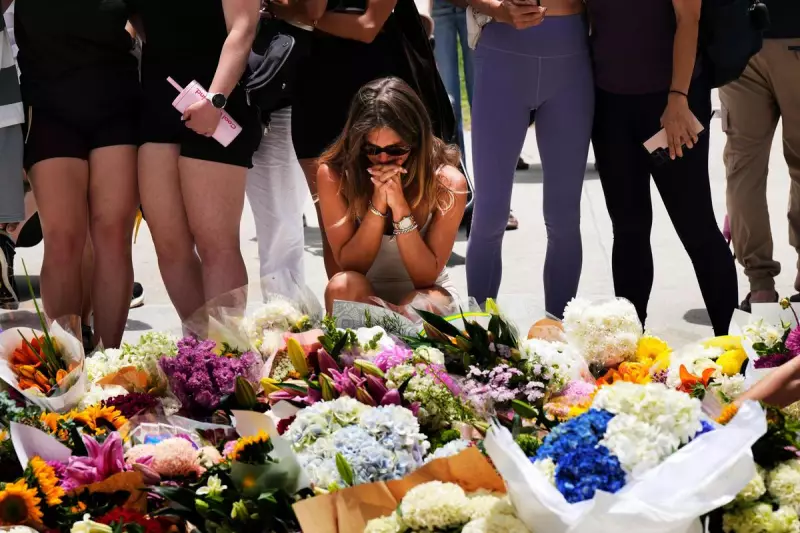
In the wake of Australia's darkest week in decades, a nation stands at a crossroads. The horrific shooting at Sydney's Bondi Beach on Sunday, December 15, 2025, which claimed 15 lives, has plunged the country into profound grief and ignited a fierce debate about our collective future.
A Nation Grieves and Gathers
As dawn broke on Friday, December 19, thousands of Australians converged on Bondi Beach in a powerful act of communal mourning and defiance. They gathered to reclaim a space scarred by terror, to honour the 15 souls lost, and to send a clear message to those who hate the Australian way of life. The sight of surfers paddling out into the Bondi waves at daybreak became a poignant symbol of a community choosing to move towards the light.
The grief has been particularly acute for Australia's Jewish community, numbering some 116,000 people. For many, the sorrow is mixed with anger, stemming from a belief that their repeated warnings about escalating anti-Semitism were not heeded by authorities. The attack has forced a painful national reckoning with the ideologies of hate that incubated this violence.

The Political Response and Calls for Accountability
Under significant public pressure, Prime Minister Anthony Albanese on Thursday, December 18, offered a rare concession. "Governments aren't perfect, I'm not perfect," he stated, accepting some responsibility for failures that may have contributed to the tragedy. This admission came after days of scrutiny, including public critiques from former Treasurer Josh Frydenberg and former Prime Minister John Howard.
However, the Federal Government is resisting mounting calls for a royal commission into the attack. Senior ministers, including Tony Burke and Jim Chalmers, argue that such an inquiry could delay the immediate response by burdening security agencies with administrative tasks. This position has been met with sharp criticism from those who argue that a transparent, thorough investigation is essential.
The proposed royal commission would need to examine the attack itself, assess whether security agencies missed opportunities to prevent it, and investigate how anti-Semitic beliefs gained a foothold in Australian society. Critics of the government's stance believe that avoiding a commission risks leaving critical questions unanswered and lessons unlearned.
Heroism and the Power of Individual Action
Amid the darkness, stories of extraordinary courage have emerged, reminding the nation of the strength found in goodness. Ahmed Al Ahmed has been rightly hailed a hero for disarming one of the attackers, an act of immense bravery that saved countless lives.
Tragically, others like Reuven Morrison, and Boris and Sofia Gurman made the ultimate sacrifice while trying to protect others. These acts of heroism are not mere distractions from the horror; they are a fundamental part of the national response, demonstrating that individuals hold immense power to confront evil.
While few will face such extreme tests, every Australian can contribute to shaping the country's path forward. It involves reflecting on the society we are and the one we aspire to be, and rejecting hatred in everyday interactions.
The editorial, taking responsibility under Editor-in-Chief Christopher Dore, concludes with a clarion call. In the shadow of the Bondi tragedy, Australia must consciously choose light over hate, solidarity over division, and transparent accountability over obfuscation. The way the nation answers this call will define its character for generations to come.