Joyce and Plibersek Clash Over Fuel Security as Middle East Crisis Escalates
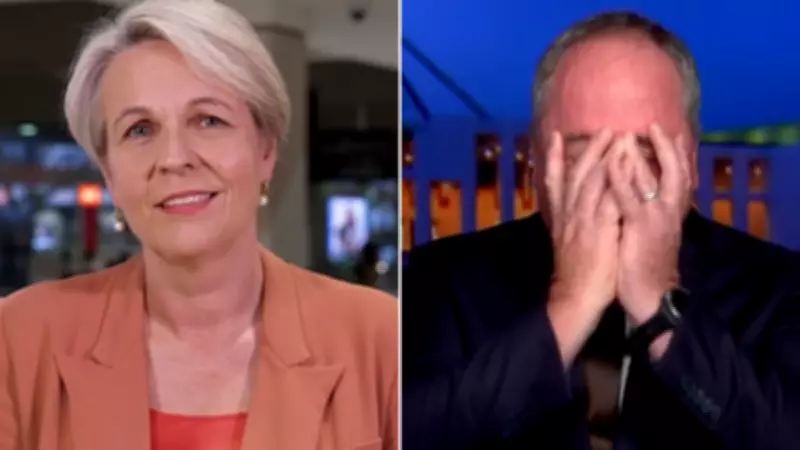
Federal politicians Tanya Plibersek and Barnaby Joyce have engaged in a fiery and contentious debate on the Sunrise morning television program, clashing sharply over Australia's fuel security and broader economic preparedness as tensions escalate dramatically in the Middle East. The heated exchange unfolded against a backdrop of severe global disruptions, including the closure of the critical Strait of Hormuz and the cancellation of thousands of flights worldwide following US-led strikes on Iran and subsequent retaliatory attacks across large parts of the region.
Australians Face Immediate Ripple Effects at the Fuel Pump
The escalating conflict is already sending shockwaves through the Australian economy, with citizens beginning to feel the direct impact through rising costs at the fuel pump. Joyce issued a stark warning during the broadcast, stating that the ongoing crisis could have severe and prolonged economic consequences if it continues to drag on without resolution. He cited specific predictions forecasting petrol price increases of up to an extra thirty cents per litre, a significant jump that would place additional strain on household budgets.
"Your cost of living is going to be smashed if this continues on," Joyce declared emphatically. He launched a pointed criticism of Australia's current reliance on imported fuel, arguing passionately that the nation has deliberately left itself economically vulnerable by systematically reducing domestic oil refining capacity over recent years.

"It's a shame in a crisis like this that we've got ourselves down to two oil refineries so that if there's a crisis in the production of fuel, we're in a bad spot," Joyce stated, questioning the country's broader economic resilience by pointing to existing debt levels and suggesting Australia may struggle to mount an effective response to a protracted international conflict.
Plibersek Defends Government Priorities and Long-Term Energy Security
In a forceful rebuttal, Tanya Plibersek pushed back against Joyce's assertions, insisting that the federal government's immediate priority remains ensuring the safe return of Australians from affected regions while simultaneously working to strengthen the nation's long-term energy security framework. She framed the current crisis as a compelling argument for pursuing greater energy independence.
"It is a very good argument for Australia to have energy security and energy independence," Plibersek argued, noting that the most effective way to secure that future is to "rely less on imported oil from overseas." Her comments highlighted a strategic shift toward reducing foreign fuel dependency as a core component of national security policy.
Exchange Escalates Over Clean Energy and Economic Planning
The political discussion escalated rapidly into a broader debate over energy policy, with Joyce launching a scathing critique of current clean energy initiatives, labelling them "childish" and "ridiculous." He argued forcefully that renewable energy sources could not possibly sustain the country during a genuine crisis scenario, directly linking the reduction in oil refineries to climate policy.
"We are down to two oil refineries because of this insane idea that we're going to cool the planet... I've got no confidence whatsoever that they've got a plan to get through this," Joyce exclaimed, expressing deep skepticism about the government's crisis management capabilities.
Plibersek fired back with a practical counterargument, pointing to the observable market shift toward electric vehicles as evidence of changing economic realities. "There's a reason the big supermarkets are shifting to electric vehicles. It's cheaper," she stated. "And when oil supplies are cut like this, Barnaby, it just shows how useful that is." The exchange grew increasingly heated, with Joyce appearing visibly frustrated, at one point screaming into his hands as both politicians spoke over each other in a dramatic television moment.

Expert Warnings of Broader Economic Consequences
The fiery political clash unfolded alongside mounting expert warnings that Australians could soon feel the impact far beyond service stations. Energy analysts, including prominent figure Saul Kavonic, have cautioned that petrol prices could surge by up to thirty cents per litre, potentially leading to Australia's worst oil shock since the 1970s if Middle East tensions deteriorate further.
The economic consequences may extend well beyond immediate fuel costs:
- Approximately twelve percent of Australia's Consumer Price Index basket is directly tied to fuel prices.
- More than half of the index is indirectly affected through transport costs, plastics, packaging, and synthetic materials.
- If the Strait of Hormuz remains disrupted, economists warn the pressure could flow quickly into grocery bills and airfares.
- The Reserve Bank's inflation outlook could be significantly impacted, bringing the global crisis sharply into Australian households.
This complex scenario underscores the profound interconnectedness of global energy markets and domestic economic stability, highlighting why fuel security has emerged as such a contentious and critical political issue during this international crisis.