Greens Supporter Voices Outrage Over Coalition Negotiations with Liberals
As a dedicated supporter of the ACT Greens for many years, I was profoundly disappointed to learn that the party is reportedly considering forming a coalition with the Canberra Liberals to remove the Labor government from power. Merely entertaining such an arrangement shows a deep disrespect towards the electorate who placed their trust in these political entities.
Countless voters would never have cast their ballot for either party if they had believed their support might ultimately facilitate a partnership with their sworn political adversary. This potential alliance also represents a significant insult to the volunteers and donors who backed both parties under the clear understanding that their core values and policy directions were fundamentally incompatible.
Greens' Justification Raises Eyebrows
The Greens' stated justification – that urgency stems from the Labor government's poor performance – is particularly astonishing. The ACT Greens actively participated in that very government until 2024. They cannot simply distance themselves from its failures or absolve themselves of responsibility for helping to shape and sustain an administration they now characterise as ineffective.

This entire episode appears less like a principled strategic move and more like naked ambition and a desire to seize power for its own sake. If this assessment proves accurate, it represents precisely the kind of political maneuvering that the Greens have long claimed to reject. It raises serious questions about the judgment of the party's MLAs and their advisers, and how such a proposal could advance without stronger internal checks and balances.
The Greens have consistently insisted that they "do politics differently," yet this situation suggests that principles and values might be readily discarded when power comes within reach. If everything becomes negotiable in the pursuit of office, voters have every right to question whether the Greens' proclaimed values are anything more than superficial branding.
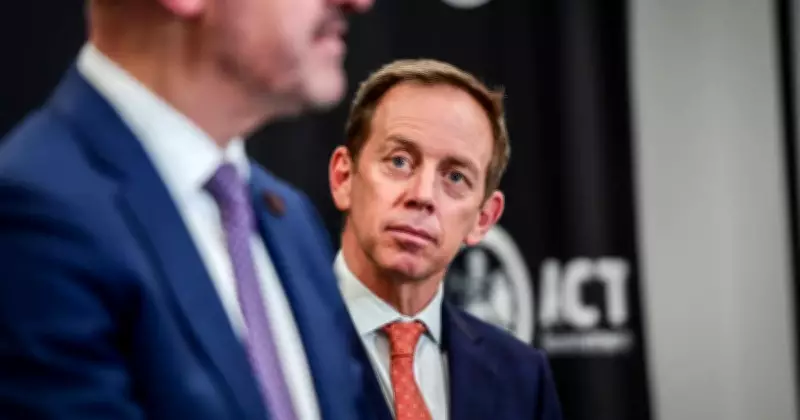
Sheridan Burnett, DicksonShane Rattenbury should not attempt to distance himself from the failures of a government he was part of.Broader Political Landscape Under Scrutiny
The discussion around coalition talks has ignited broader conversations about Australia's political climate. Some media outlets have been accused of exaggerating the rise of One Nation, portraying them as a viable political choice despite predictions that seem disconnected from electoral reality. Thanks to compulsory and preferential voting systems, their path to securing House of Representatives seats remains highly unlikely.
Meanwhile, the recent dissolution of the federal Coalition has prompted reflection on political partnerships. The decision to reform the Coalition so soon after a split has been criticised as a significant error, potentially giving the Nationals an inflated sense of importance. Without Liberal support, their future viability remains uncertain.
Climate Resilience Demands Urgent Attention
The recent extreme weather events across Australia serve as a stark reminder of our collective vulnerability. Our built environments, infrastructure networks, food systems, and indeed life itself appear increasingly fragile as communities face evacuation orders with growing frequency. Weather reports now seem to break more records than an Olympic Games.
With another heatwave following closely behind holiday floods, we must ask whether we are doing enough to address the tangible impacts of climate change. Are our governments and urban planners prioritising system resilience as our cities undergo rapid densification? Can our infrastructure – including housing, energy, communications, food, and water systems – withstand these intensifying weather events?
This goes beyond being merely desirable; it has become essential. The recurring cycles of evacuations, clean-ups, and rebuilding suggest we are not adequately prepared. Our state emergency services and volunteer response groups are being stretched to their limits by the frequency of these disasters. Governments and planners need to shift from reactive measures to proactive strategies, designing and building systems capable of withstanding increasingly severe weather patterns.

Community Concerns Over Government Projects
In local matters, frustration continues over ACT government initiatives like the proposed split 50-metre pool project. While some suggestions may seem humorous, they highlight genuine community concerns about consultation processes. The pattern of "pop-up" ideas receiving approval with minimal public input has eroded trust in decision-making.
Residents rightly maintain pressure on the government to reconsider projects like the Phillip pool and genuinely listen to community feedback before proceeding with significant developments.
Historical Perspective on Current Political Chaos
Looking at the federal political landscape, the current chaos in constituencies like Maranoa would likely astonish previous generations of conservative politicians. Historical figures who helped establish parties like the Country Party operated within very different political norms and expectations.
The recent unraveling of coalition agreements and leadership challenges raises questions about whether traditional political structures can withstand contemporary pressures and ambitions.
Democratic Institutions Face Unprecedented Challenges
Internationally, concerns grow about the resilience of democratic processes. Observations about potential disruptions to electoral systems in other democracies serve as cautionary tales about how quickly institutional safeguards can erode. These discussions remind us that democratic systems require constant vigilance and protection from those who might undermine them for political gain.
Criminal Justice System Deserves Balanced Scrutiny
Meanwhile, important institutions like prison systems warrant more balanced public discussion. While media often focuses on certain public services, other critical areas like correctional facilities receive less nuanced attention. Stories about rehabilitation programs, such as prison dog training initiatives, reveal complex human dimensions that deserve broader understanding.
Just as we seek "the complex truth" about our hospitals, we should apply similar rigorous, balanced examination to all institutions that shape our society.
These letters collectively paint a picture of a political and social landscape where principles are tested, institutions are strained, and citizens increasingly demand transparency, integrity, and resilience from their leaders and systems. The fundamental question remains whether political actors will uphold their stated values when confronted with opportunities for power, or whether expediency will ultimately prevail.