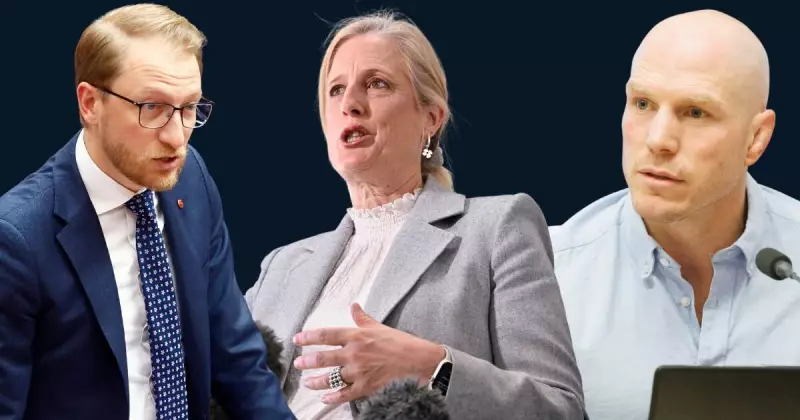
Finance Minister Katy Gallagher is refusing to comply with a Senate order demanding the release of letters her department sent to agency heads, instructing them to identify potential budget savings.
Cabinet confidentiality cited as reason for refusal
Senator Gallagher, who also serves as the Public Service Minister, has formally claimed public interest immunity from the order. The order required her to table the correspondence, along with related communications, by last Friday, November 29, 2025.
In a letter addressed to Senate President Sue Lines, Gallagher argued the documents relate to Cabinet deliberations in preparation for the next federal budget. She stated that preserving the confidentiality of these discussions is in the public interest to ensure the best possible decisions are made.

"Through every Budget process, the government seeks to ensure that government spending is efficient and represents value for money for Australian taxpayers," Gallagher wrote. She clarified that the government is not imposing a blanket 5 per cent cut, but has asked agencies to review their programs and identify lowest priority spending.
Crossbench and opposition unite to demand transparency
The order for the production of documents was initiated by ACT independent senator David Pocock and opposition finance and public service spokesperson James Paterson. It passed the Senate last week with the support of the Greens.
The order specifically demanded all correspondence between key government figures—including Gallagher, Treasurer Jim Chalmers, Prime Minister Anthony Albanese, and their departments—concerning the cost savings targets reported by the Australian Financial Review.
Senator Pocock has strongly criticised the government's refusal to comply. "The Albanese government appears determined to remain one of the most secretive on record," he said. He labelled the use of Cabinet confidentiality as "farcical," arguing the savings drive is already being openly discussed.
Pocock asserted that to validly claim the protection, Gallagher must demonstrate the documents would disclose the actual deliberations of Cabinet, which he says the government has failed to do. He warned that the public service faces "a potentially devastating cut" and vowed to discuss next steps with Senate colleagues to force compliance.
Implications for budget process and government accountability
This standoff highlights ongoing tensions between the executive government's desire for confidential budget preparation and the Senate's power to scrutinise government activity. Senator Gallagher's refusal, sent on behalf of herself, the Prime Minister, and the Treasurer, sets the stage for a potential constitutional clash over the limits of public interest immunity.
The dispute centres on the government's latest efficiency drive, which has sparked concerns about the scale of impending budget cuts. While the government frames it as a routine reprioritisation exercise, critics see it as a significant cost-cutting measure shrouded in unnecessary secrecy.
The outcome of this confrontation will be closely watched, as it tests the boundaries of parliamentary oversight and the transparency of the Albanese government's budget process.