Coalition Leaders Reunite Amid Lingering Tensions and Policy Challenges
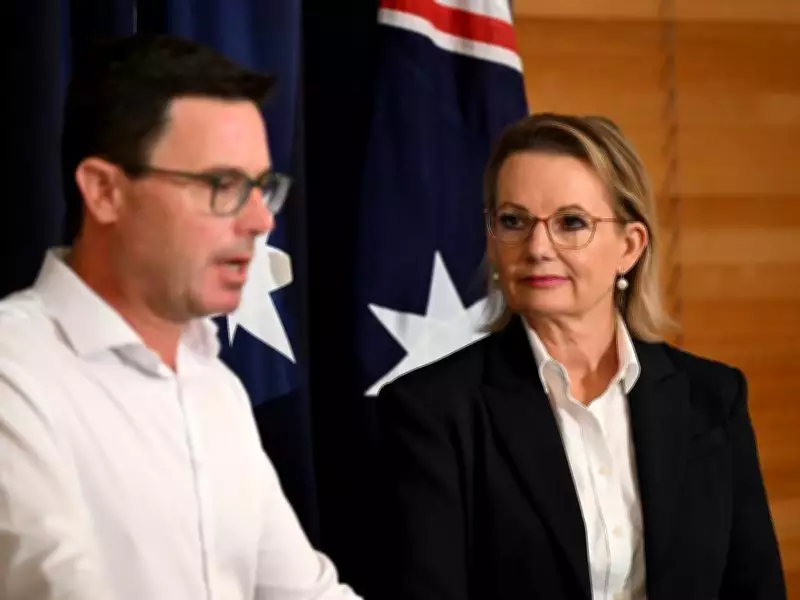
After seventeen days of public discord and internal party friction, Opposition Leader Sussan Ley and Nationals leader David Littleproud have formally reunited the Coalition. The political leaders presented a united front during a carefully orchestrated press conference at Parliament House in Canberra, where they announced a deal to restore senior Nationals to the front bench. This reconciliation follows intense pressure from party elders who have been advocating for the restoration of Australia's most enduring political partnership.
The Mechanics of Reconciliation
The agreement between the Liberal and National parties includes clearly defined rules and additional procedural requirements designed to prevent future conflicts. Frontbenchers who previously operated outside party discipline now face a six-week period of restricted influence, described by insiders as a form of political purgatory. Both leaders appeared in coordinated outfits during their joint appearance, symbolising their renewed commitment to political synchronisation despite recent tensions.
Sussan Ley declared with confidence, "The Coalition represents the most enduring and successful partnership in Australia's entire political history." Her counterpart, David Littleproud, echoed this sentiment, though observers noted subtle tensions beneath the surface camaraderie.

Internal Party Dissent and Electoral Mathematics
Despite the public display of unity, significant discontent persists within both parliamentary parties. Some Liberal members have privately questioned whether temporary separation might have served both parties better, allowing each to address their distinct electoral challenges independently. The Nationals face growing pressure from One Nation in traditional strongholds, while Liberals struggle with urban voter sentiment.
The mathematical reality remains stark: any pathway back to government must navigate Australia's urban centres, where Nationals' positions on contentious issues including Indigenous recognition, nuclear energy, and climate commitments have created substantial voter resistance. This fundamental tension between rural-focused Nationals and urban-oriented Liberals presents an ongoing challenge for the reunited partnership.
Historical Precedents and Structural Questions
Political analysts have noted alternative models that might have been considered. A twelve to eighteen month separation period, similar to arrangements previously implemented in Western Australia, could have allowed both parties space to resolve internal issues before reuniting for electoral purposes. However, such separation carries its own risks, potentially weakening both parties during a critical political period.
The current Coalition structure stands in contrast to arrangements in other jurisdictions:
- Queensland and Northern Territory feature merged Liberal-National entities
- Tasmania's political landscape effectively lacks National Party representation
- Only at the federal level do the parties maintain distinct identities while operating in coalition
Trust Deficit and Leadership Dynamics
Perhaps the most significant question surrounding the renewed partnership concerns mutual trust between the leaders. When pressed during their joint appearance, both politicians offered carefully worded assurances. Ms Ley stated unequivocally, "Yes, one hundred percent I trust David." Mr Littleproud responded in kind, though he notably shifted blame toward Prime Minister Anthony Albanese for recent disputes rather than accepting personal responsibility.
The Nationals leader acknowledged there had been "terse conversations" during the preceding fortnight, while both leaders avoided detailed discussion of underlying tensions. They jointly guaranteed no further fractures under their leadership, though political observers remain sceptical given recent history.

Broader Political Implications
This reconciliation represents another political victory for Sussan Ley in managing broader party dynamics. However, questions persist about her ability to maintain authority within her own party room, particularly if prominent figures like Angus Taylor mount leadership challenges. The partnership's durability will face immediate tests as both parties navigate policy compromises and electoral pressures.
Ultimately, the reunited Coalition faces the dual challenge of presenting a coherent alternative government while managing fundamentally different constituency priorities. Whether this partnership can withstand the pressures of an election campaign and govern effectively if successful remains Australia's most pressing political question.