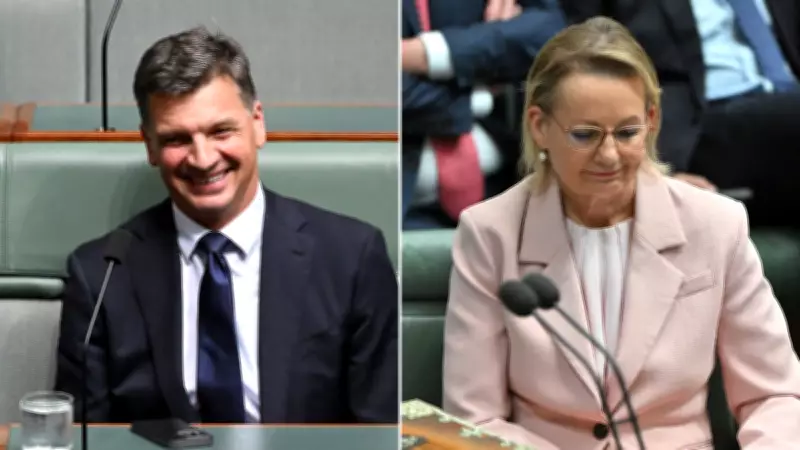
Liberal MP Angus Taylor has been elected as the new leader of the Liberal Party, taking over from Sussan Ley after a period of intense internal conflict and instability within the party ranks.
Leadership Vote and Resignations
Taylor secured the leadership position with a decisive vote of 34 to 17, marking a significant shift in the party's direction. This change comes in the wake of Taylor's resignation from the frontbench on Wednesday, where he informed Ley that he could "no longer support her leadership."
In a statement, Taylor highlighted the party's struggles under Ley's leadership, noting that the Liberal Party was at its weakest point since its formation in 1944. "This is a confronting reality, but one we cannot ignore," he asserted, underscoring the need for change.

The leadership transition follows Ley's earlier victory over Taylor after the party's crushing defeat in the 2025 election. However, support for Ley waned significantly, leading to a mass exodus from her frontbench. On Thursday, nine MPs and senators resigned, including prominent figures such as Michaelia Cash, Matt O'Sullivan, Jonno Duniam, Leah Blyth, James Paterson, Claire Chandler, James McGrath, and Dan Tehan.
Background of Angus Taylor
Angus Taylor grew up in southern New South Wales and pursued higher education at the University of Sydney, where he studied law and economics. His academic excellence earned him a Rhodes scholarship to Oxford University, where he focused on philosophy.
In 1994, Taylor began his professional career at the consulting firm McKinsey, working alongside his brother. He became a partner in 1999 and later ventured into entrepreneurship, starting several businesses in irrigation and agriculture with his family. One notable venture was Eastern Australia Agriculture, where he served as director.
Taylor entered federal politics by winning Liberal pre-selection for the NSW seat of Hume ahead of the 2013 election. He was elected with an 11 per cent margin as part of Tony Abbott's landslide victory, establishing himself as a key figure in the party.
Controversies and Political Challenges
Taylor's career has not been without controversy. In 2019, he faced criticism after revelations that the federal government spent $80 million on water rights from Eastern Australia Agriculture in 2017. Additionally, he was accused of using allegedly forged documents to criticise Sydney Lord Mayor Clover Moore over her council's travel costs, later issuing a public apology.
Following the Liberal Party's landslide defeat in the 2025 election, Taylor challenged for the leadership but narrowly lost to Sussan Ley by a vote of 29-25. He subsequently took on the role of shadow minister for defence, positioning himself for future leadership opportunities.
Support and Future Outlook
Prior to Taylor's appointment, Senator Jane Hume, who was removed from the shadow ministry after the 2025 election, expressed strong support for his leadership. She described him as a "terrific leader" and indicated her intention to run for deputy leader of the party.
"The most important thing now is that we let him have an opportunity to develop the policies that he knows he wants to deliver for the Australian people," Hume told Nat Barr on Sunrise. "He has an incredible background and amazing academic history. He's a good man, a great liberal and he deserves an opportunity to lead."
With Taylor at the helm, the Liberal Party aims to rebuild and refocus its policies, addressing the internal divisions that have plagued it in recent weeks. His diverse background in law, economics, and business is expected to play a crucial role in shaping the party's future direction and reconnecting with voters.