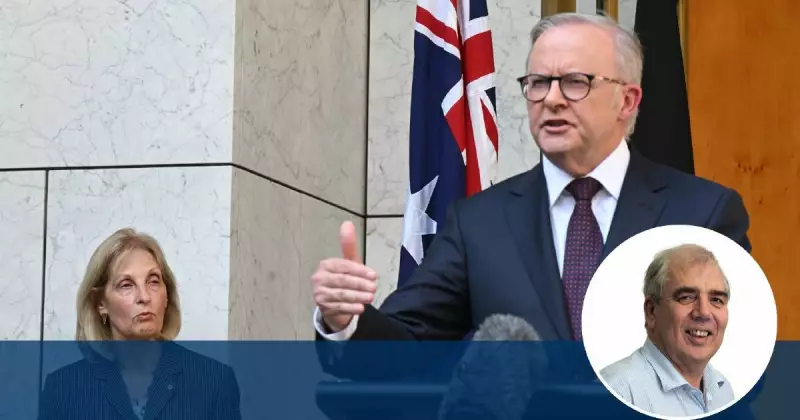
Prime Minister Anthony Albanese, an old-school politician known for holding long grudges, has suffered a significant blow to his authority. This follows his humiliating reversal on establishing a royal commission into anti-Semitism and the circumstances leading to the December Bondi massacre.
A Personal and Political Clash
The conflict following the horrific events at Bondi became deeply personal. Words exchanged will linger with active politicians long after public tempers cool. While the general public, including Jewish and Muslim Australians, seeks answers about how the tragedy occurred and how to prevent future violence, the issue is unlikely to drastically shift votes at the May 2027 election.
Albanese is not accused of being anti-Semitic in his allocation of public funds. However, analysts suggest he likely feels he owes little to certain Jewish lobby groups, believing political capital is better spent elsewhere. The Prime Minister, with a record majority and a disorganised opposition, has been acting with considerable latitude, at times appearing to ignore core Labor principles and public accountability.

He will not forget being bested by those lobbying for the commission. While the pressure forced his hand, it did not win their loyalty. The government had invested heavily in maintaining manageable relations between ethnic groups. A workable, if sometimes distant, relationship with both Jewish and Muslim Australian communities had persisted, strained more by overseas events than domestic issues. That fragile balance was shattered by the Hamas attacks of October 7, 2023, and Israel's subsequent war in Gaza.
The Commission's Daunting Task
The royal commission, to be led by former High Court justice Virginia Bell, faces immediate and complex challenges. A key task will be distinguishing between a surge in criticism of Israel's actions and a genuine rise in anti-Jewish sentiment. Bell, though not anti-Semitic, has faced criticism over her appointment due to her judicial history of balancing free speech with necessary restrictions.
Public confidence in Albanese's judgment has taken a major hit, particularly among his parliamentary colleagues. His initial, defiant refusal of an open inquiry looked increasingly vulnerable, culminating in a predictable but damaging backflip. The pressure for transparency was irresistible, especially after the intelligence failure preceding the massacre was met only with an internal review.
Much of the campaigning for an inquiry was orchestrated, with actors including past and present Liberals and News Ltd accused of having wider agendas, such as stoking fears about immigration and Muslim communities. Jewish Australian lobbies, feeling their warnings about rising anti-Semitism were ignored, went on the offensive. Their fierce criticism of the Prime Minister, which Albanese is unlikely to forgive, may have burned bridges for future influence with this government.
Navigating Definitions and Divisions
The inquiry's framework is already contentious. The government has adopted the International Holocaust Remembrance Alliance's working definition of anti-Semitism as a guide. This definition, while focusing on hatred of Jews, controversially states that manifestations might include "targeting the state of Israel, conceived as a Jewish collectivity." It also problematically asserts that anti-Zionism—denying the Jewish right to self-determination—is anti-Semitic.
Critics argue Australian institutions have a long history of viewing Israelis as "people like us" while treating Muslim Australians as potential security threats. This commission must serve all Australians, not just those invested in the Israeli-Palestinian conflict. Its mandate includes examining Islamophobia as the other side of the racist coin.
Meanwhile, former defence secretary Dennis Richardson will focus on the intelligence and police failings surrounding the Bondi attackers. His report will likely scrutinise the often-poisonous relationships and poor information sharing between ASIO, the AFP, and NSW Police.

The ultimate goal must be to establish reliable facts about the scale of anti-Semitism and Islamophobia in Australia, and to recommend clear, actionable solutions. It is not an inquest into the Gaza war, but that conflict provides essential context. For Prime Minister Albanese, defending his record with more vigour and seeking accountability from all sides, including those who inflamed tensions, is now a critical test of his leadership.