Aguia Resources is successfully revitalizing its Colombian gold operations, with enhanced grades, improved recoveries, and record-breaking monthly production now emerging from its flagship Santa Barbara mine, located in Colombia's most prolific gold belt. Following a three-month operational overhaul, the company has observed a steady climb in production performance, with February marking the project's best month on record as strategic metallurgical adjustments and operational modifications begin to yield positive results.
Operational Improvements Drive Production Surge
The latest monthly processing run yielded 470 grams of gold at an average grade of 4 grams per tonne (g/t), while recovery rates in recent cycles have consistently exceeded 85%, a notable increase from the 70% recoveries recorded just a few months prior. This progress stems from a focused management initiative to address operational bottlenecks in both the underground mine and processing plant, implemented after a restructuring of operations late last year.
Key advancements include refined mining practices and optimized metallurgical procedures. The operation has transitioned from using stockpiled material to selective mine feed, which has elevated head grades, minimized dilution, and enhanced the overall gold yield per tonne processed. Currently, Santa Barbara processes ore in carefully controlled batches of approximately 5 tonnes, with each batch smelted separately every five to seven days to maximize reconciliation and maintain precise control over recovery performance.

Plant Upgrades and Future Plans
Behind the scenes, Aguia has been progressively upgrading the plant. Equipment for a fully mechanized crushing circuit has arrived on-site and awaits final assembly, which is expected to eliminate a major throughput bottleneck once operational. Additionally, the company is preparing to deploy a Merrill-Crowe precipitation system, anticipated to boost gold recovery by up to 5% while reducing processing times.
According to Aguia Resources managing director and chief executive officer Timothy Hoskings, production at Santa Barbara is consistently improving with better grades, enhanced recoveries, and growing revenue. He expressed confidence that the process efficiencies implemented over the past three months will soon lead to positive cash flow, despite current revenue remaining modest.
Geological Significance and Mining Focus
Aguia's 320-hectare Santa Barbara narrow-vein gold project is situated in the Serranía de San Lucas district of Colombia, sharing striking similarities with major deposits like Segovia and Buriticá. All three are mesothermal deposits known for high-grade gold and silver, with Santa Barbara already mirroring the others in vein structure and gold-silver grade potential.
For instance, Continental Gold's Buriticá system contains 3.1 million ounces of gold and 11 million ounces of silver from just 14 veins in the Yaraguá zone, with veins as narrow as 3 centimeters thick and often spaced less than 50 meters apart. Aguia notes that Santa Barbara's footprint and density align with this scale, positioning it as a smaller counterpart to Buriticá.
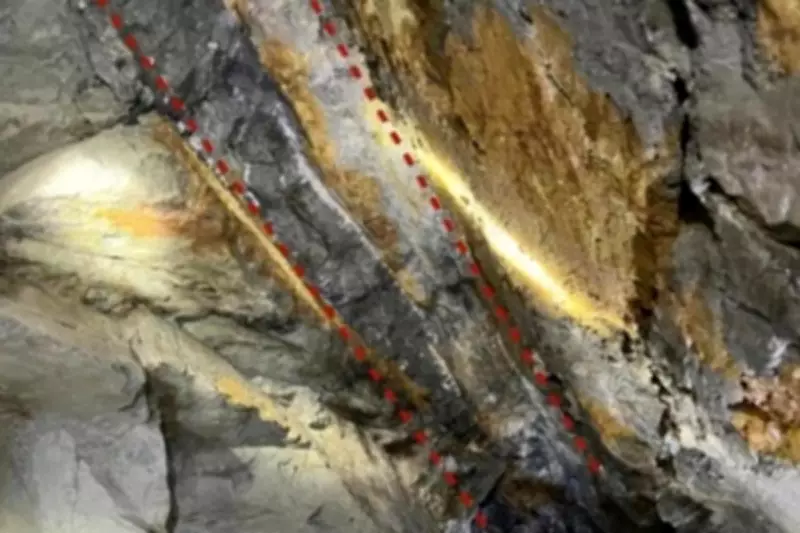
Mining efforts concentrate on structurally controlled gold shoots within a broader quartz and carbonate vein network, with underground stopes targeting these zones already returning grades exceeding 10g/t gold in some areas. The ore features extremely fine-grained gold, with testing indicating about 97% of particles are smaller than 75 microns, necessitating fine grinding and efficient cyanide leaching for metal extraction.
Expansion and Diversification Strategies
With plant performance improving and mechanization nearly complete, Aguia is now focused on increasing throughput and gradually building production. Management reports that minimal capital will be required to fully automate the production process, as all necessary equipment is already on-site. As operations stabilize, attention has shifted to optimizing underground mining methods and improving plant head grade ahead of a planned exploration restart.
If ongoing operational improvements continue to deliver, Santa Barbara could soon transition from a technical turnaround into a cash-flow generator, enabling the company to explore deeper into what management believes may be a larger gold system beneath current workings.

Beyond Colombia, Aguia is advancing its Três Estradas phosphate project in southern Brazil's Rio Grande do Sul, a region heavily reliant on imported fertilizer for large-scale agriculture. The company aims to produce roughly 300,000 tonnes of phosphate concentrate annually from an open-pit operation, targeting a local market eager for domestic supply.
With gold attracting investors as a safe-haven asset in uncertain times and phosphate underpinning global food production, Aguia is positioned in two commodities that rarely fall out of favor. If Santa Barbara continues to boost production while the Brazilian fertilizer project progresses, the company could benefit from markets driven by both wealth security and food security.