Albanese sidelined as Jewish community mourns: Political fallout from Bondi tragedy deepens
Albanese sidelined in Bondi mourning as political fallout grows

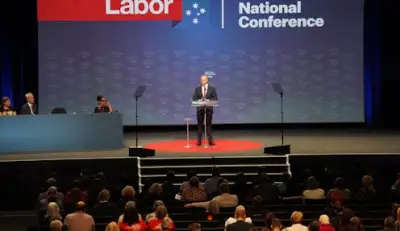
In a stark and deeply symbolic rebuke, Australia's Jewish community has effectively sidelined Prime Minister Anthony Albanese from the role of national chief mourner in the wake of the Bondi tragedy. The move underscores a profound rupture in trust as grief transforms into anger over the government's perceived failure to adequately address anti-Semitism.

A Prime Minister Unwelcome at Funerals

In ordinary circumstances, a national leader would be a central, consoling figure at the funerals of victims, particularly those of a rabbi and a 10-year-old child. However, Anthony Albanese knew his presence was not wanted, and that he risked a hostile reception. This stood in sharp contrast to the warm welcome extended to NSW Premier Chris Minns, who attended both services.

The Prime Minister instead focused on private engagements. He visited the home of a rabbi, meeting with direct relatives of those killed and parents of wounded children, where frank discussions took place. He also held lengthy phone conversations with other community members.

Government Scrambles for a Policy Response

The federal government struggled for days to formulate its public response to the massacre. Initially, Albanese emphasised tighter gun controls, convening national cabinet to begin work—though Minns moved faster, recalling the NSW Parliament to legislate.

This focus, however, only ignited further criticism, with many seeing it as avoiding the core issue: the failure to act more decisively against the anti-Semitism that has plagued Australia for the past two years.

Under pressure, the government broadened its approach. On Thursday, December 18, 2025, Albanese announced a package of measures to strengthen hate crime laws and existing visa denial powers. The government is also examining action against online hate and has established a taskforce, led by respected business figure David Gonski, to tackle the problem in the education sector.

Unlike NSW, there will be no pre-Christmas recall of Federal Parliament. Albanese cited the complexity of drafting the new laws, but the political reality is the government wished to deny the opposition a forum for attack.

Political Weaponisation and a Leadership Void

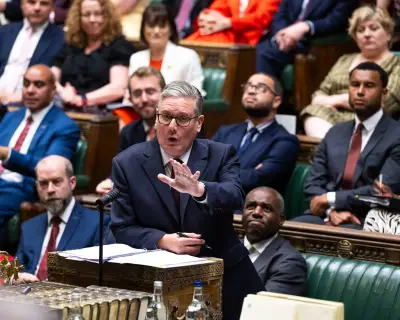
Opposition Leader Sussan Ley spent much of the week at Bondi and attended funerals, capitalising on the Coalition's stronger ties with the Jewish community. While this partisanship is controversial, the opposition has long argued for stronger action against anti-Semitism—a point the government has now been forced to concede.

In a rare admission, Albanese stated, "I, of course, acknowledge that more could have been done, and I accept my responsibility for the part in that as prime minister of Australia."

The most powerful Liberal voice, however, came from former treasurer Josh Frydenberg, who delivered a searing critique of Albanese at Bondi. His intervention led some within the Liberal Party to wonder if he might return to the team after the 2028 election.

The Coalition outlined its own response, attacking the government's past omissions and proposing more extensive measures than Albanese's package. The government rejected Frydenberg's call for a royal commission, arguing it would delay action—a stance critics labelled an excuse.

An Indelible Marker for a Complicated Nation

The Bondi atrocity has violently reshaped the political agenda, obliterating the previous week's focus on parliamentary travel allowances and reducing the budget update to a footnote.

Kos Samaras of RedBridge political consultancy noted the uncertain political fallout, warning that "politicians from every side will need to think very carefully about how they conduct themselves." He cautioned that weaponising the tragedy for partisan gain could trigger a public backlash similar to that seen during the pandemic.

Samaras added that Australians currently grant wide moral licence to the Jewish community to express its anger and fear, reflecting a deep well of public sympathy.

While some claim the massacre will change Australia forever, a more realistic assessment is that it acts as an indelible marker of modern multicultural Australia, where global tensions can instantly shatter local security and test societal harmony to its limits.