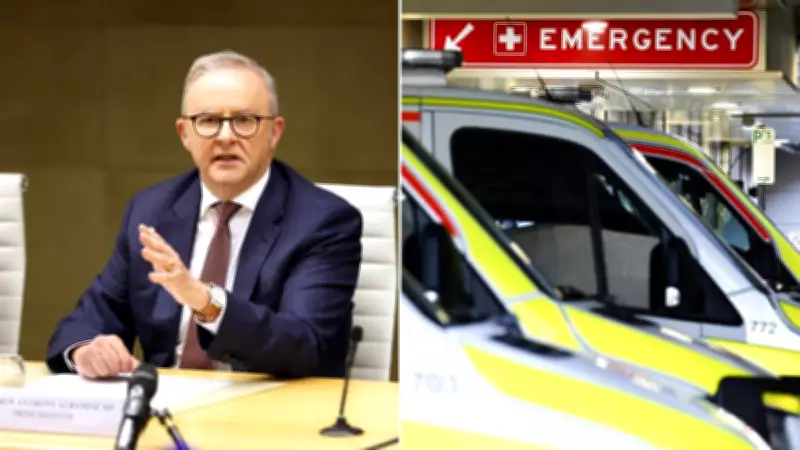
Prime Minister Anthony Albanese has successfully negotiated a major breakthrough in public hospital funding, securing a landmark agreement with state and territory leaders that ends months of tense negotiations and political stalemate.
Record Funding Injection for Healthcare System
Following Friday's crucial National Cabinet meeting in Sydney, states and territories will receive an additional $25 billion in Commonwealth hospital funding. This substantial injection brings the federal government's total hospital expenditure to more than $219 billion, representing a tripling of investment compared to the previous agreement framework.
The final settlement exceeds initial government proposals by $2 billion, demonstrating the significant concessions made during negotiations. This breakthrough follows the federal government's initial $23 billion offer being rejected in December, with multiple subsequent rounds of discussions failing to produce consensus.

Strategic Negotiations Yield Results
Premiers and chief ministers from across Australia gathered in Sydney for the pivotal talks, with Prime Minister Albanese reportedly hosting a diplomatic dinner the night before to facilitate smoother negotiations and build consensus among the diverse leadership group.
"We've reached a landmark agreement to deliver record funding to state and territory hospitals, but also secure the future of the National Disability Insurance Scheme," Albanese announced following the successful negotiations.
Medical Community Responds with Cautious Optimism
Medical groups have welcomed the funding boost while expressing concerns about ongoing systemic challenges. Australian Medical Association president Dr Danielle McMullen described the agreement as "welcome and long overdue" but cautioned that it may not be sufficient to reverse declining hospital performance metrics.
Dr McMullen emphasized that additional action remains necessary to address hospital backlogs, citing persistent issues with emergency surgery waiting times and ambulance ramping at facilities nationwide. She further warned that states and territories must increase their own funding contributions, noting that the agreement is unlikely to achieve the AMA's goal of increasing the Commonwealth share to 45 percent of hospital costs by 2030.
NDIS Sustainability Measures Incorporated
The comprehensive agreement includes significant measures addressing the National Disability Insurance Scheme's sustainability. The government has committed to limiting growth in the $50 billion NDIS to 6 percent or less annually, representing a substantial reduction from last year's 9.5 percent growth rate.
Additionally, premiers and territory ministers have agreed to delay the full implementation of the Thriving Kids program for children with autism, pushing its complete rollout from July to January 2028.
Additional Components and State Responses
The negotiated package includes $2 billion specifically allocated to accelerate hospital discharges for elderly patients awaiting aged care placements, addressing a critical bottleneck in the healthcare system.
New South Wales Premier Chris Minns highlighted how the additional funding would assist hospitals in managing demographic pressures, stating: "We've got an ageing cohort, so as much as the system is stretched today, we can expect even further problems in the future. But we're very grateful that we've got this agreement today."
Queensland Premier David Crisafulli expressed qualified support for the agreement, acknowledging that while he would have preferred additional funding, the settlement represents "a really big step forward" for healthcare delivery across the nation.
Disability Advocates Voice Concerns
While the agreement has been broadly welcomed by political leaders and medical professionals, it has sparked concerns among disability advocates who worry that the NDIS growth limitations and program delays may negatively impact service delivery and support for vulnerable Australians.
The successful negotiation marks a significant achievement for the Albanese government in addressing one of Australia's most pressing policy challenges, though implementation and ongoing funding adequacy will remain subjects of close scrutiny in the coming years.