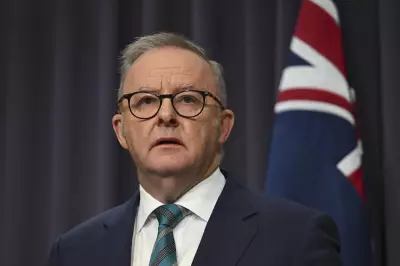
Prime Minister Anthony Albanese Declines to Rule Out Extra ACT Senate Seat
Prime Minister Anthony Albanese has declined to rule out the possibility of granting the Australian Capital Territory an additional Senate seat, a move that could significantly alter the political landscape in the nation's capital. This statement has ignited discussions among political analysts and stakeholders regarding representation and fairness in the federal parliamentary system.
Political Implications and Historical Context
The Australian Capital Territory currently holds two Senate seats, a number that has remained unchanged for decades despite population growth and evolving demographic trends. Albanese's refusal to dismiss the idea of an extra seat suggests a potential shift in government policy aimed at addressing concerns about underrepresentation. Historically, the allocation of Senate seats has been a contentious issue, with debates often centering on the balance between state and territory representation.
This development comes at a time when the federal government is under pressure to review electoral boundaries and ensure equitable political participation across all regions. The Prime Minister's comments have been interpreted by some as a signal that the Labor Party may be considering reforms to enhance the voice of territories in the Senate.

Reactions from Political Figures and Experts
Political figures from various parties have weighed in on Albanese's stance. Opposition members have expressed skepticism, arguing that any change to Senate seat allocations should be based on rigorous demographic data and not political expediency. In contrast, advocates for territory rights have welcomed the Prime Minister's openness, highlighting that the ACT's population has surged in recent years, warranting greater parliamentary representation.
Experts in constitutional law and electoral systems note that adding an extra Senate seat for the ACT would require legislative changes and could set a precedent for other territories. They emphasize that such a move would need to align with the principles of proportional representation and could impact the dynamics of Senate voting and committee structures.
Potential Outcomes and Future Steps
If the government proceeds with granting an extra Senate seat to the ACT, it could lead to:
- Increased political influence for the territory in federal decision-making processes.
- A reevaluation of Senate seat allocations for other regions, such as the Northern Territory.
- Enhanced scrutiny of population-based representation models in Australia's parliamentary system.
The Prime Minister has not provided a timeline for any potential decision, indicating that further consultations and analyses are necessary. This cautious approach reflects the complexity of altering Senate composition, which involves balancing historical precedents with contemporary needs for fair representation.
As the debate continues, stakeholders are calling for transparent discussions and evidence-based assessments to guide any future changes. The outcome could reshape the political landscape, not only for the ACT but for the entire nation, as it touches on fundamental questions of democracy and equity in governance.