Unprecedented Alliance Talks Challenge ACT's Political Landscape
Canberrans might reasonably anticipate that Labor will publicly characterise the recent discussions between the Canberra Liberals and the ACT Greens regarding potential government formation as a misguided pursuit of power. This interpretation serves as effective public relations for Labor and undoubtedly offers a comforting narrative for the longstanding party of government.
A Call for Deeper Self-Examination
However, all Canberrans should genuinely hope that, behind closed doors, Labor remains unsatisfied with this convenient, self-serving explanation. The party ought to be posing more challenging and introspective questions about this remarkable political development.
The Liberals and Greens represent distinctly unusual political partners, and such exploratory discussions remain entirely unprecedented within the Australian Capital Territory following a full quarter-century of continuous Labor governance. Nowhere else across Australia would such negotiations even be conceivable, let alone actively occurring.

The current government must therefore interrogate why this unprecedented scenario is unfolding precisely here and now. What aspects of the present ACT administration would concern leaders from diametrically opposed political parties so profoundly that they are willing to undertake the substantial personal and political risks associated with discussing a coalition government?
Beyond Ideological Differences
The answer does not appear to be fundamentally ideological, as a hypothetical Liberal-Greens government would likely arrive at policy positions not drastically dissimilar from those of Labor. Instead, the underlying motivation might be intimately connected to the efficiency and effectiveness of governmental administration. Several prominent examples are evident even to observers without insider knowledge of government operations.
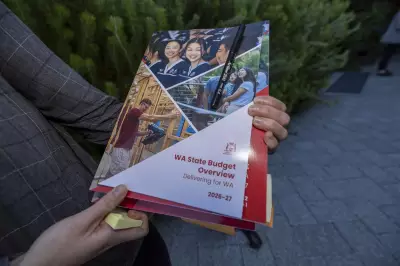
First among these is the alarming and unsustainable trajectory of government debt and deficit. The administration faces the imperative to control the deficit in the forthcoming budget. It essentially confronts two simplistic options, each of which profoundly unsettles one of the other major parties.
The government could opt to increase taxes across the board for all Canberrans, a prospect that the Liberals instinctively oppose. Alternatively, it could implement indiscriminate spending cuts and impose widespread efficiency measures, which would disproportionately impact society's most vulnerable citizens and fundamentally undermine the Greens' core social justice objectives.
The Harder Path of Prudent Governance
The third, more difficult option involves the government developing sufficiently intimate knowledge of its budget to identify specific areas of expenditure that can be eliminated without adversely affecting citizens. This approach requires strategic investment in prevention initiatives to generate longer-term savings, alongside increasing revenue from appropriate and equitable sources.
Executing this complex budgetary recalibration at the necessary scale has apparently proven too challenging for the government across several consecutive budgets. Members of the Legislative Assembly across the political spectrum likely harbour doubts about the government's capacity to succeed this year and instead dread the implementation of one of those simplistic, lazy budget options.
Structural Governance Challenges
Relatedly, a quarter-century in power inevitably distorts the proper, arms-length relationship between the elected government and the public service. This observation is not a commentary on individuals, as the structural pressures at play are virtually irresistible over such an extended period.
When it assumed office last year, this government initiated a significant Machinery of Government change precisely because it acknowledged room for improvement in administrative efficiency and effectiveness. The persistent problem, however, is that fifteen months later, this restructuring process remains ongoing without a clear completion date. During this prolonged transition, the public service has inevitably become more inward-looking, and significant government commitments have stalled.

In a city populated by federal public servants who routinely experience Machinery of Government changes, it is widely understood that this represents exceptionally poor performance with tangible, negative consequences for the broader community.
Greens' Pivotal Decision and Political Calculus
Recent reports indicate that the Greens as a collective are seriously contemplating the possibility of allowing this alliance to proceed. The entire political future of Canberra now rests with this relatively small political group, given the increasing improbability of achieving majority government in future elections.
Numerous factors demand their careful consideration, including alliance stability and associated political risks. They might also pose themselves a question similar to the one Labor should be asking: what specific circumstances have driven their own MLAs to entertain this radical proposition at this particular moment?
Greens MLAs possess a more nuanced understanding of why governmental change is urgently needed compared to the party rank and file, owing to their more intimate knowledge of internal government operations. Canberra's failure to meet its emissions reduction targets, coupled with the absence of a clear, actionable plan for recovery, represents one symptomatic issue that Greens members deeply care about. This concern is likely amplified if they perceive it as merely one manifestation among many systemic governance failures.
The Spectre of Political Impotence
Gough Whitlam's famous observation, "certainly, the impotent are pure," seems particularly relevant to this political juncture. If the Greens block not only this specific proposal but also the broader prospect of a Liberals-Greens alliance, they would effectively neuter their own negotiating power both immediately and following the next election. Such a move might also inadvertently push the Liberals further toward the political right. In a single strategic decision, the Greens could ensure seven years of ideological purity accompanied by political impotence—an outcome more effectively guaranteed by their own actions than anything Labor could orchestrate.
Questions for the Public Service
Finally, these extraordinary discussions should prompt the public service to engage in difficult self-reflection regarding the appropriateness of providing Chief Minister Andrew Barr with the Incoming Government Brief on election night. The provision of this critical information to one political party while withholding it from others could well have influenced the outcome of negotiations that continued for several subsequent days. If nothing else, the recent Liberal-Greens discussions vividly demonstrate that the unpredictable dynamics of politics can indeed force the most unlikely of alliances.