In a compelling analysis that challenges conventional wisdom, a prominent financial expert has argued that the true determinant of United States military action is not raw power or political will, but cold, hard cash. The assertion cuts to the core of how global superpower dynamics are fundamentally shaped by economic constraints.
The Financial Leash on Military Might
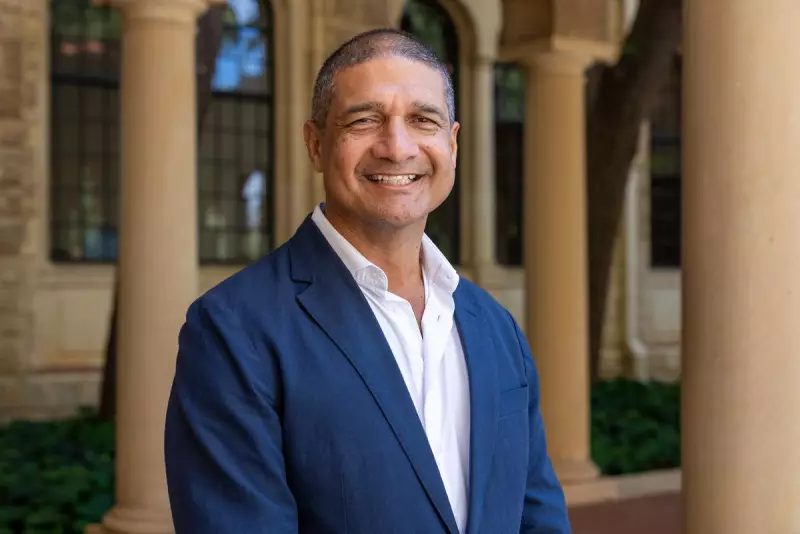
Raymond da Silva Rosa, an associate professor at the University of Sydney Business School, presents a stark reality often overshadowed by talk of aircraft carriers and high-tech weaponry. He contends that while the US possesses unparalleled military capability, its ability to project that force is tightly tethered to its budgetary approvals and fiscal health.
The US defence budget, despite being the world's largest, operates within a finite framework set by Congress. Da Silva Rosa points out that every major deployment, from sustained operations in the Middle East to naval patrols in the South China Sea, requires significant and ongoing financial appropriation. These funds must be debated, justified, and voted upon, creating a critical check on executive power.

This financial gatekeeping means that even the most hawkish administration cannot wage unlimited war or maintain a global presence without convincing legislators to open the purse strings. The professor's analysis suggests that political rhetoric about strength and resolve often masks a more mundane, yet powerful, driver: the balance sheet.
Congressional Power and Strategic Constraint
The role of the US Congress, particularly its "power of the purse," emerges as a central theme in this re-evaluation of military decision-making. Da Silva Rosa highlights that this constitutional mechanism forces a continuous dialogue between military objectives and domestic economic priorities.
Major initiatives, such as supporting Ukraine or conducting freedom of navigation operations, are not merely strategic choices but also line items in a massive federal budget. This creates a scenario where domestic policy concerns—like healthcare, infrastructure, or tax cuts—can directly influence the scope and scale of international military engagements.
The professor argues that this system, while sometimes cumbersome, acts as a vital democratic safeguard. It prevents military adventurism that is not broadly supported and ensures that the colossal cost of defence is regularly scrutinised against other national needs. The analysis reframes understanding of events like the withdrawal from Afghanistan or hesitancy in new conflicts, viewing them not solely as strategic retreats but as manifestations of budgetary pressure and shifting fiscal priorities.
Implications for Allies and Global Stability
This perspective carries profound implications for US allies, including Australia. If American military posture is as sensitive to domestic budget cycles as it is to international threats, it introduces a layer of uncertainty into alliance planning.
Nations that rely on US security guarantees must now factor in the political and economic climate of Washington DC. A change in congressional majority or a looming debt ceiling debate could theoretically alter US commitments as decisively as a change in the international order. For Australian defence planners, this underscores the importance of strategic self-reliance and diversified partnerships.
Da Silva Rosa's conclusion is clear: to comprehend US foreign and defence policy, one must study congressional appropriations bills and deficit projections with the same intensity as troop movements and diplomatic cables. The ultimate check on the world's most powerful military may not be a rival army, but its own accountants and the elected officials who hold the keys to the treasury.
This financial reality, he suggests, is a sobering counterpoint to narratives of unchecked imperial power, revealing the intricate and often overlooked links between economic policy at home and military power abroad.