Historic Defence Properties to be Sold in Major $2 Billion Estate Overhaul
The Australian federal government has announced a significant plan to sell off dozens of historically important military properties across the nation. This strategic move is designed to generate billions of dollars that will be reinvested directly into the country's defence capabilities. Defence Minister Richard Marles revealed on Wednesday that a total of 67 defence sites will be either fully or partially sold as part of this comprehensive estate review.
Key Heritage Sites Among Those Hitting the Market
Among the most notable properties earmarked for sale are the iconic Victoria Barracks located in Melbourne, Sydney, and Brisbane. These heritage-listed sites hold profound historical significance, with Sydney's Victoria Barracks established in the 1840s and Melbourne's barracks playing crucial roles in both World Wars with buildings dating back to 1850. The Sydney barracks alone represents one of the crown jewels in what is expected to be a $2 billion sale of defence force land.
The property audit identified these sites as both surplus to current defence requirements and expensive to maintain, leading to the decision to divest. Between 450 and 650 personnel currently based at these barracks will be systematically relocated to other defence facilities as the sales proceed.

Diverse Range of Properties Included in Sale
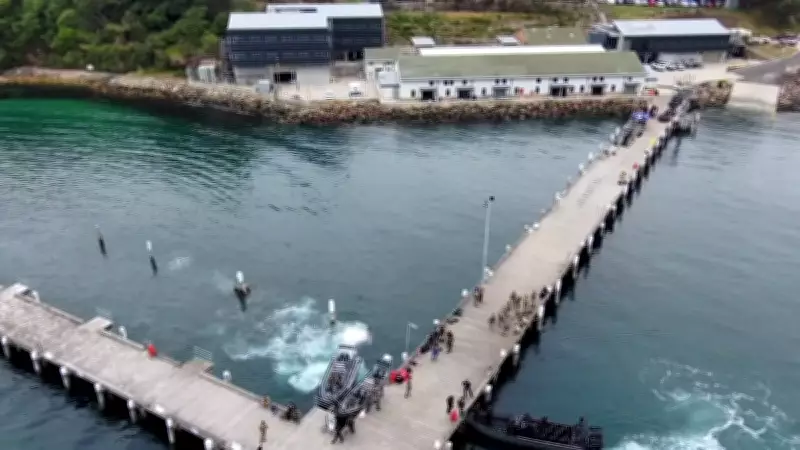
The sale portfolio extends beyond barracks to include various other military facilities. An unoccupied naval base on Sydney's Spectacle Island will go under the hammer, while Lancer Barracks in Parramatta and HMAS Penguin, a navy diving base visible from Balmoral Beach, will be partially sold. Additionally, three military-owned golf courses in Victoria and the Australian Capital Territory are included in the disposal plan.
David Borger from Business Western Sydney highlighted the potential community benefits, particularly for Lancer Barracks located adjacent to a university campus. "We've been working for a number of years on a proposal to allow community access," Borger explained, noting the strategic location next to one of New South Wales' busiest stations.
Financial Implications and Strategic Rationale
The sell-off is projected to generate approximately $1.8 billion for the federal government while saving taxpayers an additional $100 million annually in maintenance costs. All proceeds from these sales will be redirected exclusively to defence spending, creating a substantial reinvestment pool for military modernization and capability enhancement.
Defence Minister Marles emphasized that the review revealed Defence as one of the country's largest property owners with a significant estate that was substantially underutilized. "What became clear was that defence, as one of the largest owners of property in the country, had a very significant estate, much of which was not being used," Marles stated during the announcement.
Heritage Preservation and Implementation Timeline
A key aspect of the sale process will involve preserving the heritage value associated with these historically significant military sites. The government has committed to maintaining heritage protections while finding new uses for the properties, which could include public access, housing developments, or other community-oriented purposes.
The independent defence estate review originally recommended selling 68 properties, but the government has decided to retain one site and sell only portions of three others. One such partial retention involves a dive-training site at Pittwater on Sydney's northern beaches, which hosts what officials describe as a "critical capability" that cannot be easily relocated.
Condition of Properties and Sale Process
The review uncovered that some defence sites were currently vacant or unfit for use due to various issues including rusted and derelict buildings, black mould contamination, and chemical hazards. These findings reinforced the financial logic behind divesting from properties that were both costly to maintain and operationally unnecessary.

All sites designated for sale will be gradually transferred to the Finance Department over coming years, with that department assuming responsibility for finding appropriate buyers. Government officials anticipate that some properties may take several years to sell, with expected buyers including state and territory governments alongside private investors.
Expert Analysis and Political Responses
Raelene Lockhorst, deputy director of the Australian Strategic Policy Institute's National Security Program, praised the announcement as positive and practical. "It's aligning the estate footprint with the national defence strategy," she noted, emphasizing that the move delivers substantial annual savings for facilities that were underutilized or completely unused.
However, the plan has drawn mixed political reactions. Opposition assistant defence spokesman Phillip Thompson, an army veteran, expressed concerns that expanding military forces might require some of these estates for training and headquarters purposes. Meanwhile, Greens defence spokesperson David Shoebridge criticized the approach, arguing the sites could deliver "literally thousands of homes" while protecting heritage and providing public parklands if handled differently.
Minister Marles acknowledged that some military personnel might have emotional attachments to these historic sites but emphasized the strategic necessity of the sales. The government maintains that this rationalization of the defence estate represents a prudent financial decision that will strengthen Australia's military capabilities through substantial reinvestment.