A former senior United States intelligence officer has delivered a scathing assessment of Australia's intelligence community in the wake of the Bondi Beach terror attack, comparing the systemic failures to those that led to the September 11 attacks in America.
'Silos of Excellence' Blamed for Intelligence Breakdown
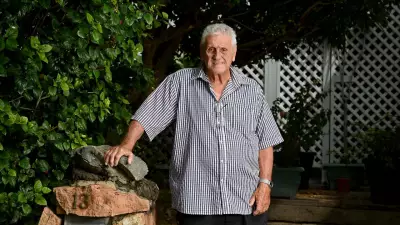
John Powers, who finished his decorated career in 2017 as the most senior American defence intelligence officer stationed in Australia, told 7NEWS that the deadly shooting exposed a critical weakness he observed during his tenure. He described Australian agencies as "silos of excellence" where crucial information was not shared effectively.
"What happened at Bondi is our 9/11," Powers stated, referencing how the 2001 hijackings exposed fatal flaws in how US agencies communicated. He went further, suggesting the situation in Australia was even worse. "I would suggest to you there was less sharing going on in the Australian intelligence community than there was in the U.S. Intelligence community before 9/11. And that was pretty bloody bad."

The Attack and a History of Warnings
The attack on Sunday saw father and son Sajid Akram, 50, and Naveed Akram, 24, open fire at a Hanukkah event at Bondi Beach, targeting the Jewish community. The massacre left 15 people dead and 40 others wounded. Sajid was killed in a police shootout, while Naveed was injured, later waking from a coma to face 59 charges, including 15 counts of murder.
Powers' criticism comes after ASIO confirmed that accused gunman Naveed Akram had come to their attention as a potential threat as far back as 2019. The extent to which these early concerns were investigated and, crucially, shared with other relevant agencies remains a central question in the ongoing investigation.
A Farewell Plea for Reform Goes Unheeded
Powers, who loved Australia so much he and his wife became citizens, recalled his final words to the intelligence community at his farewell from the US Embassy in Canberra. "My last words to them were, you gotta break these stove pipes. You gotta learn how to share better."
He revealed a startling paradox: intelligence sharing between Australia and its Five Eyes partner, the United States, was substantially better than the sharing between Australian agencies themselves. "We had a better appreciation of what were the gaps and the requirements within the Australian intelligence community than the Australian intelligence community did," Powers claimed.
Expressing deep discouragement, Powers fears Australia is only now confronting the pressure for major intelligence reform that the US faced nearly 25 years ago. "I'm very discouraged, but if things have not changed, which I don't believe they have dramatically, I'm not surprised," he concluded. In response to the attack, the federal government has already announced stronger hate speech laws, highlighting the ongoing political and social repercussions of the tragedy.