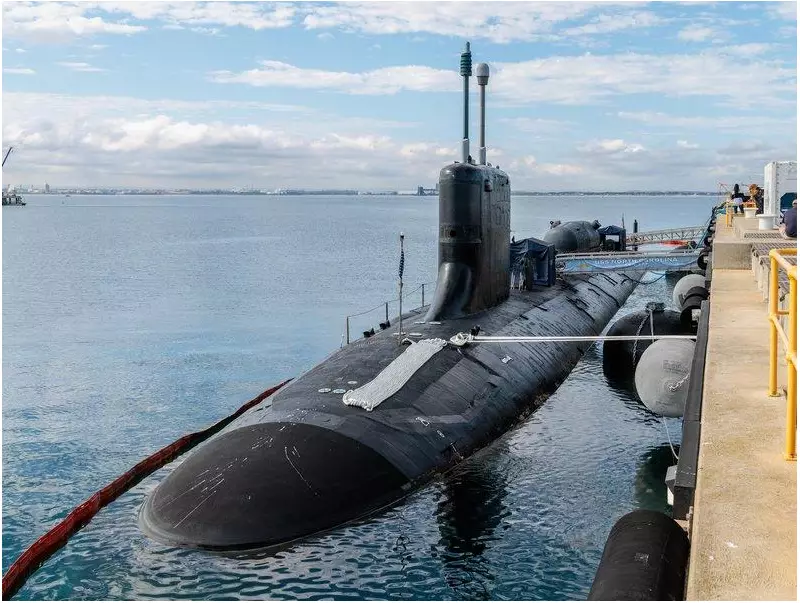
The Australian Defence Department has made a significant admission, confirming that United States submarines deploying to a naval base in Western Australia have the potential to be armed with nuclear weapons. This revelation has ignited a fresh debate about transparency and Australia's commitments under international nuclear treaties.
Parliamentary Inquiry Uncovers Key Details
The confirmation came in response to questions posed by Greens Senator David Shoebridge during a recent Senate estimates hearing. Senator Shoebridge directly asked Defence officials whether the US Virginia-class submarines, which have been making regular visits to HMAS Stirling near Perth, were capable of carrying nuclear weapons.
Defence official Andrew Fisher provided a clear answer, stating, "Yes, they can." He elaborated that while the US Navy's Los Angeles-class submarines are conventionally armed, the newer Virginia-class vessels are designed with the capability to be fitted with nuclear-tipped Tomahawk cruise missiles. This capability is inherent to their design, regardless of whether the weapons are physically present on board during port visits to Australia.

AUKUS and the Nuclear Question
This admission directly touches on the heart of the landmark AUKUS security pact between Australia, the United Kingdom, and the United States. A central pillar of the agreement is Australia's planned acquisition of nuclear-powered submarines. The government has consistently stressed that these boats will be nuclear-powered but not nuclear-armed, aligning with Australia's long-standing policy and its commitments under the Treaty on the Non-Proliferation of Nuclear Weapons (NPT).
However, Senator Shoebridge argues that the routine visits of US submarines with nuclear-weapon capability challenge the spirit of this position. "The government has been at pains to say we're not getting nuclear weapons, but at the same time they're rolling out the red carpet for US submarines that are literally designed for them," he stated. He contends that this practice creates a "grey zone" that risks undermining Australia's non-proliferation credentials.
Government's Stance and International Obligations
The Defence Department and the federal government maintain that there is no contradiction or breach of treaty obligations. Officials emphasise a critical distinction: the capability of a vessel versus the actual presence of nuclear weapons in Australian territory.
Defence has asserted that the US Navy adheres to a strict policy of neither confirming nor denying the presence of nuclear weapons on any specific vessel. More importantly, the department has stated it is "highly confident" that nuclear weapons have not been brought into Australian territory on these submarines. This position is based on diplomatic arrangements and assurances with the United States.
The government's line is that Australia is fully compliant with its NPT obligations, which prohibit the stationing of nuclear weapons on its soil. Hosting allied submarines that are capable of carrying such weapons, but are not believed to be carrying them while in port, is viewed as a separate matter entirely. This activity is framed as a normal aspect of military cooperation between close allies, enhancing regional deterrence and stability.
The debate highlights the complex realities of modern defence alliances in an era of strategic competition. While Australia pursues a cutting-edge nuclear-powered submarine capability through AUKUS, it continues to navigate the delicate balance between enhanced security partnerships and its foundational commitments to nuclear non-proliferation. The confirmation about US submarine capabilities ensures this balance will remain under close parliamentary and public scrutiny.