Australia's AUKUS Dream Faces Harsh Reality Check
The ambitious AUKUS agreement to replace Australia's Collins-class submarines with nuclear-powered vessels appears increasingly like a costly political nightmare. Recent reports from the United States Congressional Research Service have exposed significant challenges in the Virginia-class submarine program, casting doubt on Australia's ability to acquire these advanced vessels as planned.
Production Delays and Political Whims
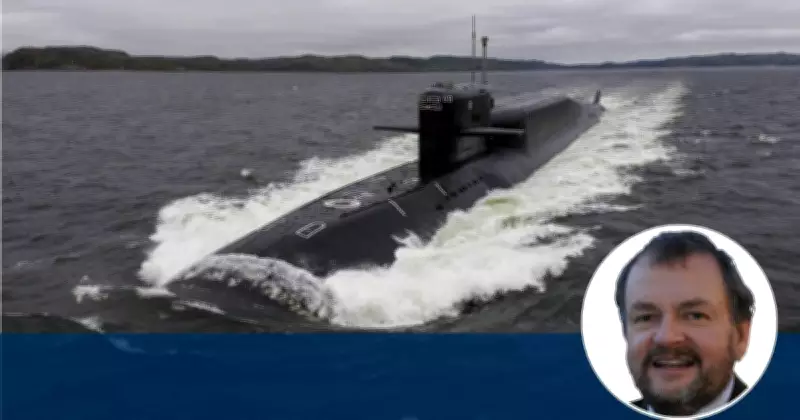
The Congressional Research Service report reveals troubling details about the Virginia-class submarine production. Originally targeting two submarines annually since 1998, production has dwindled to just 1.1 boats per year since 2022. To meet both American needs and supply Australia with three to five submarines under AUKUS, production must surge to 2.33 boats annually - a target that appears increasingly unrealistic.
More concerning is the political nature of the agreement. The report indicates that President Donald Trump's administration rewrote the Pentagon's initial AUKUS review to align with his enthusiasm for the pact. This suggests the entire program remains vulnerable to presidential whims rather than strategic planning.

Industrial Complex and Financial Concerns
The submarine construction process involves approximately 16,000 suppliers across all 50 US states, creating a complex web of dependencies. Two commercial shipyards - General Dynamics in Connecticut and HII/NNS in Virginia - share construction responsibilities and profits equally. This arrangement, while politically advantageous for spreading economic benefits, raises questions about efficiency and cost-effectiveness.
Australia has already made substantial financial commitments, including a quiet $1.5 billion non-refundable payment to the United States in December 2025. Combined with previous payments, Australia has committed approximately $4.5 billion to support US shipbuilding efforts - not for actual submarines, but merely to bolster American industrial capacity.
British Partnership in Peril
The United Kingdom's contribution to AUKUS appears even more precarious. Retired UK Rear Admiral Philip Mathais warned in December 2025 that Britain's nuclear submarine fleet was in a "parlous state" with "shockingly low availability." Despite these concerns, Australia has committed another $4.6 billion to support the UK's participation in developing the new AUKUS-class submarines for delivery in the late 2030s or early 2040s.
Ironically, the only operational UK nuclear-powered attack submarine, HMS Anson, is currently en route to Australia to fulfill rotational requirements under the agreement, highlighting the strained nature of British capabilities.
Strategic Questions Unanswered
The AUKUS debate has largely focused on whether Australia should pursue diesel versus nuclear submarines, or French versus American designs. However, more fundamental questions remain unaddressed. The discussion has failed to consider whether Australia actually needs submarines at all, or whether alternative national security priorities deserve greater attention.
Critical issues like Australia's dependence on foreign oil, climate change impacts, and building a more resilient industrial base have been overshadowed by the submarine procurement debate. The secrecy surrounding defence matters has limited public scrutiny and diverse perspectives in policy-making, potentially repeating historical mistakes in military procurement.
Geopolitical Realities
While proponents argue nuclear submarines are necessary to protect vulnerable supply chains through the South China Sea and Strait of Hormuz, many other nations facing similar challenges have not pursued nuclear options. Regarding potential Chinese threats, Australia's geographical distance - thousands of kilometres from mainland China compared to Taiwan's 130-kilometre proximity - suggests different strategic considerations may apply.
The AUKUS agreement, announced suddenly by former Prime Minister Scott Morrison, created political circumstances that compelled the Labor government to continue support. Now, Australia finds itself locked into an expensive, uncertain path with limited options for reconsideration, despite mounting evidence of programmatic challenges and questionable strategic foundations.