An unexpected school confrontation during his teenage years set District Court Judge Andrew Haesler on the path to a distinguished legal career spanning decades. As he approaches his official retirement at the end of this month, the Wollongong-based judge reflects on the journey that began with what he describes as "gross insolence and persistent disobedience" in year eleven.
From School Rebellion to Legal Inspiration
While attending Fort Street Boys High School in the 1970s, young Andrew Haesler became involved in a campaign against the school's attempts to expel students with longer hair. This experience brought him into contact with barrister, politician and future premier Neville Wran QC, who helped resolve the situation without court proceedings.
"I thought this was interesting, how you use the legal system to help people ... there was an injustice done, and an injustice righted," Judge Haesler recalled. "We didn't go to court, but it got me thinking about it."

Community Law Beginnings
While studying law at the University of NSW, Haesler began working as a student clerk at the Redfern Legal Centre from its second day of operation. This experience shaped his approach to law as a tool for community problem-solving.
"We were interested in working with people in the community to solve problems that affected the whole community, and providing services to people who just simply did not have access to a lawyer at all," he explained.
After briefly considering journalism and working at law magazine Justinian and Channel 10, Haesler returned to law following an unsuccessful ABC cadetship application. He took up a role as a solicitor at Redfern Legal Centre, where his work ranged from prosecuting domestic violence cases to securing releases for wrongfully imprisoned individuals.
Building a Distinguished Career
In 1989, after more than seven years at the legal centre and a year in Alice Springs, Haesler began working as a Legal Aid duty solicitor in Wollongong, where he had moved with his wife years earlier. His career progressed through various roles including five years as a private barrister and a position as public defender, which he initially considered "the best job in the world."
Among his notable cases were representing Ljube Velevski, convicted of the 1994 murders of his wife and children, and Mark Valera, killer of Wollongong mayor Frank Arkell and Albion Park man David O'Hearn, during their appeals. He also contributed to law reform as director of criminal law for the Attorney-General's Department.
Judicial Appointment and Community Connection
Appointed senior counsel in 2004, Haesler successfully represented Anthony Markarian in a High Court appeal that established important sentencing principles. Then in 2010, "almost by surprise," he was named a judge, becoming the sitting judge in Wollongong in 2016.
"As a lawyer, an advocate, you argue for the particular side, the particular proposition; for some, that's the best thing about being a lawyer," Judge Haesler reflected. "But I'm actually quite good at making decisions, and an advocate doesn't get to make the decision, only the judge does. So I relish the opportunity to actually make decisions."
He particularly valued working with juries, seeing them as bringing community perspectives into the courtroom. "The judge's job is to help them understand the law, and understand the process ... so you help ordinary members of the community work with 11 other members of the community to make an important decision about someone's liberty or who is believed," he explained.
Balancing the Demands of Justice
After fifteen years on the bench, Judge Haesler acknowledges the toll of constant exposure to difficult cases. "In Sydney sometimes, you might get a trial that goes for four or five weeks and that's all you do; here, every day, there's whatever you've got to get done, and then there are new adventures every morning," he noted.

Developing emotional resilience became essential. "There are some things that you would rather have not read about or seen photographs of or heard described, and you've got to keep a certain distance, but some people are good at that, and I think I am," he said. "It doesn't mean it doesn't have an impact, but you deal with that ... it helps living in the Illawarra, you can always go down for a walk on the beach or have a swim."
Community Life Beyond the Courtroom
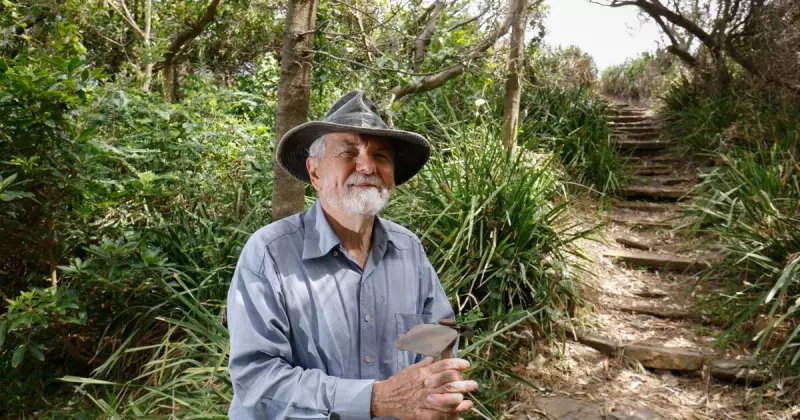
Judge Haesler has maintained strong community connections through nearly thirty years of BushCare work, helping regenerate the area behind Wombarra Rock Pool from what he describes as a "barren wasteland" to a thriving pocket of bushland. He also enjoys cultural activities including films at Warrawong's Gala Cinema, shows at the Illawarra Performing Arts Centre, and dining at local restaurants.
"People tend to think that judges are somehow remote from it, but most people where I live think I'm that bloke who fixed the steps near the cemetery at Wombarra Pool," he observed with characteristic humility.
Retirement Plans and Continuing Contributions
While officially retiring at month's end, Judge Haesler won't completely leave the legal world behind. He plans to work on law reform projects and will sit as an acting judge in Bega later this year.
"I've been doing it for a long time, so it's going to leave a hole, but I'm sure I'll fill it with something else, once I've slept for six months," he quipped.
At a farewell ceremony in Wollongong last December, legal colleagues unanimously praised Judge Haesler for his fairness, humanity, and the interesting facts and anecdotes he shared in court. His career demonstrates how early experiences with injustice can shape a lifetime commitment to legal service and community connection.