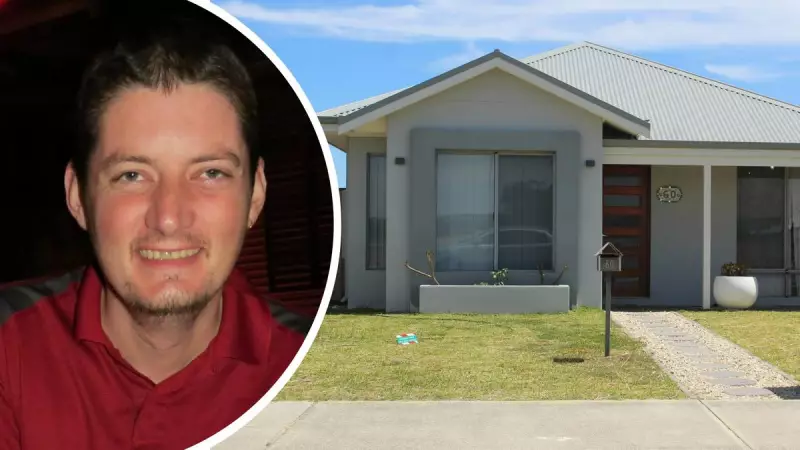
A Western Australian man has been acquitted of murder after a judge ruled he was mentally impaired at the time he killed his housemate with a hammer in a suburban group home.
Supreme Court Delivers Verdict in Brutal Group Home Killing
Chad Johnathan Hardy, 39, was found not guilty of murdering 61-year-old housemate Michael James O’Kane in the Supreme Court of Western Australia on Thursday. Justice Joseph McGrath handed down the verdict, accepting that Hardy was of unsound mind during the fatal incident in Mirrabooka on October 17, 2022.
The court heard that Hardy attacked O’Kane with a hammer inside their state-funded group home on Yirrigan Drive. The assault was so severe that O’Kane suffered catastrophic head injuries and died at the scene. Police and paramedics were called to the address but could not save the victim.

Justice McGrath’s decision was based on evidence from two forensic psychiatrists. Both experts independently concluded that Hardy was suffering from a schizophrenic illness at the time of the killing. Their reports stated that his mental impairment deprived him of the capacity to know he ought not have committed the act.
The Path to a Mental Impairment Defence
Hardy had initially pleaded not guilty to murder. His defence team successfully argued for a verdict of not guilty by reason of unsound mind, a provision under Section 27 of WA’s Criminal Code. This law states a person is not criminally responsible if a mental disease prevents them from understanding the wrongfulness of their actions.
The court was told Hardy had a documented history of mental health issues. His condition and the circumstances leading to the tragic event were detailed in the psychiatric assessments. Justice McGrath noted the unanimous medical opinion left him with no alternative but to find Hardy not guilty on the grounds of mental impairment.
Following the verdict, Hardy was ordered to be detained in strict custody. He will be held at a declared place, which is typically a secure mental health facility, under the Custody Act. His case will now be referred to the Mentally Impaired Accused Review Board, which will determine the conditions of his ongoing detention and any future release.
Aftermath and Next Steps for the Accused
The case highlights the complex intersection of violent crime and severe mental illness within the justice system. A finding of not guilty due to unsound mind is not an acquittal in the ordinary sense. Instead, it acknowledges the accused was incapable of forming criminal intent.
Hardy will remain in custody indefinitely, subject to regular reviews by the independent board. The board assesses whether a detained person continues to pose a danger to the community. Any future release would be conditional and closely supervised.
The death of Michael O’Kane has left a community in mourning and raises difficult questions about care and safety in supported accommodation. The verdict brings a legal conclusion to the criminal proceedings, but the tragedy’s impact endures for all involved.