Court Raises Concerns Over Canberra Jail's Drug Detection Capabilities
A coronial inquest into a suspected fatal drug overdose at Canberra's Alexander Maconochie Centre has cast serious doubt on the competency of correctional officers in interpreting X-ray body scans used to detect contraband. The ACT Coroner's Court heard compelling evidence this week that frontline screening processes may be failing due to inadequate training and technical shortcomings.
Fatal Overdose Case Reveals Systemic Issues
The inquiry focuses on the death of 34-year-old Aubrey Agostino, who died within a week of entering the correctional facility in August 2024. Expert testimony suggests Agostino may have successfully concealed contraband during the jail's induction process, with potentially fatal consequences.
Radiation safety consultant David Leslie, whose company trained AMC officers in body scan interpretation, identified "suspect appearances" in Agostino's scans that two correctional officers apparently missed. "It does not appear to be normal anatomy," Leslie told the court, noting anomalies consistent with concealed items.

Training Deficiencies Exposed
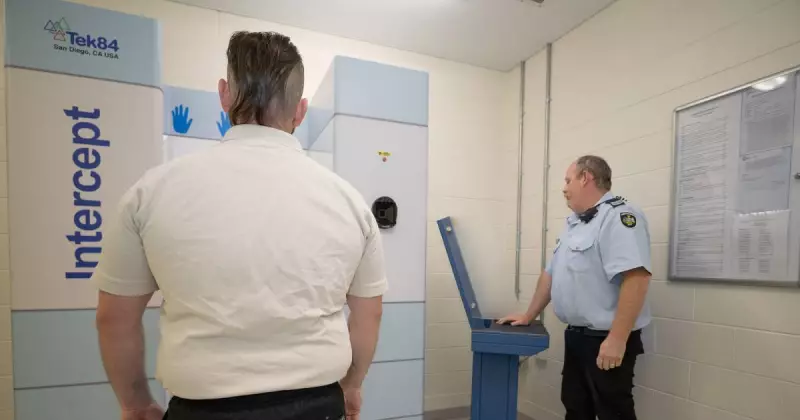
The court learned that AMC correctional officers received only two hours of training on using the Tek84 X-ray machine, one of only two such scanners available in Australia. Despite this minimal preparation, no refresher training has been requested for Canberra jail staff since the initial instruction.
"I'm not saying [staff] are not qualified ... but some people [may not] come with ... university qualifications and may not have studied science seriously," Leslie testified, highlighting potential knowledge gaps among personnel responsible for critical security screening.
Coroner Questions Increasing Reliance on Technology
Coroner Ken Archer expressed concern about the growing dependence on scanning technology without corresponding improvements in staff competency. "As reliance increases isn't there a greater need to increase the technical competency of the officers?" Archer questioned, receiving agreement from the expert witness.
The coroner acknowledged that while scanning machines provide valuable assistance in contraband detection, they appear to be "increasingly relied upon" for frontline screening without adequate support systems.
Missed Opportunities in Security Procedures
Leslie suggested that suspicious anomalies in Agostino's scans, based on shape and groin anatomy displacement, could have indicated concealed items such as a syringe in underwear or contraband in a balloon or condom. The expert noted that strip searches would provide the most reliable confirmation, but the court previously heard Agostino's strip search was incomplete, with officers failing to check his underwear thoroughly.
The inquest continues to examine whether multiple failures in contraband detection, record-keeping, and internal communication may have contributed to the 34-year-old's death. Additional expert testimony scheduled for this week will further explore these "missed opportunities" in prison security protocols.
This case highlights significant concerns about the implementation and oversight of technological security measures in Australian correctional facilities, particularly regarding staff training and procedural consistency in life-threatening situations.