The journey begins not with a step, but with a breath. Sitting on a straw mat, a dry brush pen in hand, I trace sacred characters onto calligraphic paper at the start of a quest for zen in Japan's ancient capital, Kyoto. The instruction is clear: take five deep breaths and do not seek perfection. The Buddha, I am told, resides within every character. As I finish, a pop culture phrase echoes in my mind, setting the tone: "This is the way."
The Path Begins at the Moss Temple
My first destination is Saiho-ji, a Zen Buddhist temple nestled in Kyoto's Arashiyama district with UNESCO World Heritage status. Gaining entry requires planning; pre-booked timeslots are highly sought after to limit visitor numbers and preserve the profound silence. The temple recently modernised its once postcard-based reservation system to online bookings.
Known as Koke-dera, the Moss Temple, Saiho-ji's lower garden is a living tapestry of over 120 varieties of moss. The experience is multisensory: dappled light filters through maple leaves, the air is preternaturally still, and shades of green blend in perfect harmony. Walking the stone paths induces a deep state of mindfulness.

The site's history is layered. While roots date to the year 250, a Buddhist temple was first built here in 731 CE. After centuries of disrepair, the monk and master gardener Muso Soseki restored it in 1339 to such brilliance that it became a model for the gardens of the 3rd and 8th Shoguns. Though the upper dry rock garden is now closed, the lower garden remains an unmissable sanctuary.
Golden Light and Silver Dreams
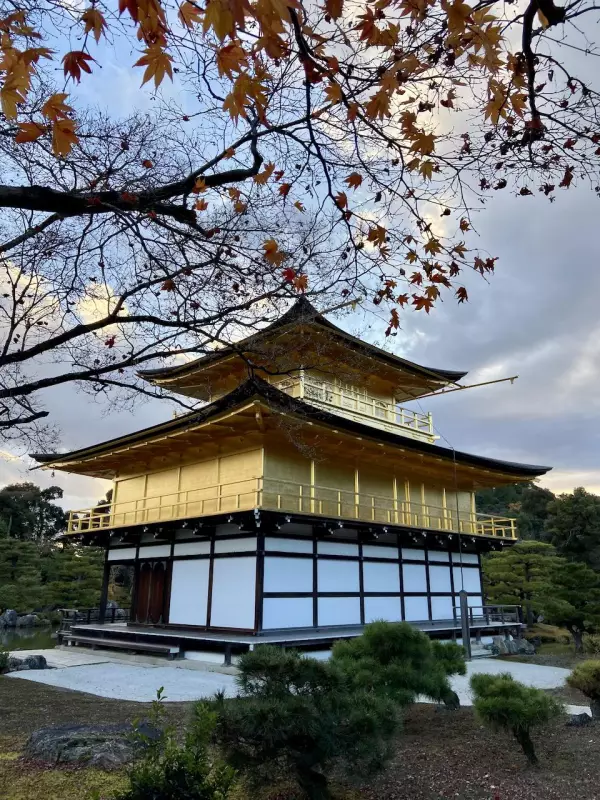
From Saiho-ji, the path led to the legacy of the 3rd Shogun, Ashikaga Yoshimitsu. He built Kinkaku-ji, the Golden Pavilion, on the grounds of his villa, completing it around 1399. The name is literal: the top two floors are cloaked in gold leaf. Hidden from initial view, the pavilion suddenly reveals itself across its pond, shining like a beacon. Ornamental pines and moss-covered rocks complete the scene.
This structure is a phoenix. The original was tragically destroyed by an arsonist's fire in 1950, but meticulously rebuilt by 1955 with gold leaf just as dazzling. At sunset, watching the roof glow through the trees, a profound calm settled over me. The ambiance differed from Saiho-ji's mossy quiet, yet both were integral parts of the Zen way.
The following day deepened my immersion. At Kennin-ji—a temple whose founder also introduced tea drinking to Japan—I studied the Zen language of stone gardens. I observed how rocks symbolise islands, raked gravel mimics water ripples, and pruned trees embody nature in miniature. Sitting quietly, I felt the hum of a fellow visitor resonate through the wooden floor; Zen was beginning to vibrate within me.
A bus ride brought me to Ginkaku-ji, the Silver Pavilion, converted by the 8th Shogun. Despite its name, it boasts a dark lacquer finish, said to shimmer silver under moonlight. Nestled at a mountain's base, its gardens are a testament to meticulous care: perfectly shaped hedges, artistically raked sand, and vibrant maple leaves. The sound of water in winding channels and bamboo swaying in the breeze cemented a feeling of lucky, fleeting belonging.
Aqueducts and Full Circles
My journey concluded with a walk along the Philosophers' Path to Nanzen-ji. Originally Emperor Kameyama's palace, it was converted into a Zen temple in 1291, becoming a head temple for Zen monks. Destroyed in the 1400s and rebuilt in the 1600s, it is now considered one of Japan's most important temples. As dusk fell, the painted sliding doors (fusuma) glowed, and the rock gardens evoked imagery of tigers crossing water.
A final, unexpected symbol awaited my departure. An enormous stone aqueduct, built in 1890 to channel water from Lake Biwa to Kyoto, loomed overhead. Inspired by Roman engineering and built with Western techniques, it cut through the temple grounds simply because tunnelling was too expensive. In that moment, the ancient way of Zen intersected with the modern way of infrastructure. The path had come full circle.

The zen of Kyoto had done its work. From tracing sutras to contemplating gardens and unexpected aqueducts, the journey offered a timeless lesson in mindfulness, history, and the serene beauty of finding one's way.