WA Medical Research Leaders Sound Alarm Over Catastrophic Federal Funding Bias
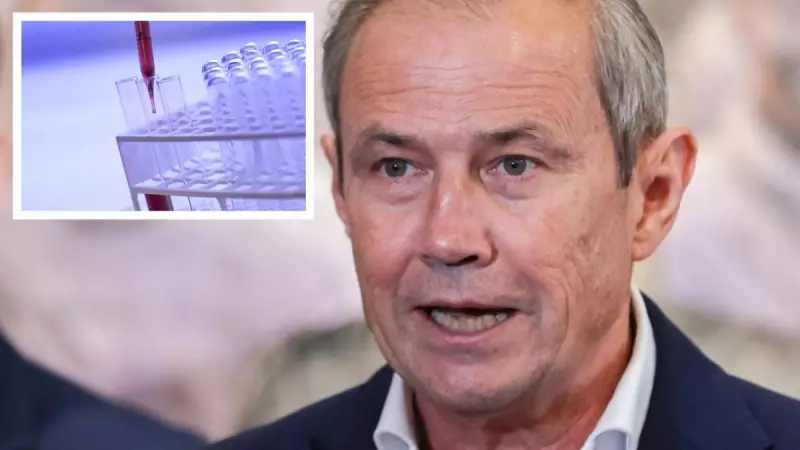
Leading Western Australian medical researchers have pressed the panic button over what they describe as a catastrophic rate of grant rejections by the Federal Government's primary funding body. The Cook Government has joined research leaders in expressing dismay at the State's paltry 3.8 per cent success rate in the National Health and Medical Research Council's Ideas Grant Round for 2025.
A Disturbing Trend of Declining Support
The rejection of more than 96 per cent of applications from WA medical researchers continues a troubling trend of declining annual grant support from the NHMRC since 2020. This means potentially life-saving work is being lost, and there is a genuine risk of a brain drain, with local scientists forced to look elsewhere for employment opportunities.
WA's Minister for Science, Innovation and Medical Research Stephen Dawson was the lead signatory of a letter to Federal Health Minister Mark Butler questioning the unfair grant allocation that appears to favour applicants on the east coast. The December 16 letter, calling for urgent action, transparency and a fairer system, was also signed by research leaders from four WA universities and six medical institutes.

Systemic Bias and Historical Excellence
The letter stated clearly: "There has been a long-held belief that conscious and/or unconscious bias may be influencing national competitive grant outcomes to the disadvantage of Western Australia." It claimed the 3.8 per cent success rate in grant applications—less than half the national average—does not reflect the high calibre of WA researchers.
WA has a proud history and longstanding record of contributing to national biomedical excellence, including globally transformative achievements such as:
- The discovery of Helicobacter pylori by Nobel Laureates Professors Barry Marshall and Robin Warren
- Professor Fiona Wood AM's revolutionary burns treatment
- Professor Fiona Stanley AC's pioneering work in population-level data and record linkage
"This history reflects a research culture capable of producing breakthroughs of global significance," the letter emphasised.
Economic Impact and Career Threats
Today, WA's medical research sector remains a strong partner to the State Government in efforts to diversify the economy and invest in medical research excellence for the benefit of all Australians. Independent economic modelling has shown that the sector contributed $322.9 million in value add and 2632 FTE jobs in 2021, with year-on-year growth.
The poor grant allocation "poses a significant threat to early-and mid-career researchers seeking to establish long-term careers in medical research," the letter added.
Voices from the Research Community
Harry Perkins Institute of Medical Research chief executive Professor Peter Leedman said the award of just five grants to WA researchers from the NHMRC had nothing to do with capability. "WA has a world-leading track record in medical research and continues to deliver breakthroughs, jobs and impact," he stated. "But this year's outcome threatens all West Australian researchers and raises real concerns about systemic disadvantage and eastern states bias in national funding."
Professor Leedman posed a critical question: "You have to ask, why on earth would you come into science if you've got a one-in-30 chance of getting your funding?" He expressed the research community's desire for transparent dialogue: "We are really keen to talk to the NHMRC leadership and say, 'let's look at this transparently and openly and see if we can understand why the success rate has been dropping'."
Professor Gina Ravenscroft, Group Leader, Rare Disease Genetics & Functional Genomics at the Harry Perkins Institute of Medical Research and the University of WA, shared the personal toll: "It's exhausting writing grant applications and trying to keep your research program going when we know the chance of success is less than 5 per cent."

She added an important perspective on taxpayer investment: "Western Australians pay taxes and deserve for a portion of those taxes to be invested back into local health and medical research, and we know that health outcomes are better when there are strong research activities connected to our hospitals."
Seeking Resolution and Federal Response
A delegation of WA medical research leaders intends to visit Canberra with the aim of discussing the issue directly with Mr Butler. However, Mr Butler has yet to respond to the letter that was sent in December.
A spokesperson for Mr Dawson confirmed: "We haven't had a response to this letter but our offices are in contact." The spokesperson emphasised the State Government's commitment: "Improving WA's success rate and share of national research funding is a priority for the State Government."
The research community remains united in their concern, with Professor Leedman noting: "We've got all of the universities and all of the medical research institutes and the government all in sync on this issue. We want to keep the very bright and best minds in Western Australia so they can contribute to the science and improve the well being of citizens in our state and across the globe."