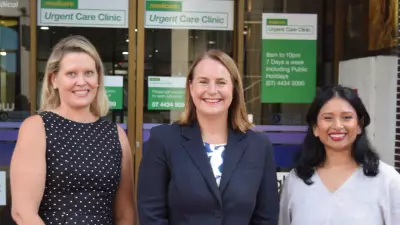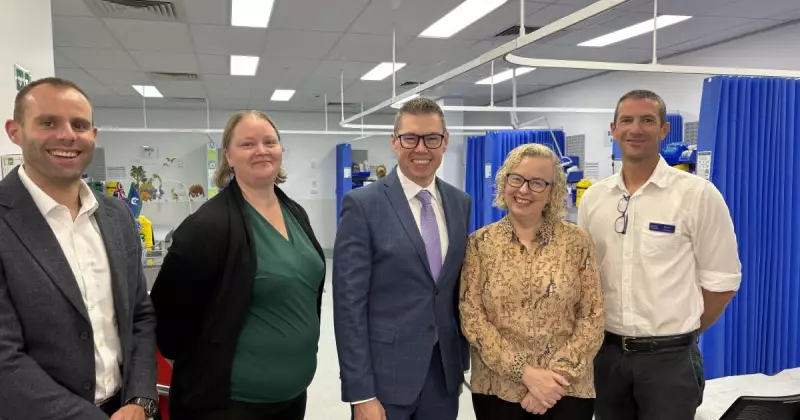
In response to overwhelming community demand, the Medicare Urgent Care Clinic in Charlestown has significantly boosted its medical workforce, doubling its clinical staff to manage the surge in patients.
A Year of Remarkable Demand
The clinic, which operates on a walk-in, bulk-billed basis from 8am to 10pm daily, proved to be one of Australia's busiest in its inaugural year. Official figures reveal it treated 14,950 individual patients across 17,690 separate occasions since opening. A quarter of all patients were children under the age of 15.
ForHealth Group, which manages the clinic, acted on a pre-election promise from the Albanese government. In October 2025, a second doctor and nurse were added to cover the peak period from 9am to 6pm. According to Matt Baldwin, ForHealth's General Manager for NSW/ACT, the impact was immediate.

"We've been able to see roughly double the amount of patients we were seeing previously," Mr Baldwin said. "Typically with one doctor and one nurse operating, you're looking at 40 to 50 patients a day. We've been hitting 80 to 85 since then."
Easing the Burden on Hospital Emergency
The clinic's core mission is to handle semi-urgent and non-urgent cases that would otherwise go to hospital emergency departments. Shortland MP Pat Conroy highlighted its success, noting the 20,000 visits equate to 20,000 fewer presentations at facilities like the John Hunter Hospital.
"The impact is palpable," Mr Conroy stated. "Over half the presentations to the emergency department at the John Hunter are for category four and five cases... It's what the urgent care clinics are designed to help with." He confirmed nurses at the hospital are now directing suitable patients to the clinic.
Common treatments at the Charlestown clinic and its four sister sites across the Hunter, New England, and Central Coast include:
- Minor illnesses like respiratory and urinary tract infections.
- Injuries such as fractures, sprains, simple lacerations, and minor burns.
- On average, the Charlestown clinic treats about 20 patients daily for fractures and sprains alone.
Future Expansion and Workforce Concerns
When asked about adding a third doctor to the Charlestown clinic, Mr Conroy remained non-committal, emphasising the need to track ongoing demand first. The federal government is investing $8.5 million nationally in the urgent care clinic model.
The initiative has faced criticism from bodies like the Royal Australian College of GPs, which argues the clinics are more expensive than standard GP consults and risk drawing doctors away from private practices.
Newcastle MP Sharon Claydon countered these concerns, stating the clinic expands the overall workforce pool. "There's been some overseas doctors that have come in; they've expanded the workforce recently to include paramedics," Ms Claydon said. "This is a really attractive workplace for a lot of people."
Looking ahead, the site for a promised Medicare mental health centre in Charlestown is expected to be announced soon, along with the final details of a new urgent care clinic for Maitland.