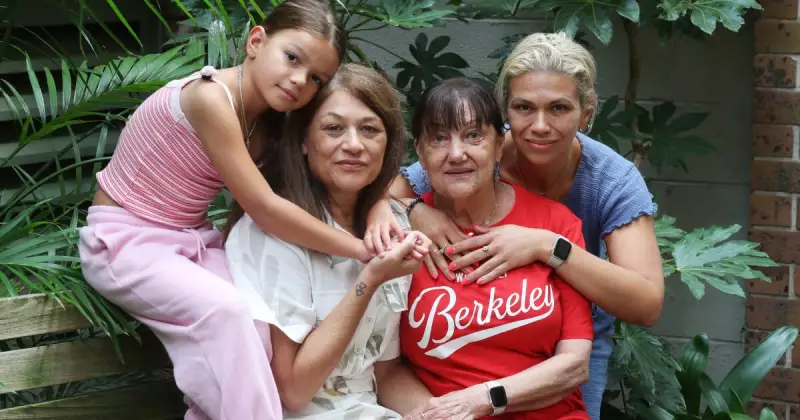
A Wollongong woman is confronting a heartbreaking prognosis after being diagnosed with an extremely rare and fatal brain disease, with doctors warning she may have only months to live.
A devastating diagnosis before Christmas
Tina Floro, a 58-year-old from the Illawarra region, received life-altering news just days before Christmas. Medical tests confirmed she has Creutzfeldt-Jakob disease (CJD), a rapidly progressive and invariably fatal neurodegenerative disorder.
The disease occurs when abnormal, infectious proteins called prions damage the brain, causing it to develop a spongy appearance. This leads to severe dementia and, ultimately, death. The condition typically claims a person's life within months or even weeks after symptoms first appear.

For Ms Floro, the journey began about ten months ago with subtle signs she initially attributed to work-related stress. "It started with some confusion," the article notes. She would forget where she parked her car or become disoriented in her familiar office. Other early symptoms included uncharacteristic mood swings and a newfound intolerance to loud noises.
From suspected stroke to a rare disease discovery
The situation escalated in late November 2024 when a colleague grew concerned Ms Floro was having a stroke, prompting a hospital visit. While a stroke was quickly ruled out, doctors began a battery of tests. They systematically eliminated possibilities until they arrived at the grim conclusion: sporadic Creutzfeldt-Jakob disease.
On December 19 – which coincidentally was the birthday of one of her six grandchildren – Ms Floro was told to gather her family to receive the formal results. The diagnosis comes just five years after her daughter, Paula Giraldi, successfully battled stage four breast cancer, now in remission.
Facing her own mortality has been "so overwhelming," Ms Floro said. In the wake of the news, she was connected with palliative care services, consulted psychologists, and had discussions about voluntary assisted dying (VAD) options.
Family rallies with hope and practical support
Despite the prognosis, Ms Floro's spirit remains focused on life. "I've got too much to live for," she declared. Her family, including her three children and six grandchildren scattered across the Illawarra and Shoalhaven, has mobilised completely. Her mother, Josephine Dunn, has relocated from Tweed Heads to Wollongong to be closer.
To ease financial pressures and allow the family to concentrate on precious time together, Emily Thompson – the sister of Ms Floro's daughter-in-law – started a GoFundMe fundraiser. "Right now, what matters most to Tina is spending as much time as possible with her loved ones while she still can," Ms Thompson wrote on the fundraising page.
The family has also signed a lease on a larger property in Primbee to accommodate everyone being together. Ms Floro's daughter, Paula Giraldi, summed up their approach simply: "We are taking each day as it came."
Pursuing treatment and raising awareness
Ms Floro is not without support or hope. Her GP has referred her to a neurologist specialising in degenerative diseases. She is also connected with a national CJD support group, which has provided crucial information and pomegranate tablets containing omega 5. Some research suggests omega 5 may help slow the disease's progression.
After only a few weeks of taking the tablets, Ms Floro reports noticing a difference in the mental "fogginess" she had been experiencing. Her family clings to hope that the fact her symptoms emerged around ten months ago might indicate a slower-progressing form of the disease.
Currently, while she deals with confusion, Ms Floro remains physically capable and lives independently. If her health remains stable, she hopes to join a clinical trial in February 2026 aimed at prolonging life for CJD patients.
Ms Floro has chosen to speak publicly about her experience to raise awareness of this little-known condition. CJD is exceptionally rare, occurring in only one to two people per million globally. Australia sees roughly 40 to 50 cases annually.

Most cases, like Ms Floro's, are sporadic with no known cause. The disease can also be inherited or, rarely, acquired through certain medical procedures. A variant is linked to consuming meat from cattle with bovine spongiform encephalopathy (BSE or "mad cow disease"), though no such cases have ever been recorded in Australia. The cause of Ms Floro's illness remains unknown, though she has undergone genetic testing.