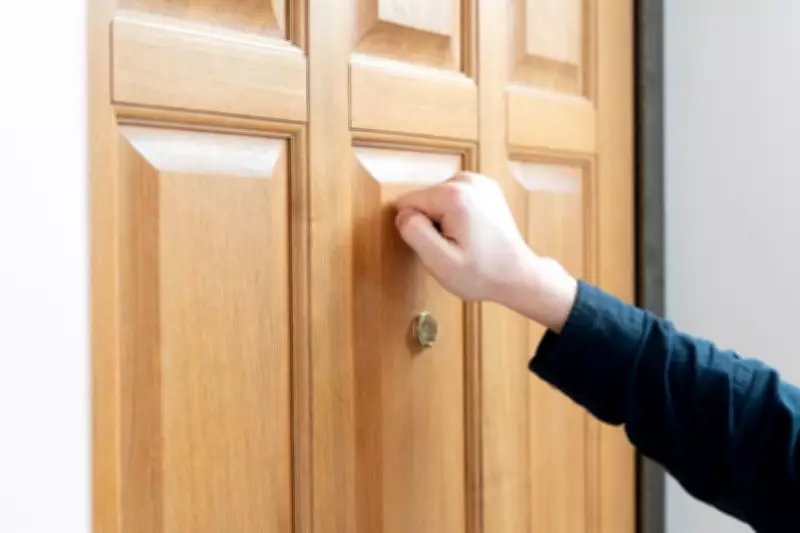
The Changing Meaning of the Front Door in a Digital World
In today's internet age, where privacy is increasingly elusive, the simple act of an uninvited knock at the front door no longer garners the warm reception it once did. This shift highlights a deeper societal issue: the bypassing of consent in a world where personal boundaries are constantly tested.
From Simple Barrier to Complex Gateway
Historically, the front door served as a straightforward divider between the public and private spheres. It kept out the elements, contained pets, and generally maintained a respectful distance from strangers. An unexpected knock was often a minor event, perhaps from a neighbor sharing news, a charity seeking support, or a polite encyclopedia salesperson. These interactions were tolerated because they occurred infrequently and with a sense of mutual respect.
However, in contemporary times, the front doorstep has transformed into a bustling hub, reminiscent of a neighborhood on bin day. Salespeople, charity collectors, religious advocates, and, alarmingly, an increasing number of scammers all view it as a legitimate point of contact. The knock has become so commonplace that it risks losing its significance, raising concerns about intrusion and safety.

Erosion of Trust and Consent
The altered attitude towards front-door callers is not a result of diminished friendliness among people. Instead, it stems from a fundamental change in the meaning behind the knock. There are now far more uninvited visitors than in the past, all vying for attention, time, and goodwill. Concurrently, trust has eroded significantly, with scams becoming more prevalent and often initiated by a knock at the door.
This environment fosters a sense that consent has been bypassed. In a world where most interactions can be scheduled, filtered, or declined online—through emails, messages, or calls—an uninvited knock feels out of sync with modern norms. It represents an intrusion into a space where individuals expect control over their engagements.
The Paradox of Human Contact
Despite this wariness, most people still desire certain knocks on the door. They welcome deliveries of shopping and parcels, appreciate neighbors dropping by, and value help arriving when requested. The key distinction lies in choice: these knocks are typically anticipated, purposeful, and, most importantly, invited. This creates an irony where individuals express feelings of loneliness or disconnection yet hesitate to open the door to unannounced visitors.
What people are resisting is not contact itself, but contact that disregards timing, choice, and their capacity to manage interactions. In this sense, the front door is merely catching up with other aspects of life, mirroring the screening processes applied to phones and inboxes for years. Answering the door now involves a quick risk assessment: identifying the visitor, understanding their intent, and estimating the time commitment.
If society routinely screens calls and emails to protect privacy and manage time, why should the front door be treated any differently? This evolution underscores the broader challenges of maintaining consent and privacy in an increasingly connected world.
Professor Gary Martin is CEO of AIM WA and a specialist in workplace and social trends, offering insights into these shifting dynamics.