A Newcastle man who found himself unable to shake hands or put his hand in his pocket due to a debilitating hand condition has seen remarkable improvement thanks to a unique local clinical trial.
When Fingers Buckle: The Impact of Dupuytren's
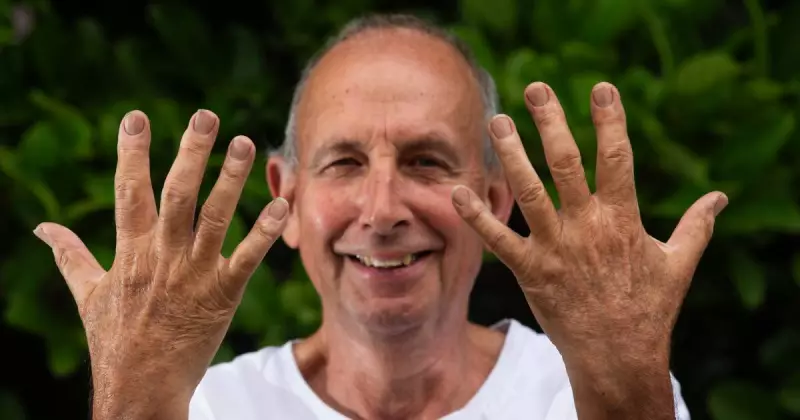
Ralph May, a 72-year-old from Wallsend, watched as the pinkie and ring fingers on his right hand progressively bent inwards. "My fingers were buckled. It was becoming a bit of a problem," Mr May said. Simple daily tasks like opening jars, washing his face, or riding a bike grew increasingly difficult.
Mr May was suffering from Dupuytren's disease, a hereditary disorder often nicknamed the "Viking disease" due to its higher prevalence in people of Northern European ancestry. The condition causes fibrous tissue to form in the palm, leading to cords that pull fingers into a permanently bent position.

Newcastle radiation oncologist Professor Jarad Martin explained that Dupuytren's is a common condition, affecting up to 20 per cent of people over 50 with a Northern European background. "It can cause the fingers to curl up or contract," said Professor Martin, who works with Genesis Care and Calvary Mater Newcastle.
A World-First Approach in the Hunter
After a referral from his GP, Mr May joined the DEPART clinical trial at the Dupuytren's clinic within Hunter Hand Surgery in Adamstown. This clinic is believed to be unique in the world, bringing together a hand therapist, hand surgeon, radiation oncologist, and clinical trial coordinator to assess patients and provide management options.
The trial, led by Professor Martin and his Hunter-based colleagues, is exploring the effectiveness of low-dose radiation therapy for Dupuytren's. "In Newcastle we started the world's largest clinical trial exploring whether low dose radiotherapy can either prevent Dupuytren's disease from deteriorating, or stop it coming back after treatment," Professor Martin stated.
While radiation is more commonly associated with cancer treatment, it has a long history for non-malignant conditions. For Mr May, the trial treatment involved a combination of radiation and surgery, with outstanding results. "It was great. I can do push-ups and put my hand flat on the ground now," he reported, adding that shaking hands is no longer an issue.
Promising Results and Future Hope
Findings from the Newcastle team's research have been published in the International Journal of Radiation Oncology, Biology, Physics and the Journal of Hand Surgery. The study found the radiation therapy to be "well-tolerated with minimal ongoing toxicities," showing only mild side effects.
This research is crucial because existing interventions, while easing symptoms, see a high rate of recurrence. Orthopaedic surgeon Dr Tanya Burgess of Hunter Hand Surgery noted that contracted fingers can return in up to 80 per cent of patients within five years. "Our aim is to find new ways to halt Dupuytren's in its tracks," Dr Burgess said.
The final results of the DEPART trial are still two years away, and longer-term follow-up is deemed vital to confirm the treatment's safety. However, the data so far offers significant promise for the many Australians affected by this challenging condition. The trial continues to be available for suitable patients through the Newcastle clinic.