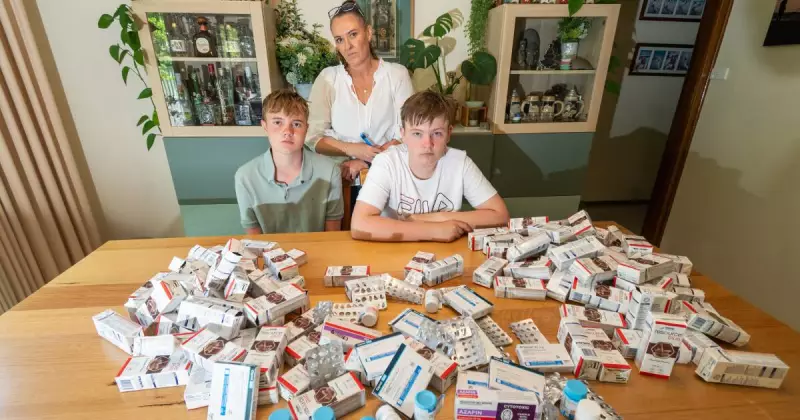
A Canberra mother's desperate fight to access life-changing medicine for her two sons with Crohn's disease has reached the halls of Parliament, as she demands Australia fall in line with global medical standards.
A Mother's Anguish in Senate Estimates
Sarah Fletcher, a primary school teacher from Kambah, wept in the public gallery during a Senate estimates hearing this week. She listened as health officials faced intense questioning over why children with Crohn's disease are denied ready access to biologic medicines, a treatment that is standard first care in other developed nations.
Her week off, meant to celebrate her 50th birthday, was instead consumed by advocacy. "I'm not going to stop until it's fixed," she declared. Both her sons, William, 16, and James, 14, live with paediatric Crohn's, a chronic inflammatory bowel disease.

The 'Fail First' System Causing Harm
Mrs Fletcher argues the current Australian system is structured to force children to deteriorate. To qualify for biologic treatment, which uses antibodies to target the immune system and reduce inflammation, patients must first 'fail' a series of other medications.
The visual evidence is stark on her kitchen table: a pile of empty boxes representing the steroids and antibiotics her younger son James consumed in just one month. "Most people take antibiotics for five days - my children have to take them for three months," she said.
This regimen involves 13 to 18 tablets daily. It could be replaced by a single fortnightly injection of biologics if the Pharmaceutical Benefits Scheme (PBS) listing was changed. In Australia, biologics are a costly third-line option, around $560 per month, while internationally they are often a first response.
The consequences of the delay are severe. Mrs Fletcher revealed her older son William is now showing signs of kidney and liver damage from the required medication. The boys have missed weeks of school and family events, often left weak and unable to eat solid food due to their treatment's side effects.
Political Pressure Mounts for Change
The issue has garnered cross-party attention. During the estimates hearing, Opposition health spokeswoman Anne Ruston and independent ACT Senator David Pocock grilled Health Department officials.
Duncan McIntyre, First Assistant Secretary of the Health Department, confirmed the matter is under active review, noting it is on the agenda for the Pharmaceutical Benefits Advisory Committee (PBAC) meeting on December 10.
Chief Medical Officer Professor Michael Kidd acknowledged biologics "can be very helpful" but noted they carry potential side effects, requiring a clinical risk-benefit analysis.
ACT Greens leader Shane Rattenbury has called for a priority review of PBS listings for paediatric Crohn's biologics. ACT Liberal Senate candidate Nick Tyrrell, who met Mrs Fletcher at a local festival, has also joined her advocacy, stating it "beggars belief" that children are forced to fail multiple drug regimes.
Mrs Fletcher has written to Federal Health Minister Mark Butler, arguing the policy may constitute medical negligence. She is seeking a meeting this week to demand PBS-funded biologics as a first-line treatment for moderate to severe paediatric Crohn's, or at least specialist discretion to prescribe them without delay.
For this determined mother, promises are not enough. "Promises mean nothing," she said. "I'm going to keep going until this happens." Her fight continues until the system is fixed, aligning Australian children's healthcare with the rest of the developed world.