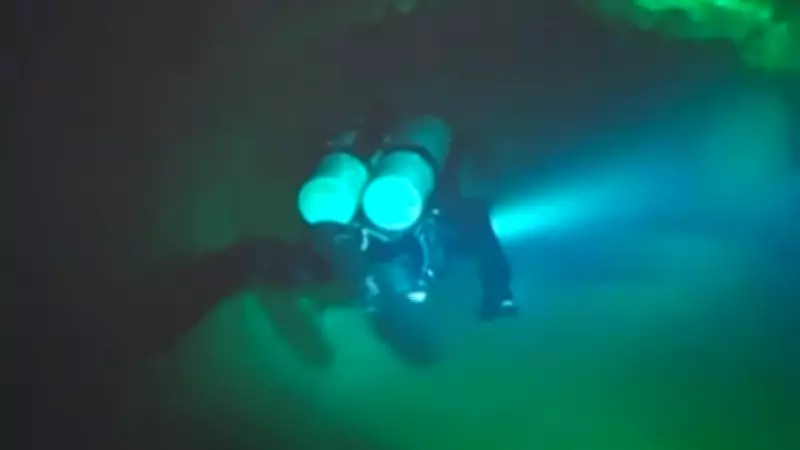
Three specialist deep divers are undertaking an extremely dangerous mission to recover bodies trapped inside a deep-sea cave in the Maldives after a tragedy that claimed six lives.
Five Italian divers and a local Maldivian rescuer lost their lives during a marine research expedition, with the tragedy unfolding inside a cave system experts say is among the most dangerous environments a diver can enter.
Experienced scuba diver Michael Atkinson told Sunrise the operation facing recovery crews is extraordinarily complex, with rescuers forced to navigate darkness, narrow passages and extreme depths. He said alarm bells rang after the group failed to return from a dive deep inside the cave system.

“Five divers go down. One of them’s an instructor. They go down to 50 metres, and then an hour and 45 minutes later, they haven’t returned to the surface. So the captain raises the alarm,” Atkinson explained.
Three specialist deep divers are involved in the high-risk retrieval mission, attempting to recover the victims from the cave’s deepest chamber.
The cave system itself presents severe hazards even for highly trained divers.
“It’s very easy to get disoriented. If you lose a light source or in any kind of emergency, it’s very hard to deal with that kind of situation,” Atkinson said.
At depths of 50m to 60m, divers can experience nitrogen narcosis, which Atkinson compared to severe intoxication.
“It’s a little bit like being drunk. At this depth, it’s like having sort of 10 to 12 drinks. So you can still make some decisions, but you’re definitely impaired,” he said.
“There’s oxygen toxicity which can give you the shakes and incapacitate you.”
Michael Atkinson told Sunrise recovery crews face narrow underwater passages, darkness, and depths beyond standard recreational diving limits.
He said air consumption also becomes critical at such depths.
“You’re really running out of air quite quick. Like, no more than five minutes down there. Every time you take a breath, you can see the needle move on your air gauge.”
A Finnish rescue team that previously entered the cave reported multiple chambers and extremely tight passages, with the victims reportedly located at the back of the deepest section.
The instructor was later found separately near the cave entrance, suggesting the group may have become separated during the dive.
Atkinson said equipment failure or disorientation may have triggered a catastrophic chain of events.
“One thing going wrong is pretty easy to happen. You could get disoriented at the mouth of the cave. Maybe their plan wasn’t even to go that deep. But yeah, as soon as things start to compound, those extra factors make things very difficult,” he said.
Investigators are expected to examine footage from at least one GoPro camera recovered from the scene, which may provide critical insight into the divers’ final moments.
Atkinson stressed the victims were experienced research divers and scientists, not reckless thrill-seekers.
“They’re not the risk-taking kind of people. So I think we just need to give them the benefit of the doubt as to what actually happened and what their motivating factors were,” he said.
The tragedy has stunned many who associate the Maldives with shallow coral reefs and resort diving rather than extreme cave exploration.
Despite the incident, Atkinson said recreational scuba diving remains safe when conducted within proper limits.